What's inside
As an Amazon Associate I earn from qualifying purchases. This post may contain affiliate links at no extra cost to you.
If you only buy one welder for a home garage or small shop, a multi purpose welder that handles MIG, stick, and TIG (or at least MIG and stick) will cover roughly 90% of repair and fabrication jobs — and for most buyers, a 200-amp-class dual-voltage unit in the $400–$800 range is the sweet spot.
As an Amazon Associate we earn from qualifying purchases at no extra cost to you.

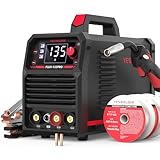


What “Multi-Purpose” Actually Means on the Box
Manufacturers use the term loosely, so check the process list before anything else:
- 2-in-1: Usually flux-core MIG + stick. Cheapest entry point, fine for repairs, no TIG.
- 3-in-1: MIG (gas and flux-core), stick, and lift-start TIG. The most common configuration and the practical choice for most home shops.
- 4-in-1 / multi-process: Adds spool-gun aluminum capability or plasma cutting. Worth it only if you regularly cut or weld aluminum.
One honest caveat: TIG on budget multi-process machines is typically lift-start (not high-frequency) and DC-only, meaning no aluminum TIG. If clean aluminum TIG work matters to you, that’s the dividing line between a $600 machine and a $1,200+ one.
Top Picks by Situation
Best all-rounder for regular fabrication: Miller Multimatic 220 AC/DC
Miller’s flagship multi-process machine runs MIG, stick, and AC/DC TIG on 120V or 240V, which means it genuinely does TIG aluminum — rare in this class. Auto-Set Elite dials in parameters from material thickness, useful when switching between sheet metal and plate in one afternoon. It sits at the top of the consumer price range (roughly $3,000), but nothing else on this list matches its process depth.
Best value 3-in-1 for hobbyists: YesWelder MIG-205DS
Dual-voltage 110/220V, synergic MIG (set wire diameter and thickness, it picks voltage and feed speed), plus stick and lift TIG. At roughly $300–$400 it’s the model most often recommended for first-time buyers who want real capability without pro-level cost. Build quality is a step below Miller/Lincoln, but duty cycle and arc quality are respectable for the price.
Best for occasional repairs: Lincoln Electric Power MIG 140 MP
A 120V unit that plugs into a standard household outlet. MIG, flux-core, stick, and DC TIG on thin material. Output tops out around 140A, so it’s best on material under 3/16″ — lawnmower decks, gate hinges, exhaust brackets, light fab. If you weld a few times a month rather than every weekend, this is enough machine.
Best budget dual-voltage: Hobart Handler 210MVP (with spool gun) or Everlast PowerMTS 211Si
The Everlast is a true multi-process (MIG/TIG/stick, dual voltage, ~$600–$800) with a longer warranty than most budget brands. The Hobart is MIG-only but paired here because many buyers cross-shop it — if you don’t need TIG at all, Hobart’s reliability and a spool gun for aluminum MIG may serve you better than three mediocre processes.
Best 4-in-1 with plasma cutting: Lotos LTPDC2000D / Primeweld CT520DP
These combine a 50A plasma cutter, 200A stick, and TIG — no MIG. The CT520DP adds pulse TIG and runs on dual voltage. A cutter plus welder in one chassis saves real shop space and makes sense if your work involves cutting brackets and sheet more than running bead after bead.
Spec Comparison
| Model | Processes | Voltage | Max Output | Duty Cycle | Weight | Aluminum TIG? |
|---|---|---|---|---|---|---|
| Lincoln 140 MP | MIG/FCAW/Stick/DC TIG | 120V | 140A | 20% @ 90A | ~46 lb | No |
| YesWelder MIG-205DS | MIG/Stick/Lift TIG | 110/220V | 205A | 60% @ 155A (220V) | ~22 lb | No |
| Everlast PowerMTS 211Si | MIG/Stick/Lift TIG | 110/220V | 200A | 35% @ 200A | ~35 lb | No |
| Primeweld CT520DP | Plasma/Stick/Pulse TIG | 110/220V | 200A / 50A cut | 60% @ 200A (220V) | ~35 lb | No (DC TIG) |
| Miller Multimatic 220 | MIG/Stick/AC-DC TIG | 120/240V | 230A | 40% @ 210A (240V) | ~56 lb | Yes |
Two numbers matter more than the rest. Duty cycle is how long the machine welds in a 10-minute window — 40% at 200A means 4 minutes welding, 6 minutes cooling. For fabrication with long beads, a higher duty cycle saves real waiting time. Max output translates roughly to thickness: 140A handles up to ~3/16″ steel in one pass, 200A+ handles 1/4″–3/8″.
Decision Matrix
| Your situation | Pick this type |
|---|---|
| Repairs a few times a month, only 120V outlets available | 140A-class 120V multiprocess (Lincoln 140 MP) |
| Weekend projects, want room to grow, tight budget | Dual-voltage 3-in-1 (YesWelder, Everlast) |
| Regular fabrication, mixed materials incl. aluminum TIG | Miller Multimatic 220 AC/DC |
| Lots of cutting, brackets, sheet work | Cutter + TIG/stick combo (Primeweld CT520DP) |
| Only steel, want maximum reliability | Dedicated MIG + spool gun (Hobart 210MVP) |
Power Requirements and Setup Realities
Dual-voltage machines are the smart buy for a reason: on 120V they’re limited to roughly 140A output, but they run anywhere. To unlock full power you need a 240V circuit — typically a 30–50A breaker with a NEMA 6-50 receptacle. Budget $150–$400 for an electrician if your garage doesn’t have one. That one-time cost is still cheaper than buying a 120V machine now and a bigger one later.
For MIG with shielding gas, factor in a cylinder lease/refill (~$60–$120 for an 80 cu ft bottle and fill in most regions) plus a regulator. Flux-core wire avoids gas entirely and works outdoors — the right call for fence and gate repairs where wind blows shielding gas away anyway.
Ownership: What Wears and What Costs Extra
- Consumables: MIG contact tips, nozzles, and liners wear fastest — a few dollars each, replaced every few spools of wire. TIG tungstens and cups last months of hobby use.
- TIG torch often sold separately: Many 3-in-1 machines ship with MIG gun and stick stinger but no TIG torch — check the box contents; a torch kit adds $50–$150.
- What fails first: On budget inverters, fans and wire-feed drive rollers are common early failures. Keep the case vents blown out with compressed air every few months.
- Common mistake: Buying for peak amperage you’ll never use instead of duty cycle at the amperage you actually weld at. Compare specs at your target output, not the marketing max.
- Gas lens and leads: Stock ground clamps and leads on cheap machines are often undersized — upgrading to a solid brass clamp noticeably improves arc stability.
FAQ
Can a multi purpose welder do everything a dedicated machine does?
Almost, with compromises. MIG and stick performance matches dedicated units in the same price class. TIG is where budget multi-process machines fall short — lift start instead of HF, no AC for aluminum, often no foot-pedal amperage control.
Is 120V enough for a multi purpose welder?
For material under 1/8″–3/16″, yes. If you plan to weld 1/4″ plate or run longer beads, get a dual-voltage unit so you can add a 240V circuit later rather than replacing the machine.
What should I budget beyond the welder itself?
Realistically $200–$350: auto-darkening helmet, gloves, jacket, wire/electrodes, gas bottle and regulator, and possibly a 240V circuit install. Multi-purpose doesn’t mean everything’s included.