What's inside
As an Amazon Associate I earn from qualifying purchases. This post may contain affiliate links at no extra cost to you.
Best Adjustable Wrench Multi-Tools in 2026
The best adjustable wrench multi tool for most buyers is a compact, full-size-style multitool with a real adjustable jaw, a secure locking mechanism, and enough handle length to loosen ordinary fasteners without forcing it. Choose a Leatherman Crunch if gripping and turning awkward hardware matter most; choose a Gerber Dual-Force for a more wrench-focused design; choose a Leatherman Wave+ or similar compact multitool only if the adjustable wrench is a backup rather than your main tool.
These tools solve different problems. Some have a genuine adjustable jaw that turns nuts, while others offer pliers and fixed-size wrench features. Jaw opening alone is not a measure of usefulness: jaw shape, play in the adjustment, handle leverage, and access around the fastener all affect whether the tool works well.
As an Amazon Associate we earn from qualifying purchases at no extra cost to you.

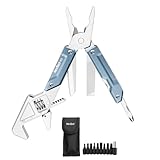
Shortlist by the job you need to do
- For grabbing and turning irregular or damaged hardware: Leatherman Crunch. Its locking pliers can clamp onto shapes that a conventional open-end jaw may struggle to hold. It is a specialist pick, not the most convenient tool for routine wrenching.
- For a compact tool with an adjustable jaw: Look at the Gerber Dual-Force. Its wrench-oriented layout gives the jaw more prominence than a typical pocket multitool, though it is still limited by compact-tool leverage.
- For a general-purpose multitool with occasional wrenching: Leatherman Wave+. It is useful when pliers, blades, and drivers are the priority, but its pliers are not a substitute for an adjustable wrench jaw.
- For frequent work on nuts and bolts: Buy a standalone adjustable wrench in the appropriate size and carry a multitool only for secondary tasks. A longer handle and wider jaw are usually more valuable than adding more implements.
What matters more than the tool’s implement count
Jaw capacity and fit
Measure the largest fastener you expect to turn across its flats, then compare that measurement with the tool’s stated jaw opening. Allow some margin: a jaw opened to its maximum may be harder to position, and nearby brackets or tubing can prevent the head from seating fully. For example, a 19 mm nut calls for more than a 19 mm maximum opening if you need room to approach it at an angle.
A properly fitted jaw should contact the fastener broadly rather than ride on its corners. Excessive clearance or a loose adjustment can round the nut, especially when the tool is pulled hard. If the job involves repeated tightening, high torque, or a critical connection, use a correctly sized fixed wrench or socket instead.
Adjustment precision and head access
Turn the adjustment mechanism until the jaw fits closely before applying force. A wheel that moves smoothly and stays in position makes this quick; a stiff or sloppy adjustment can make accurate fitting frustrating. Also check the head thickness and jaw profile. A tool with a generous opening may still be useless if its head will not fit between the fastener and the surrounding surface.
Handle ergonomics and leverage
Short handles are easy to carry and maneuver, but they limit leverage. That encourages users to squeeze harder or add an extension—both poor choices for a compact tool. Never slip a pipe over a multitool handle to increase force. For stubborn hardware, use a longer wrench or a breaker bar designed for that load.
Comparison: what the familiar options actually offer
The table separates genuine adjustable-wrench or gripping capability from general multitool usefulness. Manufacturer specifications can vary by model generation and market; confirm the exact version before buying. Dimensions and weights below are approximate published figures, not a claim of comparative testing.
| Tool | Relevant working feature | Closed length | Approx. weight | Best fit |
|---|---|---|---|---|
| Leatherman Crunch | Locking pliers with an adjustable clamping mechanism; not a conventional wide-opening wrench jaw | About 10 cm | About 196 g | Clamping and turning awkward or damaged shapes |
| Gerber Dual-Force | Adjustable wrench feature integrated into a multitool | About 12 cm | About 340 g | Buyers prioritizing wrench capability in a carryable tool |
| Leatherman Wave+ | Pliers, drivers, and other implements; no adjustable wrench jaw | About 10 cm | About 241 g | General repairs where wrenching is occasional or handled separately |
| Typical 150 mm adjustable wrench | Dedicated adjustable jaw; opening varies by model | About 15 cm | Roughly 150–250 g | More frequent nut-and-bolt work with better leverage than a pocket tool |
Do not read the numbers as a direct capacity ranking: jaw openings differ by specific model, and a tool’s closed length does not tell you how much usable handle you get when it is open. Check the manufacturer’s current specification for maximum opening, and compare it with your measured fasteners.
Choose by situation, not by the longest feature list
| Your situation | Practical choice | Why |
|---|---|---|
| Occasional household fixes; limited drawer or bag space | Compact multitool, with a separate adjustable wrench available for larger fasteners | Portability matters more than maximum leverage for infrequent, light work. |
| Frequent plumbing, bicycle, or workshop adjustments | Dedicated adjustable wrench sized to your common fasteners | A longer handle and more useful jaw access reduce awkward positioning and overexertion. |
| Field repairs involving stripped edges or irregular parts | Locking-plier multitool such as the Leatherman Crunch | Clamping can be more useful than a standard adjustable jaw when the shape is compromised. |
| First multitool; wrench use is secondary | General-purpose multitool such as the Leatherman Wave+ | It covers more everyday tasks, but should not be mistaken for an adjustable wrench. |
Durability and ownership: where compact wrench tools wear
On an adjustable jaw, the adjustment screw and its contact surfaces are common wear points. Dirt, grit, corrosion, or repeated loading with a loose-fitting jaw can increase play and make the tool less secure. On locking pliers, inspect the pivot, locking action, and adjustment mechanism. Multitool pivots and implement locks also collect debris, particularly after workshop use.
- Clean after gritty or damp work: Brush debris from the jaw, adjustment wheel, pivots, and locking areas. Dry the tool before storing it.
- Use light lubrication where appropriate: A small amount on moving joints can help prevent sticking. Wipe away excess so it does not collect sawdust or grit.
- Seat the jaw fully: Keep the fixed jaw on the side toward which you pull when the tool’s design allows it. This reduces the tendency to force the movable jaw away from the fastener.
- Don’t use the tool as a hammer or pry bar: Side loads can damage the jaw, pivot, or handle even if the tool feels robust.
- Reassess if the jaw slips: If it no longer fits snugly or the locking mechanism does not hold consistently, stop using it on fasteners where slipping could damage parts or injure your hand.
Bottom line
For an actual adjustable-wrench multitool, prioritize a jaw opening that covers your measured fasteners, a head that fits the work area, and handles long enough for controlled light-duty turning. The Gerber Dual-Force is the more wrench-centered compact option in this shortlist; the Leatherman Crunch makes more sense for gripping and clamping; and the Wave+ is a capable general multitool, not an adjustable wrench. If you routinely loosen tight fasteners, a dedicated wrench is the better tool—and often the safer, more durable buy.