What's inside
- Pure vs. Modified Sine Wave: The Real Trade-Off for RVs
- How to Size Your RV Inverter: Wattage Without Killing Batteries
- Spec Comparison: Popular Pure Sine Wave RV Inverters
- Decision Matrix: Which Inverter Fits Your RV Use
- Easy Install That Protects Your Batteries
- Durability and Ownership Realities
- Frequently Asked Questions
- Pure vs. Modified Sine Wave: The Real Trade-Off for RVs
- How to Size Your RV Inverter: Wattage Without Killing Batteries
- Spec Comparison: Popular Pure Sine Wave RV Inverters
- Decision Matrix: Which Inverter Fits Your RV Use
- Easy Install That Protects Your Batteries
- Durability and Ownership Realities
- Frequently Asked Questions
As an Amazon Associate I earn from qualifying purchases. This post may contain affiliate links at no extra cost to you.
The best inverters for RVs for most owners is a 2000W to 3000W pure sine wave inverter with a built-in transfer switch and remote display, because it will run sensitive electronics, a microwave, and a residential fridge without risk of damage while keeping battery drain predictable.
If you only need to charge laptops and run simple resistive loads like a basic coffee maker, a modified sine wave inverter can work and costs less, but it will shorten the life of many modern RV appliances and create audible buzz or overheating in others. For full-time or off-grid RV use, pure sine wave is the clear standard in 2026.
As an Amazon Associate we earn from qualifying purchases at no extra cost to you.

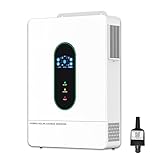
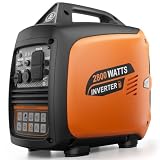
Pure vs. Modified Sine Wave: The Real Trade-Off for RVs
The difference comes down to power quality. A pure sine wave inverter produces smooth, grid-like AC power. A modified sine wave inverter produces a stepped, blocky approximation that is cheaper to generate but harder on appliances.
When to Choose Pure Sine Wave
- Required for: Residential refrigerators, variable-speed microwaves, induction cooktops, CPAP machines, modern TVs and projectors, pellet ice makers, and any device with an AC motor, digital timer, or microprocessor.
- Advantages: Runs everything quietly, no interference lines on TVs, higher starting efficiency for motors, and manufacturers will not void warranties for improper power.
- Downside: Costs 40-80% more than a modified unit of the same wattage and is slightly larger and heavier.
When Modified Sine Wave Is Acceptable
- Acceptable for: Simple resistive heaters, incandescent lights, basic power tool chargers without soft-start, and older single-speed fans.
- Risks: Can cause buzzing in audio equipment, overheating in microwave magnetrons, failure to start for laser printers, and erratic behavior in furnace control boards and newer RV air conditioners.
- Recommendation for RVs: Avoid modified sine wave if your RV has a residential fridge, solar charge controller, or lithium battery system. The small upfront savings is quickly lost if one appliance fails.
Bottom line: If you plan to run anything more than lights and a kettle, buy pure sine wave. The entire RV industry has standardized on it for a reason.
How to Size Your RV Inverter: Wattage Without Killing Batteries
Do not size by the label on the inverter alone. Size by your simultaneous continuous watts plus the highest surge load you will run at once.
Step 1: List Continuous and Surge Watts
Every AC appliance has two numbers. Continuous is what it draws while running. Surge or peak is what a motor needs for 2-5 seconds to start.
- Residential fridge (10-12 cu ft): 150-200W continuous, 800-1200W surge
- Microwave (900W cooking power): 1300-1500W continuous, no extra surge
- TV + satellite + router: 150-250W combined
- Portable induction burner: 1200-1800W continuous
- RV air conditioner 13,500 BTU: 1300-1600W continuous, 2800-3500W surge – requires a soft-start kit or a 3000W+ inverter to start
Step 2: Apply the Worked Calculation
Use this formula to estimate both inverter size and battery runtime:
Battery Runtime (hours) = (Usable Battery Amp-Hours x 12.8V x 0.85 inverter efficiency) / Load Watts
Example for a common RV setup: 200Ah lithium battery bank (200Ah usable) running a 1500W microwave through a 2000W pure sine wave inverter.
- Total energy available: 200Ah x 12.8V = 2560Wh
- After inverter loss (85% efficient): 2560Wh x 0.85 = 2176Wh usable AC energy
- Runtime at 1500W: 2176Wh / 1500W = 1.45 hours (87 minutes) of continuous microwave use
- Real-world use: 5 minutes of microwaving consumes about 147Wh, or roughly 11.5Ah from your 12V bank (1500W / 12.8V / 0.85 = 138A draw x 0.083 hours).
That same calculation shows why a 100Ah lead-acid battery (only 50Ah usable to avoid damage) would drop to 11.1V after just 3-4 minutes of that 1500W load and trigger low-voltage shutdown. For any inverter over 1000W, a lithium bank of at least 200Ah is strongly recommended.
Step 3: Add a Safety Margin
Choose an inverter rated for 20-25% more than your highest simultaneous continuous load. If you plan to run a fridge (200W) + TV (150W) + microwave (1500W) at the same time, you need 1850W continuous. A 2000W unit is the minimum, a 3000W gives headroom for surge and prevents constant fan noise from running at 90% capacity.
Spec Comparison: Popular Pure Sine Wave RV Inverters
These models represent the most common wattage classes for RVs in 2026. All are pure sine wave; dimensions and weights affect where you can mount them in a pass-through or under-bed compartment.
| Model (Type) | Continuous / Peak Watts | Weight | Dimensions (L x W x H) | Peak Efficiency | No-Load / Idle Draw | Key RV Feature |
|---|---|---|---|---|---|---|
| Victron Energy MultiPlus 12/3000/120 | 3000W / 6000W | 42.1 lbs (19.1 kg) | 23.2 x 12.8 x 5.5 in | 93% | 15-20W (8W eco mode) | Inverter/charger combo with 120A charger and 50A transfer switch |
| Xantrex Freedom X 2000 | 2000W / 4000W | 16.5 lbs (7.5 kg) | 14.8 x 11.0 x 4.0 in | 91% | 18W | Built-in 30A transfer switch, remote panel ready |
| Go Power! GP-ISW2000-12 | 2000W / 4000W | 13.2 lbs (6.0 kg) | 17.5 x 9.1 x 4.0 in | 90% | 22W | Dual GFCI AC outlets, lightweight for Class B/C vans |
| Renogy 3000W Pure Sine Wave Inverter | 3000W / 6000W | 17.6 lbs (8.0 kg) | 20.4 x 10.2 x 5.1 in | 90% | 25W | Hardwire AC terminal + outlets, wired remote included |
| AIMS Power PICOGLF30W12V120V | 3000W / 9000W | 48.5 lbs (22 kg) | 23.5 x 11.0 x 7.8 in | 88% | 30W | Low-frequency transformer for high surge (A/C, well pump) |
General market range: Standalone 2000W pure sine wave inverters typically fall between $300 and $600, while 3000W inverter/charger combos with transfer switches range from $900 to $1,600. Low-frequency units cost more and weigh twice as much but handle air conditioner surge far better.
Decision Matrix: Which Inverter Fits Your RV Use
| Your Situation | Recommended Size and Type | Why |
|---|---|---|
| Weekend camper, no residential fridge, charging phones/laptops and occasional TV | 1000W – 1500W pure sine wave, standalone | Low idle draw, fits in small compartment, avoids battery drain |
| Family RV with residential fridge and microwave, shore power at campgrounds | 2000W pure sine wave with transfer switch | Handles fridge surge + microwave, auto-switches to shore power without rewiring |
| Off-grid / boondocking full-time with solar and lithium | 3000W pure sine wave inverter/charger | Runs all appliances except A/C, charges batteries quickly when generator runs |
| Need to run rooftop air conditioner off batteries | 3000W low-frequency pure sine wave + soft-start kit + 400Ah+ lithium | Only combination that manages 3000W+ locked-rotor surge without shutdown |
| Class B van with limited space and 100Ah battery | 1000W pure sine wave, compact high-frequency design | Keeps DC cable runs short and weight low; larger inverter would trip on voltage sag |
Easy Install That Protects Your Batteries
Most RV inverter failures are installation problems, not product defects. Follow these steps to avoid voltage drop and overheating.
- Mount close to batteries: Keep DC cables under 6 feet. Every extra foot at 150+ amps creates voltage drop. Use 2/0 AWG for 2000W/12V and 4/0 AWG for 3000W/12V. Fuse within 18 inches of the battery positive with a Class-T or ANL fuse rated to cable size (250A for 2000W, 400A for 3000W).
- Ventilation matters: Low-frequency inverters need 4-6 inches of clearance on fan sides. Do not mount in a sealed battery box. High-frequency models can mount vertically to save floor space if the manual allows.
- Ground and AC wiring: Bond the inverter chassis ground to the RV chassis. If hardwiring AC output, use the built-in transfer switch or add an external 30A automatic transfer switch so shore power and inverter power never back-feed. Use 10 AWG for a 30A AC circuit.
- Remote and battery monitor: Install the wired remote panel inside the cabin and a shunt-based battery monitor. Voltage alone is inaccurate under load with lithium. Set low-voltage cutoff to 10.5V for lead-acid and 11.5V for lithium as a safety net – do not rely on it for regular discharge control.
- Idle draw tip: A 3000W inverter can waste 25-30W just being on, draining 50Ah overnight. Use eco/sleep mode or turn the inverter off when not powering AC loads. This single habit extends boondocking time more than adding a small solar panel.
Durability and Ownership Realities
Inverters are generally reliable for 8-12 years, but three components wear first.
- Cooling fans and dust: Fans are the first failure point. Vacuum intake screens monthly when traveling on dusty roads. A clogged fan forces thermal derating, where a 2000W inverter silently limits itself to 1200W.
- DC terminals and corrosion: Loose or corroded terminals create heat and voltage sag that triggers low-voltage alarms. Torque lugs to spec and coat with dielectric grease. Check after the first 50 miles of travel and then annually; vibration loosens them.
- Capacitors: Electrolytic capacitors age faster in hot compartments over 100°F. Mount away from furnace ducts and water heater lines if possible.
- Common mistakes: Running an inverter with undersized cables, using modified sine wave on a residential fridge, and leaving a large inverter on 24/7 with no load. All three shorten battery life and can void appliance warranties.
- Consumables: No regular consumables, but keep a spare Class-T fuse and replace remote control batteries yearly. Clean or replace air filters if your model has them.
Frequently Asked Questions
Can I run my RV air conditioner on an inverter?
Yes, but only with a large system. A 13,500 BTU A/C needs 2800-3500W to start. You will need a 3000W low-frequency inverter, a soft-start kit like a Micro-Air EasyStart, and at least 400Ah of lithium to run it for more than an hour. For most RVers, a generator remains more practical for A/C.
What size inverter do I need for a residential refrigerator?
A 1000W pure sine wave inverter is the absolute minimum, but a 1500W-2000W unit is recommended to handle defrost cycles and startup surge without shutting down, especially when the fridge shares power with other small loads.
Will an inverter drain my RV batteries when nothing is plugged in?
Yes. Idle draw of 15-30W will consume 30-60Ah per day from a 12V bank. Turn the inverter off at the remote switch when AC power is not needed, or use automatic standby mode if available.
Do I need an inverter/charger or just an inverter?
If your RV already has a quality converter/charger and you always have solar or generator charging, a standalone inverter saves money and weight. If you want automatic shore-power switching and faster battery charging from a generator, an inverter/charger simplifies wiring and is worth the premium for full-time use.