What's inside
- The best power tool set depends on how often you’ll use it: choose Ryobi for low-cost home projects, DeWalt or Makita for a balanced long-term kit, and Milwaukee for a broad professional-grade lineup.
- Four brands, four different value propositions
- The real cost per tool: a worked comparison
- Which power tool set fits your situation?
- Warranty: compare the terms, not just the number
- Ownership costs and the parts that wear
- Bottom line
- The best power tool set depends on how often you’ll use it: choose Ryobi for low-cost home projects, DeWalt or Makita for a balanced long-term kit, and Milwaukee for a broad professional-grade lineup.
- Four brands, four different value propositions
- The real cost per tool: a worked comparison
- Which power tool set fits your situation?
- Warranty: compare the terms, not just the number
- Ownership costs and the parts that wear
- Bottom line
As an Amazon Associate I earn from qualifying purchases. This post may contain affiliate links at no extra cost to you.
The best power tool set depends on how often you’ll use it: choose Ryobi for low-cost home projects, DeWalt or Makita for a balanced long-term kit, and Milwaukee for a broad professional-grade lineup.
For most homeowners, an impact driver and drill in a two-tool combo kit are a better buy than a large set padded with tools you may rarely use. Compare the included batteries, warranty terms in your country, and the cost of adding the next tool—not just the headline tool count. Prices and kit contents vary by retailer, region, and sale, so treat the ranges below as general market guidance and check the exact model number before buying.
Four brands, four different value propositions
| Brand and example kit type | Typical useful starter set | Common battery platform | General kit price range | Best fit |
|---|---|---|---|---|
| Ryobi ONE+ 18V | 2 tools: drill/driver and impact driver | 18V lithium-ion | About $150–$300 | Occasional home projects and tight budgets |
| DeWalt 20V MAX | 2–4 tools: drill, impact driver, and sometimes a saw or light | 20V MAX (18V nominal) | About $200–$500 | Frequent DIY and a wide range of future tool choices |
| Makita 18V LXT | 2–4 tools: drill, impact driver, and sometimes a saw or light | 18V LXT lithium-ion | About $250–$600 | DIYers and tradespeople who value a mature 18V lineup |
| Milwaukee M18 | 2–4 tools: drill, impact driver, and sometimes a saw or light | 18V M18 lithium-ion | About $250–$650 | Frequent use and users building a broad professional kit |
These are typical categories, not a claim that every brand sells the same bundle. A four-tool kit might include a circular saw, while another uses its extra slots for a light or compact tool. Verify the exact contents, battery capacity, charger, and case. The “20V MAX” label on DeWalt tools describes maximum voltage; its platform is commonly referred to as 18V nominal, so it is broadly comparable in voltage class to the 18V systems listed here.
As an Amazon Associate we earn from qualifying purchases at no extra cost to you.


The real cost per tool: a worked comparison
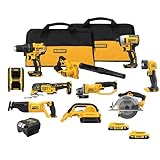
Cost per tool is useful only when the tools are comparable and you’ll actually use them. Consider two hypothetical sale purchases: a $250 two-tool kit with drill, impact driver, two batteries, and charger, versus a $400 four-tool kit with those same essentials plus a circular saw and work light.
| Bundle | Price | Included tools | Simple price per tool | More useful way to judge it |
|---|---|---|---|---|
| Two-tool kit | $250 | 2 | $125 | $250 for the drill, driver, batteries, and charger |
| Four-tool kit | $400 | 4 | $100 | $150 more buys a saw and light, or $75 per added tool |
That extra $150 is a good deal if you need the saw and the batteries suit its workload. If you don’t, the “cheaper per tool” bundle still costs more in cash and storage. For a fair comparison, subtract the approximate value of tools you would otherwise buy, then divide the remaining kit price by the tools you’ll use. Don’t count batteries or a charger as tools, and don’t assign full standalone value to a small accessory just because it appears in the box.
Which power tool set fits your situation?
- Occasional repairs, furniture assembly, or hanging shelves: Start with a Ryobi ONE+ drill and impact-driver kit, or the best-priced equivalent from another brand. A second battery matters more than a large tool count if you work away from an outlet.
- Regular DIY, renovations, or woodworking: Compare DeWalt 20V MAX, Makita 18V LXT, and Milwaukee M18 two- or four-tool kits. Pick based on which useful bare tools—tools sold without batteries—you expect to add.
- Frequent jobsite use: Consider Milwaukee M18, DeWalt 20V MAX, or Makita 18V LXT, then compare the specific tools and service terms rather than assuming one brand is best at everything. Buy batteries sized for the saws and other demanding tools you’ll use.
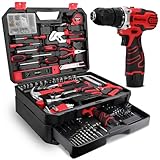
- Limited space or a small budget: Choose a compact two-tool kit with a carrying case, and add tools individually as projects call for them. A 10-tool set can take up room while leaving you with low-use extras.
- Already own batteries: Stay on your current platform if the batteries are compatible with the tools you want. A bare tool may be better value than paying again for batteries and a charger.
Warranty: compare the terms, not just the number
Warranty length can differ between the tool, battery, and charger, and may depend on registration, purchase location, or local law. Milwaukee, DeWalt, Makita, and Ryobi have published warranty programs, but terms can vary by product and country and may change. Check the warranty page for the exact model before purchasing; confirm what counts as normal wear, whether batteries have a separate term, and how a claim is handled where you live.
Longer coverage can be reassuring, but it doesn’t tell you how quickly a repair will be processed or whether a worn chuck, switch, or battery is covered. Keep the receipt and model numbers together, and register the tools when required. For a kit bought on sale, verify that every included component qualifies for the stated coverage.
Ownership costs and the parts that wear
In a typical homeowner kit, the first recurring costs are often drill and saw consumables—not replacement tools. Bits dull or break, circular-saw blades lose their edge, and sanding discs clog. Use the right bit for the fastener, select a blade suited to the material, and avoid forcing a tool that is binding. Heat, dust, and repeated deep discharges can also shorten battery life.
After dusty work, let tools cool, brush off vents and housings, and store batteries dry at moderate temperatures. Don’t wash a tool or blow debris deeper into its vents with uncontrolled high-pressure air. Keep spare batteries away from loose metal objects that could bridge their contacts. For heavy cutting, a larger-capacity battery can reduce interruptions, but it adds weight; for overhead drilling and driving, a smaller pack is usually easier to handle.
Bottom line
The best power tool set is the one whose core tools match your projects and whose battery platform you can afford to grow. Ryobi is a sensible value starting point for occasional household jobs. DeWalt, Makita, and Milwaukee each offer substantial 18V-class ecosystems for more frequent work; compare the exact kit, batteries, warranty, and local service options before choosing. If you’re unsure, buy a quality two-tool drill-and-driver set first, then add a saw or other specialty tool only when a real project calls for it.