What's inside
- Quick picks by shooter and intended use
- How to choose the right draw weight
- Bow length: stability versus maneuverability
- Wood versus composite-laminated construction
- Target shooting versus hunting performance
- Decision matrix for buying the best longbows
- Ownership costs and a simple value calculation
- Stringing, storage, and maintenance
- Quick picks by shooter and intended use
- How to choose the right draw weight
- Bow length: stability versus maneuverability
- Wood versus composite-laminated construction
- Target shooting versus hunting performance
- Decision matrix for buying the best longbows
- Ownership costs and a simple value calculation
- Stringing, storage, and maintenance
As an Amazon Associate I earn from qualifying purchases. This post may contain affiliate links at no extra cost to you.
The best longbows for target shooting and hunting are usually matched by draw weight first, bow length second, and construction third: choose a manageable 30–45 lb bow for target practice, 45–55 lb for many deer-hunting setups where legal, and a wood bow for traditional feel or a composite-laminated bow for greater consistency and durability.
As an Amazon Associate we earn from qualifying purchases at no extra cost to you.

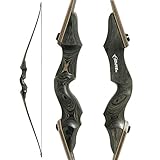

Quick picks by shooter and intended use
| Situation | Recommended specification | Why it fits | Typical market range |
|---|---|---|---|
| New adult archer | 30–40 lb draw weight, 64–68 in length | Easier form development and longer practice sessions | $150–$350 |
| Frequent target shooting | 35–45 lb, 66–70 in, laminated wood or composite limbs | Smooth handling, reduced fatigue, better dimensional stability | $250–$700 |
| Small-game or light hunting use | 40–50 lb, 62–68 in | Balances maneuverability with useful arrow speed | $200–$600 |
| Deer hunting, where permitted | 45–55 lb, 60–66 in, reinforced laminated construction | Practical hunting power without making the bow excessively heavy | $300–$900 |
| Traditional craft and slow shooting | 35–50 lb, 68–72 in, solid or backed wood | Quiet, tactile shooting experience and classic appearance | $200–$1,000+ |
These are starting ranges, not universal rules. Hunting regulations may specify minimum draw weight, broadhead type, season dates, and minimum animal size. Check the current rules for your location before buying equipment or hunting.
How to choose the right draw weight
Draw weight is the force required to pull the string to the bow’s stated draw length, commonly 28 inches. A bow marked 45 lb at 28 inches may feel substantially heavier if you draw it farther, or lighter if your draw length is shorter. Longbows do not have the let-off found in compound bows, so you hold nearly the full draw weight while aiming.
For target shooting, the best longbows are often lighter than beginners expect. A 35 lb bow that allows clean, repeatable shots is more useful than a 50 lb bow that causes collapsing shoulders, shortened draws, and inconsistent release. As a practical test, you should be able to draw the bow smoothly at least 10 times without raising your shoulder, twisting your torso, or losing your anchor position.
- Beginner or smaller-framed adult: 25–35 lb.
- Average adult building technique: 35–45 lb.
- Experienced target archer: 40–50 lb.
- Experienced hunter: commonly 45–55 lb, subject to local regulations and ethical shot requirements.
Do not choose a hunting bow solely by the highest weight you can pull once. Hunting requires repeated draws, controlled aiming, and enough reserve strength to shoot safely under pressure. A coach or archery shop can check your draw length and form before you commit to a heavier bow.
Bow length: stability versus maneuverability
Longer bows generally provide a smoother draw curve and better stability during target shooting. A 68–72 inch longbow can be comfortable on an outdoor range, particularly for a taller archer with a longer draw. Its disadvantages are greater transport length and a higher chance of contacting branches or ground cover when hunting.
Shorter bows, typically 60–66 inches, are easier to carry through woodland and can turn more readily from a seated or enclosed position. They may stack more sharply near full draw, meaning the final few inches require disproportionately more force. This is not automatically a problem, but it makes accurate draw-length fitting more important.
A useful sizing rule is to start around your height, then adjust for draw length and use. Archers with a draw length around 28 inches often find 64–68 inches versatile. Archers with a draw length of 30 inches or more should usually consider 66–72 inches, unless they specifically want a compact hunting bow and have confirmed that it does not stack uncomfortably.
Wood versus composite-laminated construction
Solid or backed wood
Traditional wooden longbows may use woods such as hickory, ash, osage orange, or yew, sometimes with a backing layer of wood, bamboo, or fiber. They offer natural grain, a quiet shot, and a distinctive hand-finished feel. They also demand more care. Heat, prolonged humidity, direct sunlight, and incorrect stringing can change the limbs or contribute to cracks and set, the permanent forward bend that reduces performance.
Wood is attractive for an archer who values craftsmanship, owns a suitable storage area, and does not mind periodic inspection. Buy from a maker who clearly states the bow’s tiller, draw length, brace-height range, and recommended stringing method.
Laminated wood and composite limbs
Laminated longbows bond multiple layers of wood, fiberglass, carbon, or other reinforcing material. The result is usually more resistant to moisture and dimensional changes than a one-piece wooden bow. Laminated limbs also make it easier for manufacturers to produce consistent weights and profiles.
Composite construction is normally the safer choice for frequent practice, travel, or hunting in changing weather. It is not maintenance-free: inspect the limb edges, string grooves, and grip area for lifting or separation, and avoid leaving the bow in a hot vehicle. Composite bows may also feel slightly livelier or louder depending on limb design and string material.
Target shooting versus hunting performance
For targets, prioritize a forgiving length, comfortable draw, and low vibration. A 66–70 inch bow in the 35–45 lb range is a strong all-purpose specification. Pair it with arrows that are correctly spined for the bow’s draw weight and your draw length; an incorrectly spined arrow can fly poorly even when the bow itself is well made.
For hunting, compactness matters more, but speed is not the only criterion. The bow must deliver enough energy for the intended game with a legal, sharp broadhead and a properly matched arrow. A 62–66 inch bow at 45–55 lb is a common compromise for experienced hunters. Heavier draw weight can increase arrow speed, but it also magnifies poor form and makes practice more tiring.
Traditional longbows typically use a finger release, so arrow length, nocking point, brace height, and string material should be set as a system. Confirm that your chosen arrows and broadheads are approved for your bow and legal for the species being hunted.
Decision matrix for buying the best longbows
| Your priority | Best direction | Trade-off |
|---|---|---|
| Lowest initial cost | Entry-level laminated bow, 30–40 lb | Fewer finish options and less customization |
| Several sessions each week | 66–70 inch laminated or composite bow | Longer case and higher purchase price |
| Dense woodland hunting | 60–64 inch hunting longbow, 45–55 lb | Potentially less forgiving at full draw |
| Traditional appearance | Solid or backed hardwood bow | More sensitivity to storage and weather |
| Shared family use | Lower-weight bow or separate bows for each archer | One fixed draw weight rarely suits everyone |
Ownership costs and a simple value calculation
A bow costing $300 is not the complete setup. Budget approximately $25–$60 for a spare string, $40–$120 for six suitable arrows, $10–$25 for a stringer, and $30–$100 for a basic case or sleeve. Hunting adds broadheads, field points, and potentially a quiver.
For example, suppose a $300 bow and $180 of accessories are used for 120 target sessions over two years. The equipment cost is $480 ÷ 120, or $4 per session, before replacing arrows or strings. If a cheaper $180 bow needs early replacement after 40 sessions, its effective bow cost is $4.50 per session before accessories. The more expensive bow may therefore be better value when its construction suits frequent use.
Stringing, storage, and maintenance
- Use a bow stringer. Do not step on the lower limb or bend the bow against a doorframe. Uneven stress can twist limbs.
- Check the bow before every session. Look for splinters, cracks, lifted laminate, loose grip material, and damaged string servings.
- Maintain the recommended brace height. Measure from the string to the deepest part of the grip and adjust only within the maker’s stated range.
- Unstring a traditional wooden bow after shooting. Follow the manufacturer’s instructions for laminated and composite designs; some are designed to remain strung briefly, but long-term storage should follow the maker’s guidance.
- Store it cool and dry. Keep the bow out of direct sunlight and never leave it in a hot car.
- Replace worn consumables. Strings, serving, nocking points, finger tabs, and arrows wear before the limbs do. Retire any arrow with a crack, bend, loose insert, or damaged nock.
The right choice is usually not the most powerful or shortest bow. For most buyers, a 64–70 inch laminated longbow with a draw weight they can control repeatedly offers the best balance of accuracy, durability, and ownership cost. Choose a lighter target bow while learning, then move to a hunting-weight model only after your draw, anchor, release, and local legal requirements are all established.