What's inside
- Best Schwinn Exercise Bikes at a Glance
- Which Schwinn Bike Is Right for Your Situation?
- Schwinn IC4: Best for Indoor Cycling
- Schwinn 170: Best Compact Upright Value
- Schwinn 230: Best Recumbent Design
- Schwinn Airdyne AD7: Best for Full-Body Intervals
- Resistance: Magnetic Versus Air
- Fit, Space, and Setup Details That Matter
- Ownership, Maintenance, and Common Mistakes
- Bottom Line
- Best Schwinn Exercise Bikes at a Glance
- Which Schwinn Bike Is Right for Your Situation?
- Schwinn IC4: Best for Indoor Cycling
- Schwinn 170: Best Compact Upright Value
- Schwinn 230: Best Recumbent Design
- Schwinn Airdyne AD7: Best for Full-Body Intervals
- Resistance: Magnetic Versus Air
- Fit, Space, and Setup Details That Matter
- Ownership, Maintenance, and Common Mistakes
- Bottom Line
As an Amazon Associate I earn from qualifying purchases. This post may contain affiliate links at no extra cost to you.
The best Schwinn exercise bike depends on your training style: choose the IC4 for indoor cycling, the 170 for an affordable upright workout, the 230 for a supported recumbent position, or the Airdyne AD7 for full-body air resistance.
As an Amazon Associate we earn from qualifying purchases at no extra cost to you.
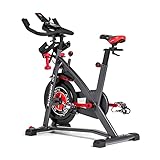

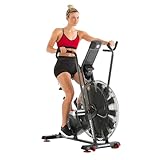
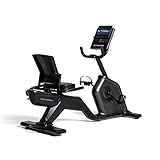
Best Schwinn Exercise Bikes at a Glance
| Model | Bike style | Resistance | Approx. footprint | Weight capacity | Best for |
|---|---|---|---|---|---|
| Schwinn IC4 | Indoor cycling | 100 magnetic levels | 48.7 x 21.2 in. | 330 lb | Structured cycling and app-based training |
| Schwinn 170 | Upright | 25 magnetic levels | 41.3 x 21.4 in. | 300 lb | Budget cardio in a compact footprint |
| Schwinn 230 | Recumbent | 20 magnetic levels | 64 x 27.7 in. | 300 lb | Longer, supported seated workouts |
| Schwinn Airdyne AD7 | Air-resistance fan bike | Progressive fan resistance | 53 x 26.5 in. | 350 lb | Intervals and upper-body involvement |
Dimensions and capacities are manufacturer-listed figures and can vary slightly by production version. Allow additional clearance around every bike for mounting, movement, and transport. In particular, a recumbent bike needs space behind the seat, while an Airdyne needs room for its moving handlebars.
Which Schwinn Bike Is Right for Your Situation?
| Your situation | Best starting point | Why | Trade-off |
|---|---|---|---|
| You want cycling-style training and frequent workouts | IC4 | Heavy flywheel, 100 magnetic resistance levels, and a performance-oriented riding position | Less upright comfort and more setup adjustment |
| You are new to exercise bikes or have a tighter budget | 170 | Compact upright design, preset programs, and a broad but simple resistance range | Less immersive than an indoor cycling bike |
| You prefer back support or low-impact seated exercise | 230 | Large seat, backrest, step-through access, and reclined posture | Longest footprint and slower-feeling geometry |
| You want hard intervals and arm movement | Airdyne AD7 | Air resistance rises as you pedal harder, and the handles add upper-body work | Louder fan and no fixed resistance setting |
| You need the most versatile resistance control | IC4 | Small resistance changes make it easier to pace steady rides or intervals | Usually costs more than the 170 |
Schwinn IC4: Best for Indoor Cycling
The Schwinn IC4 is the strongest choice for riders who want the feel and adjustability of a studio-style cycling bike at home. Its 100 magnetic resistance levels allow small changes in effort without the friction and maintenance associated with a traditional felt brake pad. A belt drive keeps operation comparatively quiet, and the bike includes a weighted flywheel, toe-cage pedals, a tablet holder, and a console that tracks common workout data.
The IC4 is a better fit than an upright bike if you expect to train three or more times per week, follow cycling classes, or alternate long endurance rides with short intervals. Its approximately 330-pound capacity also gives it a substantial user range. The downside is its 48.7-by-21.2-inch base plus the space needed to step around the seat. It also has a forward-leaning posture, which may not suit someone looking for relaxed, fully supported cardio.
App compatibility should be treated as a convenience rather than a guarantee of every feature. The bike can transmit workout data to compatible devices and services, but subscription costs, screen requirements, and app functions can change. You can still use the IC4 without a paid training subscription.
Schwinn 170: Best Compact Upright Value
The Schwinn 170 is an upright exercise bike for people who want programmed workouts and adjustable magnetic resistance without a large studio-bike setup. Its 25 resistance levels are enough for general cardio, steady riding, and moderate intervals. The upright position takes less room than the 230 recumbent, and its approximately 41.3-by-21.4-inch footprint works well in a bedroom, office, or multipurpose workout area.
Compared with the IC4, the 170 feels more like a conventional stationary bike than a road-bike simulator. That is useful if you want to sit relatively upright and reach the console easily, but it is less suitable for riders who care about cycling-specific posture or very fine resistance adjustments. The approximately 300-pound capacity makes it a practical choice for shared household use, provided the seat and handlebar adjustment fit each user.
Schwinn 230: Best Recumbent Design
The Schwinn 230 places the rider in a reclined seat with a backrest and pedals positioned in front of the body. This configuration can feel more stable and comfortable during longer sessions, and the walk-through frame makes mounting simpler than climbing onto a high saddle. Its 20 magnetic resistance levels and built-in programs cover straightforward aerobic workouts.
The main space penalty is substantial: the 230 is approximately 64 inches long and 27.7 inches wide. Measure doorways and the final storage position, not just the open floor area. A recumbent bike also needs clearance behind the seat so the user can enter and exit safely. Choose the 230 for comfort and support, not for a compact footprint or an aggressive cycling position.
Schwinn Airdyne AD7: Best for Full-Body Intervals
The Airdyne AD7 uses a large fan rather than a fixed magnetic resistance scale. The harder you push the pedals and handles, the more air resistance the fan creates. That makes it naturally suited to short intervals: a fast effort produces more resistance, while easing off immediately reduces the load.
The moving handlebars distinguish the AD7 from Schwinn’s seated cycling models. You can push and pull with the arms while pedaling, or use the foot pedals and handles in different proportions. It is approximately 53 inches long, 26.5 inches wide, and rated for a 350-pound user, but the fan creates more noise than a magnetic bike. Leave extra clearance around the handles and fan, and avoid placing it where airflow could disturb loose papers or lightweight objects.
Resistance: Magnetic Versus Air
Magnetic resistance
The IC4, 170, and 230 use magnetic resistance. Magnets change the drag without directly rubbing against the flywheel, so the ride is quiet and resistance changes are predictable. This is generally the better arrangement for apartment living, cadence-based training, and workouts where you want to repeat the same setting.
Air resistance
The Airdyne’s resistance is self-regulating. It rewards forceful bursts but does not provide the same fixed-level feel as a 20- or 100-level magnetic system. If a workout calls for a particular resistance number, the IC4 or 170 is easier to control. If it calls for repeated all-out efforts followed by recovery, the AD7 is more natural.
Fit, Space, and Setup Details That Matter
Use this quick setup sequence before judging a bike:
- Measure the user and the room. Add at least 24 inches of practical access space on the entry side, then check ceiling height if the bike will be used out of the saddle.
- Set saddle height so the knee remains slightly bent when the pedal is at its lowest point. A saddle that is too low can make pedaling feel cramped; one that is too high can cause rocking.
- Adjust the fore-and-aft saddle position so the knee is not forced far ahead of the pedal during the strongest part of the stroke.
- Level the stabilizers before the first workout. A rocking frame increases noise and places unnecessary stress on fasteners.
- Retighten visible bolts after several rides. New frames and transport wheels can settle during early use.
For example, a 30-minute workout four times each week equals about 104 hours of annual use: 0.5 hours x 4 x 52. At that frequency, quiet magnetic resistance and easy adjustment may be worth paying more for than a cheaper bike used only occasionally. Conversely, if the bike will be shared for brief, irregular sessions, the 170 may provide enough capability without paying for features that remain unused.
Ownership, Maintenance, and Common Mistakes
Wipe perspiration from the frame, seat rails, handlebars, and adjustment knobs after each workout. Sweat can corrode metal hardware and degrade upholstery over time. Use a soft damp cloth and follow the care instructions rather than spraying cleaner directly into the console, resistance controls, or bearings.
The parts most likely to need attention are pedals, seat hardware, adjustment knobs, transport wheels, and—on the Airdyne—the fan and handle linkage. Listen for new clicking or side-to-side movement instead of continuing to ride until a minor adjustment becomes a repair. Check the pedal threads and crank area periodically, especially if more than one person uses the bike.
Do not confuse a tablet holder with a built-in display. On app-guided workouts, the tablet, phone, subscription, and wireless connection may be separate from the bike. Also avoid placing a thick exercise mat under a recumbent bike without checking that it does not prevent the leveling feet from contacting the floor securely.
Bottom Line
Choose the Schwinn IC4 for serious indoor cycling and precise resistance control, the Schwinn 170 for compact general-purpose cardio, the Schwinn 230 for a supported recumbent position, and the Airdyne AD7 for loud, demanding full-body intervals. Compare the resistance system and required clearance—not just the console—because those two factors determine whether the bike actually suits your training and your room.