What's inside
As an Amazon Associate I earn from qualifying purchases. This post may contain affiliate links at no extra cost to you.
A compact cordless impact wrench is one of the most useful tools for automotive work, but “compact” does not mean “weak.” The best models fit into wheel wells, underbody spaces, and engine bays while still removing common fasteners without a breaker bar. The right choice depends on the torque you actually need, the battery platform already in your garage, and whether you value minimum size over maximum power.
As an Amazon Associate we earn from qualifying purchases at no extra cost to you.


What “compact” means in an impact wrench
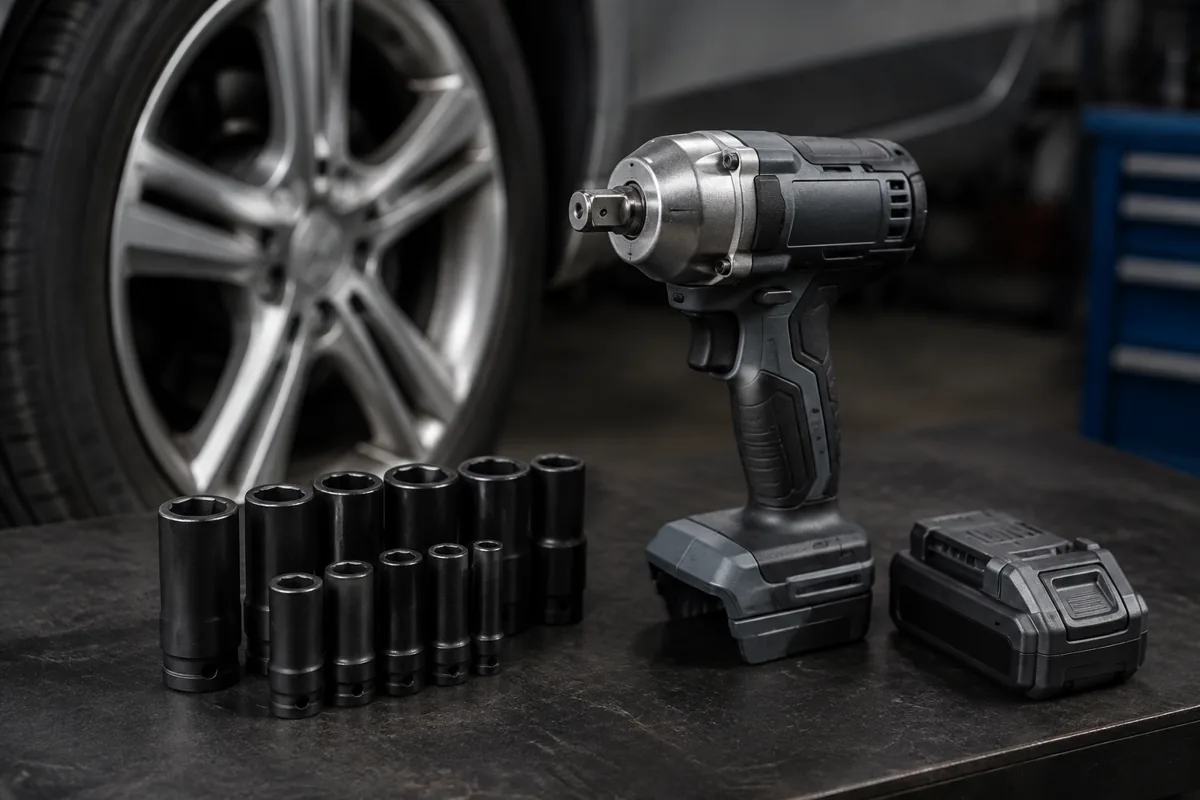
For automotive repairs, compact usually means a short-head impact wrench with a 3/8-inch or 1/2-inch drive and a relatively small battery. A short head matters more than a light weight when you are working around suspension components or between a frame rail and a bolt head. A tool that is 5.5 inches long can fit where a larger mid-torque wrench cannot, even if both claim similar fastening torque.
Most compact models fall into three useful groups:
- 3/8-inch compact models: Best for brake work, engine accessories, small suspension fasteners, and general service. They are usually the smallest.
- 1/2-inch compact models: Better for lug nuts and larger suspension bolts, with more usable torque but a little more bulk.
- Subcompact or low-torque models: Light and easy to control, but often better as a fastener-removal tool than a complete replacement for a larger impact wrench.
How much torque do you need?
Manufacturer torque figures are often measured under ideal test conditions and should not be treated as guaranteed breakaway torque. Rust, thread damage, impact socket size, and battery temperature can make a major difference. A compact wrench rated around 200 to 300 ft-lb of fastening torque is generally suitable for routine automotive work. A stronger compact or mid-torque model in the 400 to 600 ft-lb class gives you more margin for seized suspension bolts and truck lug nuts.
| Automotive task | Useful tool range | Important limitation |
|---|---|---|
| Interior, brackets, and engine accessories | 100–200 ft-lb | Lower settings prevent stripped threads |
| Brake calipers and suspension links | 200–400 ft-lb | Rust may require penetrating oil or a breaker bar |
| Passenger-car lug nuts | 250–500 ft-lb | Always finish tightening with a torque wrench |
| Large truck or heavily corroded fasteners | 400–800+ ft-lb | A compact tool may be too small for the job |
Do not use an impact wrench to set final wheel torque. Use it to run the lug nuts down, then tighten them with a calibrated torque wrench to the vehicle manufacturer’s specification. Over-tightened lugs can distort brake rotors, damage studs, and make roadside removal difficult.
Choose the battery platform before the tool
The battery ecosystem often matters more than a modest difference in torque. If you already own several batteries and a charger from a platform, buying a bare tool is usually the cheapest route. Check the platform’s battery size, though. A compact wrench with a small 2.0Ah or 3.0Ah pack is easier to maneuver than the same tool with a large high-output battery.
Small batteries are fine for occasional brake jobs or a tire rotation. They can become frustrating during repeated suspension work because the tool may shut down under load or lose speed as the pack warms. A 4.0Ah or 5.0Ah battery is a better general-purpose choice, while high-output packs make more sense on stronger 1/2-inch models.
If you are starting from zero, compare the cost of the tool, one battery, and a charger rather than the advertised bare-tool price. A slightly cheaper wrench can become more expensive once you add a battery and charging equipment. Browse compact cordless impact wrench kits to compare complete packages.
3/8-inch versus 1/2-inch drive
A 3/8-inch wrench is the better choice if access and control are your priorities. It works well with shallow sockets and is less tiring during a long repair. The downside is that 3/8-inch impact sockets are not always available in the larger sizes needed for lug nuts, and adapters reduce clearance while adding another potential failure point.
A 1/2-inch compact wrench is more versatile for wheel work. It accepts common impact sockets, handles larger fasteners, and usually has a stronger anvil. If you only plan to buy one automotive impact wrench, a compact 1/2-inch model is often the safer choice. It may be slightly heavier, but that trade-off is worthwhile if you service both cars and light trucks.
For mostly brake and engine work, consider a compact 3/8-inch cordless impact wrench. For tire changes and general chassis repairs, look at a compact 1/2-inch cordless impact wrench.
Features that make a real difference
A variable-speed trigger and several power modes are more useful than a flashy peak-torque number. Low speed helps prevent snapping small bolts and spinning a nut onto damaged threads. A controlled shutoff or reduced-power mode can also help with lug nuts, but it is not a substitute for a torque wrench.
Look for a friction ring if you change sockets frequently, or a pin detent if socket retention matters more than speed. Friction rings are faster but can lose grip when the ring wears. Pin detents hold sockets securely but make changes slower. An LED light, a belt hook, and a battery fuel gauge are helpful, but none should outweigh poor balance or an awkward trigger.
Use only impact-rated sockets. Chrome hand-tool sockets can crack under impact loading and send fragments outward. Keep the tool square to the fastener; a sideways angle wastes torque and can round the fastener head. If the wrench cannot remove a bolt after several seconds of solid contact, stop rather than repeatedly overheating it. Apply penetrating oil, use heat where safe, or switch to a breaker bar.
When the cheaper option is fine
A lower-cost compact wrench is reasonable for occasional tire changes, brake pad replacement, and light maintenance if you already have compatible batteries. You do not need premium speed control for four lug nuts twice a year. The cheaper option becomes a poor value when you use the tool weekly, work on rusty vehicles, or depend on reliable service support and replacement batteries.
Before buying, check the bare-tool weight, head length, warranty terms, charger cost, and the price of a replacement battery. Those details reveal more about long-term ownership than a single maximum-torque figure. For most home mechanics, a compact 1/2-inch wrench on an established battery platform is the best all-around starting point; add a smaller 3/8-inch tool later if tight access becomes the recurring problem.
FAQ
How much torque do you need?
Related guides
- Longest Lasting Lawn Mower Battery: AGM vs Lithium vs Flooded Lifespan and Cost per Season
- Duralast Gold Lawn Mower Battery Review: U1 Fit, CCA and When to Pay for AGM
- Greenworks Pro 80V 21-Inch Mower Review: Runtime Math, Push vs Self-Propelled and Yard Fit
- Bosch High Pressure Washer Gun Replacement: Fittings, Adapters and What Fits Your Model