What's inside
As an Amazon Associate I earn from qualifying purchases. This post may contain affiliate links at no extra cost to you.
Choosing a cordless die grinder
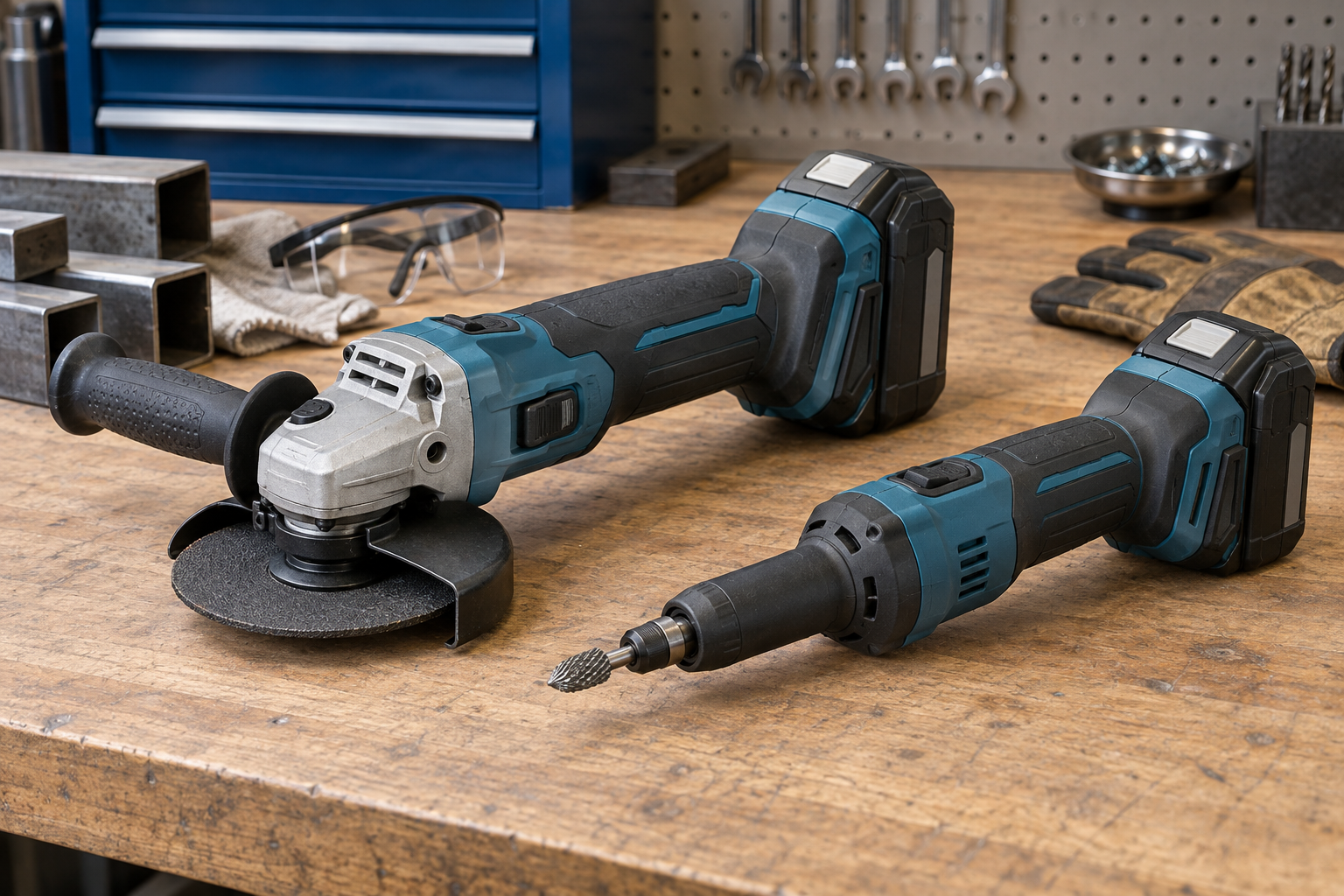
A cordless die grinder is useful when a rotary tool needs more power or reach than a small hobby tool provides. It can clean welds, remove burrs, blend edges and reach inside a casting without dragging an air hose around. It is not a miniature angle grinder: most models use 1/4-inch collets, and their small cutting accessories remove material slowly compared with a larger grinder.
For deburring and detail work, prioritize control, a comfortable grip and a speed range suited to the accessories you use. A high top speed is not automatically better. Small carbide burrs can cut aggressively at high rpm, while some mounted stones and sanding accessories have lower maximum-speed ratings. Check the accessory’s limit before fitting it, and never exceed it.
As an Amazon Associate we earn from qualifying purchases at no extra cost to you.


Straight or right-angle?
A straight grinder is usually the more versatile first purchase. It gives a direct view of the work and works well on exposed welds, edges and holes. Its longer nose can also reach into some recesses, though the body may obstruct access.
A right-angle model is easier to steer around corners and into confined spaces. That can make it a better choice for work inside a frame or on the back side of a joint, but its head takes up room and can hide the contact point. If most of your work is open and accessible, start with a straight grinder. If access is the problem, choose the angled head.
Compare the options by the job, not just by advertised speed:
| Type | Best suited to | Main trade-off |
|---|---|---|
| Straight | General deburring, weld cleanup and visible detail work | Long body may be awkward in tight corners |
| Right-angle | Recesses, inside corners and work near obstructions | Head can block sightlines and limit access |
| Variable-speed model | Mixed accessories and careful work on thin or soft material | More settings do not compensate for a poor grip or an unsuitable accessory |
Speed control and collet fit
Many cordless die grinders run at roughly 20,000 to 30,000 rpm, although the actual range varies by model. Variable speed is valuable for detail work because you can start slowly, check how the tool behaves, and increase speed only when needed. It also helps reduce heat and chatter on delicate edges. A trigger lock or usable speed selector can make long cleanup sessions less tiring.
Match the collet to your accessories. A 1/4-inch collet is common for carbide burrs and many shop accessories; smaller shanks may require a separate collet, if the manufacturer offers one. Do not force a mismatched shank into the collet or grip only the very tip. Seat the shank far enough to hold securely while leaving the accessory’s working end exposed. Before turning the tool on, check that the accessory is straight and that the collet is tight.
Battery platform and runtime
The best grinder is often the one that fits the cordless platform you already own. Staying within a battery ecosystem saves the cost and storage space of another charger and batteries. If you are starting from scratch, compare the tool-and-battery package price, not the bare-tool price alone. A grinder sold without a battery can look inexpensive until you add a charger and a battery large enough for sustained work.
Battery capacity affects runtime and weight. A compact pack is easier to handle for short, precise passes; a larger pack may run longer but make the tool more tiring to hold at arm’s length. Deburring is often intermittent, so a spare charged pack may matter more than the biggest pack available. If you want to compare options within a platform, browse cordless die grinders sold as bare tools and check battery compatibility carefully.
What to buy for your work
For regular metal fabrication, choose a reputable platform with a comfortable variable-speed model and readily available batteries. Look for a secure spindle lock or wrench access, a collet that matches the accessories you actually use, and a switch you can operate without shifting your grip. If you need to remove substantial material, a die grinder may be the wrong tool; a larger grinder or a belt sander will usually work faster.
For occasional deburring, the cheapest suitable tool can be enough. If you already have compatible batteries, a basic cordless model is a reasonable choice for a few sharp edges or light cleanup. Avoid paying extra for a premium platform if the tool will be used only once in a while and the lower-cost option has adequate speed control, a secure collet and acceptable ergonomics. For users without a battery system, compare a cordless die grinder kit with battery and charger against the combined cost of a bare tool and a starter battery.
Accessories matter as much as the grinder. Carbide burrs cut quickly but can grab an edge, especially if the tool is tilted or the workpiece is loose. Mounted stones are useful for controlled grinding but wear down and can load up. Use an accessory rated for the grinder’s speed; a wheel rated below the tool’s maximum can fail at high rpm.
Safe, controlled detail work
Clamp the work securely and support it close to the area being cut. Start the grinder clear of the workpiece, then bring the accessory in with light pressure. For deburring, a few controlled passes are safer and usually leave a cleaner edge than leaning hard on the tool. Heavy pressure can bog the motor, overheat the work, break a small burr or make the accessory catch and pull the grinder off line.
Wear eye protection and suitable hearing protection. Grinding metal throws hot particles, and a small burr can break or shed fragments. Keep loose clothing, hair and gloves away from rotating parts; gloves can snag. Let the tool stop before setting it down, and inspect accessories for cracks, bends or loose shanks. If the grinder vibrates unusually, makes a new rattling sound or heats up quickly, stop and check the accessory, collet and work setup rather than continuing.
For clean results, match the abrasive to the material, keep the tool moving and avoid grinding into a finished surface you intend to preserve. A cordless die grinder is at its best when it gives controlled access to a small area—not when it is used to force a tiny accessory through a large job.
FAQ
Straight or right-angle?
Related guides
- Longest Lasting Lawn Mower Battery: AGM vs Lithium vs Flooded Lifespan and Cost per Season
- Duralast Gold Lawn Mower Battery Review: U1 Fit, CCA and When to Pay for AGM
- Greenworks Pro 80V 21-Inch Mower Review: Runtime Math, Push vs Self-Propelled and Yard Fit
- Bosch High Pressure Washer Gun Replacement: Fittings, Adapters and What Fits Your Model