
Our Top Picks


What's inside
- Top Picks at a Glance
- Quick Comparison of the Cabinet Saws
- 1. SawStop 3 HP Professional Cabinet Saw: Best Overall
- 2. Grizzly G0651: Best Value Cabinet Saw
- 3. Delta UNISAW 36-L352: Best Premium Classic
- 4. Jet Deluxe XACTA JTAS-10DX: Best 3 HP With Cast-Iron Wings
- 5. Powermatic PM1000: Best Bench Saw Alternative
- 6. Laguna F2 Fusion: Best Hybrid for 120V Shops
- 7. Delta 36-6030 Cruzer Crossover: Best Step Up From a Jobsite Saw
- Also Consider
- How We Chose
- Buying Guide
- Common Mistakes When Buying a Cabinet Saw
- More Picks Worth Considering
- Frequently Asked Questions
- Which One Should You Buy?
- Sources
As an Amazon Associate I earn from qualifying purchases. This post may contain affiliate links at no extra cost to you.
If you want a cabinet saw for a home woodworking shop and your panel can supply 230 volts, the SawStop 3 HP Professional Cabinet Saw is the safest all-round pick on features, and the Grizzly G0651 is the one to buy when you want the same cast-iron, 3 HP, 10-inch layout for much less money. If you are stuck on a 120-volt circuit, the Laguna F2 Fusion and the Jet ProShop II are the realistic route to cabinet-style cutting without rewiring the garage. This guide covers the best cabinet saws for woodworking at home, how 3 HP compares with 5 HP, when 110 volts is enough, what to look for in a fence, and how dust collection changes the cost of ownership.
A note on how this guide was built: it is research-based. We did not personally use these saws. Specifications come from the product listings and the makers’ published documentation, and anything we could not confirm is marked “not listed” so you know to check the maker’s spec sheet before you order.
Top Picks at a Glance
- Best Overall: SawStop 10 in. 3 HP Professional Cabinet Saw with 36 in. fence
- Best Value Cabinet Saw: Grizzly G0651 10″ 3 HP 220V Heavy Duty Cabinet Table Saw
- Best Premium Classic: Delta 3 HP 10 in. UNISAW with 52 in. Biesemeyer fence system (36-L352)
- Best for Long Rip Capacity on 3 HP: Jet Deluxe XACTA JTAS-10DX (30 in. rip, listed 230V)
- Best Hybrid for 120V Shops: Laguna F2 Fusion 10-inch (36 in. rip, 1.75 HP, 110V)
- Best Budget Step Up from a Jobsite Saw: Delta 36-6030 Cruzer Crossover (induction motor)
- Best Bench Saw Alternative: Powermatic PM1000 10-inch (1-3/4 HP, 115/230V)
Quick Comparison of the Cabinet Saws
| Saw | Best for | Key specs (as listed) | Watch for | Price tier |
|---|---|---|---|---|
| SawStop 3 HP Professional Cabinet Saw | Shops that put safety features first | 10 in. blade, 3 HP, 36 in. fence | Brake cartridges are consumables; 230V needed | Premium |
| Grizzly G0651 | Getting a true 3 HP cabinet saw for less | 10 in. blade, 3 HP, 220V | Fence and extras vary; check what ships in the box | Mid-range to Premium |
| Delta UNISAW 36-L352 | Heirloom-style, upgrade-friendly saw | 10 in. blade, 3 HP, 52 in. Biesemeyer fence | Heavy; voltage not listed in the title | Premium |
| Jet XACTA JTAS-10DX | Cabinet build with cast-iron wings | 10 in. blade, 3 HP, 230V single phase, 30 in. rip | 30 in. rip limits sheet-good work without a bigger fence | Premium |
| Powermatic PM1000 | Quiet, smooth bench-style saw | 10 in. blade, 1-3/4 HP, 115/230V, 30 in. rip | Not a full cabinet saw; motor is smaller | Premium |
| Laguna F2 Fusion | Hybrid performance on household power | 10 in. blade, 1.75 HP, 110V, 36 in. rip | Smaller motor than a 3 HP saw under heavy ripping | Mid-range to Premium |
| Delta 36-6030 Cruzer | Stepping up from a jobsite saw | Induction motor, quiet, narrow rip cuts | Other specs not listed; confirm rip and HP | Mid-range |
1. SawStop 3 HP Professional Cabinet Saw: Best Overall
- 10-inch blade, 3 HP motor
- 36-inch fence package, per the listing
- Cabinet-style enclosed base for dust collection
- Maker-listed flesh-detection brake system built in
- 230V supply needed for the 3 HP version
Best for: hobbyists and small professionals who run the saw often, share the shop with others, or simply want the most complete package. Skip if: you cannot bring a 230V circuit to the shop, or you only make a handful of cuts a month.
The SawStop earns the top spot because it combines the properties that matter in a primary table saw: a heavy cast-iron top, a trunnion that stays aligned, a proper enclosed cabinet, and a fence that locks parallel without constant adjustment. The 3 HP motor is the standard size for serious ripping of thick hardwood. With a sharp 24-tooth ripping blade, a 3 HP saw has the headroom to push through 8/4 stock without bogging, which is the point where smaller motors begin to burn the cut.
The brake system is the feature most people ask about. The maker documents a flesh-detection system that stops the blade; we will not make claims beyond what the maker publishes, and no guard or brake replaces good technique. Read the maker’s owner manual for how the cartridge works, which materials can trigger it (damp or conductive lumber can), and what a trigger costs you in cartridge and blade replacement. That ownership cost is real and should be in your budget.
In practice the saw rewards buyers who also buy the right blades and an overarm or under-table dust solution. The enclosed cabinet and 4-inch dust port work with a basic dust collector, but a saw this size still throws fine dust that a shop vacuum alone will not keep up with.
Pros: complete package with fence, solid cast-iron construction, strong brand support, enclosed cabinet. Cons: premium price, brake cartridges and zero-clearance inserts cost extra over time, requires 230V for 3 HP.
2. Grizzly G0651: Best Value Cabinet Saw
- 10-inch blade, 3 HP motor, 220V
- Heavy-duty cabinet construction, per the listing title
- Cast-iron table (extension and fence details: not listed in the title)
- Typically arrives as a large, heavy freight shipment
Best for: woodworkers who want a real 3 HP cabinet saw and are willing to spend an afternoon on assembly and alignment. Skip if: you want a safety brake or a 120V option.
The G0651 is a straightforward cabinet saw. It does not chase gadgets, which is why it works as a value pick: you are paying for iron, a 3 HP motor and a cabinet rather than for features you may never use. Because it is a 220V machine, the electrical plan matters. A 3 HP single-phase motor commonly draws in the mid-teens of amps at 230V, so plan a dedicated circuit sized by an electrician against the motor nameplate rather than guessing.
The trade-off in this price class is setup time. Expect to check blade-to-miter-slot alignment, fence parallelism and trunnion squareness yourself with a dial indicator, and expect to budget for a better blade than the one that ships. Once tuned, a 3 HP cast-iron saw cuts like saws costing considerably more. The G0651 is also a good platform for upgrades such as a better fence or a zero-clearance insert.
Pros: big power for the price, cast-iron mass, simple mechanical layout. Cons: alignment work out of the box, heavy to move, 220V only, no brake system.
3. Delta UNISAW 36-L352: Best Premium Classic
- 10-inch blade, 3 HP motor
- 52-inch Biesemeyer fence system, per the listing
- Long rip capacity for sheet goods
- Voltage and phase: not listed in the title, check before ordering
Best for: shops that cut full sheets of plywood regularly and want a name with decades of parts and accessory support. Skip if: you have limited floor space; a 52-inch rip needs room on the right side of the blade.
The Unisaw name is shorthand for a cabinet saw in American woodworking. The listed 52-inch Biesemeyer fence is the main reason to choose this version: it supports cutting a 4×8 sheet in half lengthwise with the saw’s table and extension supporting the panel. For cabinet makers, that capacity is the difference between wrestling plywood and making repeatable cuts.
The ownership story is about longevity. A saw like this is typically bought once and kept for decades, and the common wear items are belts, bearings, the throat plate and the blade. Confirm the electrical specification and whether the fence rail and extension table are included in the exact package you are buying, since bundles vary between sellers.
Pros: large rip capacity, classic layout, strong accessory ecosystem. Cons: premium price, big footprint, electrical details not shown in the listing title.
4. Jet Deluxe XACTA JTAS-10DX: Best 3 HP With Cast-Iron Wings
- 10-inch cabinet saw, 3 HP
- 230V, single phase, per the listing
- 30-inch rip capacity, cast-iron wings
- XACTA fence system named in the model title
Best for: woodworkers building furniture who value a smooth fence and cast-iron wings over maximum rip capacity. Skip if: you regularly break down full sheets and need 50 inches or more.
A 30-inch rip is plenty for solid-wood furniture, door panels and cabinet face frames. It limits sheet work, but a track saw or a panel-cutting jig can handle full-size plywood before it reaches the table saw. The cast-iron wings add flatness and mass compared with stamped steel, which helps with vibration and with keeping long boards supported.
Pros: 3 HP motor, cast-iron wings, rip capacity suited to furniture work. Cons: 30-inch rip is limited for sheet goods, 230V required, premium price.
5. Powermatic PM1000: Best Bench Saw Alternative
- 10-inch blade, 1-3/4 HP
- 115/230V selectable, per the listing
- 30-inch rip capacity
Best for: small shops that want a refined, quiet saw and may run it on either voltage. Skip if: you need true cabinet-saw motor size for daily heavy ripping.
The PM1000 sits between a contractor saw and a full cabinet saw. The 1-3/4 HP motor is common in this class and works well with a sharp, thin-kerf rip blade, but it has less reserve than 3 HP when you rip thick, wet or resinous lumber. The dual-voltage feature is useful: wire the motor for 115V now and switch to 230V later if you rewire the shop.
Pros: dual voltage, smooth operation, strong brand reputation. Cons: smaller motor, premium price for the horsepower, 30-inch rip.
6. Laguna F2 Fusion: Best Hybrid for 120V Shops
- 10-inch hybrid table saw
- 1.75 HP, 110V single phase
- 36-inch rip capacity
Best for: garage shops where a 230V circuit is not practical. Skip if: you plan to resaw or rip thick hardwood all day.
Hybrid saws borrow cabinet-style construction, such as an enclosed base and trunnions mounted to the cabinet, while using a smaller motor that runs on household current. For the woodworking that involves breaking down boards, cutting joinery and trimming panels, a 1.75 HP motor on a good blade is enough. A 120V saw of this size generally wants a dedicated 20-amp circuit; check the maker’s wiring guidance so the breaker does not trip mid-cut.
Pros: runs on 110V, 36-inch rip capacity, cabinet-style stability. Cons: less power headroom than 3 HP, still a premium purchase.
7. Delta 36-6030 Cruzer Crossover: Best Step Up From a Jobsite Saw
- Induction motor, described as quiet
- Designed for precise, narrow rip cuts, per the listing
- Horsepower, rip capacity and weight: not listed in the title
Best for: hobbyists leaving a jobsite saw behind who want an induction motor without paying for a full cabinet saw. Skip if: you need the long-term mass and capacity of a 3 HP cabinet saw.
The key upgrade over a universal-motor jobsite saw is the motor type. Induction motors run far quieter, because they have no brushes and they hold speed under load. Since the listing does not state horsepower or rip capacity, confirm those details in the maker’s spec sheet; do not assume cabinet-saw performance.
Pros: induction motor, quieter running, more affordable entry. Cons: specs not fully listed, smaller than a true cabinet saw.
Also Consider
- Jet ProShop II (JPS-10, 52-inch or 30-inch rip): 1-3/4 HP, 120V, listed with steel wings or cast-iron wings. A strong hybrid for 120V garages that want a long fence.
- DEWALT DWE7491RS 10-inch jobsite saw: 15 amp, 32-1/2 inch rip, rolling stand. Not a cabinet saw, but the benchmark for a movable saw if the shop is also a driveway.
- Bosch GTS15-10 jobsite saw: 15 amp, 32-1/8 inch rip, wheeled stand. A good bridge saw while you save for a cabinet saw.
- Zero-clearance inserts: make-or-break accessories that reduce tear-out on thin stock; always check that the insert is made for your exact saw model.
How We Chose
This guide is research-based. We did not personally use these saws. We started with the cabinet and hybrid saws that appear in the product store, then compared the specifications in the listings against the makers’ published documentation and independent reviews from established woodworking publications such as Fine Woodworking, Popular Woodworking and Wood Magazine. Models were included only if they are currently sold and could be named exactly.
We weighed five factors: motor size and voltage, rip capacity and fence design, build mass and trunnion type, dust collection design, and ownership cost (blades, inserts, brake cartridges where applicable). We deliberately left out pricing because it changes often; the tier words in the comparison table are relative, not quotes. We also did not find 5 HP single-phase saws in the store, so the 3 HP versus 5 HP discussion below is general guidance rather than product comparison.
Buying Guide
3 HP vs 5 HP: how much motor do you really need?
For almost every home shop, 3 HP is the sweet spot. A 3 HP single-phase motor handles continuous ripping of 8/4 hard maple or white oak when paired with a sharp blade, and it runs on a 230V single-phase circuit that most homes can provide. A 5 HP saw is aimed at production shops that rip thick stock all day; it usually draws far more current, often needs a larger breaker and heavier wiring, and may be offered with three-phase motors that homes do not have. If your ripping is mostly 4/4 to 6/4 lumber and sheet goods, going beyond 3 HP rarely pays off. A sharp, thin-kerf blade with the correct tooth count improves cutting more than extra horsepower.
110V vs 220V: wiring and cost
A 1.75 HP saw on 110V works on a dedicated 20-amp circuit and avoids electrical work in many garages. A 3 HP saw on 220V draws roughly half the amps per leg, runs cooler and is less likely to trip a breaker, but requires a 230V circuit with the right receptacle, wire gauge and breaker. Have a licensed electrician size the circuit against the saw’s nameplate. If the saw is dual-voltage, like the Powermatic PM1000, wire it for the voltage you have now; switching later is usually a motor-lead change plus a new plug.
Fence and rip capacity
The fence is what you use on every cut. Look for a fence that locks square to the blade at both ends, slides smoothly and does not flex when you lean on it. Rip capacity to the right of the blade matters most when you break down full plywood sheets: you need about 24 inches for half a sheet and about 48 inches for a full 4-foot width. A 30-inch rip handles solid-wood furniture and face frames; 36 inches is a comfortable middle; 50 inches and up is for sheet goods. If your fence is shorter than you need, a track saw can handle sheet breakdown instead.
Dust collection
Cabinet saws collect much of their dust inside the enclosed base, but only if you give them airflow. A 4-inch dust port connected to a collector moving about 350 to 400 CFM works for basic collection, while higher airflow helps with a blade guard shroud on top. Fine dust is a health issue, so pair collection with a respirator when you are sanding or cutting engineered panels. Check that the saw has a way to connect an overarm guard dust port; some do not.
Safety features and ownership costs
Every table saw is capable of serious injury, regardless of brand. A riving knife, blade guard, push sticks and a clear stance are baseline. Some saws add flesh-detection brakes; they may add replacement costs after a trigger and require compatible blades. Whatever you choose, follow the maker’s manual and consider additional training. Budget for a quality blade, zero-clearance inserts and a dial indicator for setup.
Common Mistakes When Buying a Cabinet Saw
- Buying a 3 HP saw before confirming the shop has 230V.
- Ignoring the delivery plan: these saws weigh several hundred pounds and arrive by freight. Plan a lift gate, a pallet jack and a path to the shop.
- Skipping the setup checks. Even good saws need alignment.
- Choosing rip capacity for sheet goods you do not cut. Match the fence to your work.
- Forgetting blade costs. A great saw with a cheap blade cuts poorly.
More Picks Worth Considering
If you are narrowing down a cabinet saw, these models from the guide are worth comparing side by side on motor, fence and power requirements.
Sawstop 10 In. 3 HP Professional Cabinet Saw With 36 In. Fence
As an Amazon Associate we earn from qualifying purchases at no extra cost to you.

The listing gives a 10 inch blade, a 3 HP motor and a 36 inch fence. It is the pick for shops that put built-in safety features first. Voltage, weight and brake cartridge details are not listed in the title, so confirm them with the maker before you plan your circuit.
Grizzly Industrial G0651 10 Inch 3 HP Cabinet Table Saw

A heavy duty cabinet saw listed with a 10 inch blade, 3 HP motor and 220V power. It follows the classic cabinet layout and is the value-minded alternative to the premium brands. Fence type and rip capacity are not listed, so check the spec sheet before ordering.
Delta 3 HP 10 In. UNISAW With 52 In. Biesemeyer Fence System

The Unisaw listing pairs a 3 HP motor and 10 inch blade with a 52 inch Biesemeyer fence system, model 36-L352. The long fence is useful for ripping sheet goods. Voltage and weight are not listed, so confirm them with the maker.
JET Deluxe XACTA 10 Inch Cabinet Table Saw JTAS-10DX
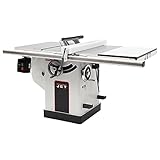
Listed with a 3 HP, 230V single-phase motor, a 30 inch rip, cast iron wings and a 3 inch cut depth. The listing gives 14.5 amps and a 20 amp circuit, with a 5-year warranty. Check your panel before ordering, and note that dust port size is not listed.
Laguna F2 Fusion 10 Inch Table Saw

A 10 inch saw with a 36 inch rip, 1.75 HP motor and 110V single-phase power. It is the one to consider if your shop cannot supply 230 volts. Weight, fence details and dust port size are not listed.
Powermatic 10 Inch Table Saw PM1000

This model is listed with a 30 inch rip and a 1-3/4 HP motor that runs on 115 or 230 volts, single phase. The dual-voltage motor gives flexibility if you may move the saw later. Fence brand and blade guard details are not listed.
Frequently Asked Questions
What is the difference between a cabinet saw and a hybrid saw?
A cabinet saw has an enclosed base with trunnions mounted to the cabinet and usually a 3 HP or larger motor on 230V, while a hybrid borrows the cabinet look but uses a smaller motor, often on 120V, and a lighter base. The cabinet saw is heavier and has more power reserve; the hybrid is easier to wire and move.
Are the best cabinet saws for woodworking worth the price over a jobsite saw?
If you build furniture or cabinets weekly, yes, because mass, a better fence and an induction motor improve cut quality and repeatability. If you make occasional cuts, a good jobsite saw such as the DEWALT DWE7491RS may be enough.
Can I run a 3 HP cabinet saw in a garage?
Yes, if you have or can add a 230V circuit sized for the motor. Have a licensed electrician check the panel, wire gauge and breaker rating against the saw’s nameplate.
What are the best bench saws for a small shop?
Among the models covered here, the Powermatic PM1000 and the Jet ProShop II are bench-style saws with 1-3/4 HP motors and dual-voltage or 120V options, which makes them practical for small shops. Check the footprint, since the fence rails extend beyond the table.
Do I need a cabinet saw with a 52-inch fence?
Only if you cut full plywood sheets on the saw. For furniture, 30 to 36 inches of rip capacity is plenty, and many people pair a smaller saw with a track saw for sheet goods.
How should I maintain a cabinet saw?
Keep the top waxed or protected from rust, vacuum the cabinet and trunnions regularly, check belt condition, verify blade alignment to the miter slot each season, and replace the throat plate when it wears. Follow the maker’s lubrication guidance for gears and trunnions.
Is a flesh-detection brake necessary?
It is not required, and it does not replace good practice. It is a feature some buyers value, mostly in shared shops. Compare the cost of cartridges and compatible blades with your risk tolerance.
Which One Should You Buy?
Pick the SawStop 3 HP if you want the most complete package and have 230V. Pick the Grizzly G0651 if you want 3 HP cast-iron capability at a lower cost and will do the setup work. Choose the Delta Unisaw 36-L352 when sheet goods are the priority. Choose the Jet XACTA for furniture work with a smooth fence. Go with the Laguna F2 Fusion or the Powermatic PM1000 when 120V power or a dual-voltage motor matters more than raw horsepower. If you are not ready to commit, the Delta Cruzer and the jobsite saws listed above keep you cutting while you plan the electrical work.
Sources
- SawStop owner documentation and product pages
- Grizzly Industrial product pages and manuals
- Delta Woodworking product pages
- Jet and Powermatic product pages (WMH Tool Group)
- Laguna Tools product pages
- Fine Woodworking and Popular Woodworking table saw coverage
Last updated: October 2026
Related guides
More from Amazon
Programs that pair well with the guide above. Offers and eligibility are set by Amazon and may change.
A free business account with business pricing and bulk-buying tools for work, shop or home office.
Create a business accountFree shipping on eligible items, Prime Video and more. Eligible new members can start with a free trial.
Start a Prime free trialAudiobooks and podcasts to listen to on the go. Eligible new members can start with a free trial.
Try Audible freeAd-free music streaming. Eligible new subscribers can start with a free trial.
Try Music Unlimited freeAs an Amazon Associate we earn from qualifying purchases.

Write Your Review
No reviews yet. Be the first to share your experience!