
What's inside
- Top Picks at a Glance
- Comparison Table
- 1. IRWIN 15-Inch Coarse Cut Hand Saw: Best Overall
- 2. CRAFTSMAN 20-Inch Fine Finish Hand Saw: Best for Fine Cuts
- 3. JORGENSEN 15-Inch Hand Saw, 8 TPI: Best for Fast Rough Cuts
- 4. HAUTMEC 14 Inch Hand Saw: Best Value
- 5. REXBETI 11-Inch Folding Saw: Best Folding Saw
- 6. Lenox HT50 High-Tension Hacksaw: Best Premium Hacksaw
- 7. WORKPRO 12-Inch Hacksaw: Best Hacksaw Kit
- Also Consider
- Handsaws for Small Areas
- Match the Saw to the Job
- How We Chose
- Buying Guide
- Common Mistakes
- Frequently Asked Questions
- Which One Should You Buy?
- Sources
As an Amazon Associate I earn from qualifying purchases. This post may contain affiliate links at no extra cost to you.
The best hand saw for cutting wood in a typical home shop is a 15 to 20 inch panel saw with about 8 to 11 teeth per inch, and the IRWIN 15-Inch Coarse Cut hand saw is the easiest place to start. If you also need something for small jobs, a 12 inch high-tension hacksaw such as the Lenox HT50 handles metal, plastic pipe and the odd piece of trim. This guide sorts the best hand saws for cutting wood into panel saws, folding saws and hacksaws, explains tooth count in plain terms, and shows which handheld saws suit small areas and tight spots.
This guide is research-based. We compared listing details, manufacturer information and independent buying guides, and we did not personally use these products. Where the listing does not state a spec, we write “not listed”.
As an Amazon Associate we earn from qualifying purchases at no extra cost to you.


Top Picks at a Glance
- Best Overall: IRWIN 15-Inch Coarse Cut Hand Saw (ProTouch handle), a dependable general-purpose wood saw.
- Best for Fine Cuts: CRAFTSMAN 20-Inch Fine Finish Hand Saw, a longer blade with finer teeth.
- Best Value: HAUTMEC 14 Inch Hand Saw, 11 TPI with triple-ground teeth.
- Best for Fast Rough Cuts: JORGENSEN 15-Inch Hand Saw, 8 TPI coarse blade.
- Best Folding Saw: REXBETI 11-Inch Folding Saw with an SK5 blade and 7 TPI teeth.
- Best Premium Hacksaw: Lenox HT50 12 inch high-tension hacksaw with a bi-metal blade.
- Best Hacksaw Kit: WORKPRO 12-inch Hacksaw with two extra bi-metal blades and an adjustable 45/90 degree blade angle.
Comparison Table
| Product | Best for | Key specs | Watch for | Price tier |
|---|---|---|---|---|
| IRWIN 15″ Coarse Cut | General wood cutting | 15 inch blade; coarse cut; ProTouch handle | TPI figure not in the listing title | Budget |
| CRAFTSMAN 20″ Fine Finish | Cleaner crosscuts | 20 inch blade; fine finish | TPI not listed in the title | Budget |
| JORGENSEN 15″ | Fast, rough cuts | 8 TPI coarse; black-coated blade; aluminum handle | Rougher edge | Budget |
| HAUTMEC 14″ | Small crosscuts, trim | 11 TPI; triple-ground teeth | Shorter blade | Budget |
| REXBETI 11″ Folding | Pruning, camping, field cuts | SK5 steel; 7 TPI staggered teeth | Not for fine joinery | Budget |
| Lenox HT50 Hacksaw | Metal, pipe, bolts | 12 inch; high tension frame; bi-metal blade | Not a wood saw | Mid-range |
| WORKPRO 12″ Hacksaw | All-round hacksaw work | 2 extra bi-metal blades; adjustable 45/90 angle | Blade tension depends on setup | Budget |
1. IRWIN 15-Inch Coarse Cut Hand Saw: Best Overall
- 15 inch hand saw (model 2011201)
- Coarse cut tooth pattern
- ProTouch handle
- TPI figure: not listed in the title
Best for: framing offcuts, 2x4s, plywood and general garage work. Skip if: you want a very smooth finish straight off the saw.
A 15 inch coarse saw is the classic starter hand saw because it is short enough to control and long enough for a full stroke through lumber. Coarse teeth remove material quickly and clear sawdust well, which makes them forgiving when you are learning to follow a line. They leave a rougher edge than fine-tooth saws, so use this one for carpentry rather than furniture faces.
The handle matters on a hand saw more than people expect, because grip fatigue is what makes cuts wander. The ProTouch handle on this model is shaped for a firm one-handed grip with the index finger extended along the side, which helps steer the blade. Keep the saw at roughly 45 degrees to the work, start with a few short pulls to set the kerf, and let the weight of the saw do the cutting.
Pros: well-known maker; practical length; coarse teeth cut quickly; handle designed for control. Cons: rougher finish; teeth are hardened and cannot be easily resharpened; TPI not stated in the title.
2. CRAFTSMAN 20-Inch Fine Finish Hand Saw: Best for Fine Cuts
- 20 inch hand saw (CMHT20881)
- Fine finish tooth pattern
- Longer blade for longer, steadier strokes
- TPI: not listed in the title
Best for: trim, shelving and crosscuts where a cleaner edge saves sanding. Skip if: you mostly cut thick framing lumber and want speed.
Longer blades make a smoother stroke because you use more of the blade on each pass. A 20 inch saw is a conventional panel size and works for most boards you would cut in a house. Fine finish teeth are designed to leave a cleaner cut, so this is the saw to reach for when the edge will show. Expect it to be slower than a coarse saw through the same piece of wood.
Because the listing does not state tooth count, treat the “fine finish” label as the guide: more teeth per inch than a coarse saw, cut speed traded for smoothness. If you need an exact figure for a specific job, check the product page before ordering.
Pros: long blade; clean finish; recognizable brand. Cons: slower in thick stock; TPI not stated; more awkward to use in tight spaces.
3. JORGENSEN 15-Inch Hand Saw, 8 TPI: Best for Fast Rough Cuts
- 15 inch blade with 8 TPI coarse teeth
- Black-coated blade
- Ergonomic non-slip aluminum handle
- Also sold in a 20 inch version (the listing for the 20 inch model states 11 TPI)
Best for: cutting lumber to rough length, ripping along the grain, and outdoor carpentry. Skip if: you need a fine surface on the cut.
Eight teeth per inch is the typical coarse range for hand saws. Coarse teeth have deeper gullets, so they clear chips from the cut and keep working even in damp or green wood. The coated blade reduces friction, which helps the saw glide, and the aluminum handle is light enough to carry in a tool bag.
This is a good second saw for a shop that already has a fine-tooth saw. Use it for breaking down boards, cutting posts to length and rough shaping, then switch to a finer saw to clean up edges.
Pros: fast cutting; coated blade; light handle. Cons: rough edge; not for fine joinery; teeth cannot be sharpened easily.
4. HAUTMEC 14 Inch Hand Saw: Best Value
- 14 inch blade, 11 TPI
- Triple-ground teeth, described as small crosscut teeth
- Soft-grip handle
- Suitable for wood and other light materials according to the listing
Best for: DIY trim, craft work and small boards. Skip if: you need a long stroke for wide boards.
At 11 TPI this is a fine-cut general saw. Triple-ground teeth are shaped to cut cleanly on the push stroke, so the saw leaves a neater edge than a coarse model. The shorter blade makes it easy to carry and control, and the lower cost makes it an easy backup saw.
The trade-off is reach. A 14 inch blade limits stroke length, so cuts through wide boards take more strokes. For small projects, planters, shelves and trim, it is a very practical size.
Pros: fine tooth count; light; low cost. Cons: short stroke; light-duty construction; not for heavy lumber.
5. REXBETI 11-Inch Folding Saw: Best Folding Saw
- 11 inch folding saw with an SK5 steel blade
- 7 TPI staggered teeth
- Locking folding design
- Marketed for wood, pruning and camping use
Best for: small branches, firewood and field cuts. Skip if: you want clean cuts in furniture-grade stock.
A folding saw earns its place when you need something compact and safe to carry. The blade folds into the handle, so it fits in a pack, a truck door or a drawer. Staggered, coarse teeth are built for green wood and branches, where fast chip removal matters more than a smooth finish.
For woodworking at a bench, a folding saw is a poor substitute for a panel saw, because the blade is thicker and the teeth are coarser. But for yard work, camp tasks and quick cuts away from the shop, it earns its keep. Always lock the blade before cutting, keep fingers behind the handle, and fold the saw away when you are done.
Pros: compact; fast on green wood; locking handle. Cons: coarse finish; not for joinery; teeth are hard to sharpen.
6. Lenox HT50 High-Tension Hacksaw: Best Premium Hacksaw
- 12 inch high-tension hacksaw frame
- Bi-metal blade (per the listing)
- Aluminum frame in blue
- Designed for metal, pipe and bolts, but also useful on plastic and dowels
Best for: cutting steel bolts, electrical conduit and PVC pipe. Skip if: you are only cutting wood.
Hacksaws are not wood saws, but a shop needs one, and many readers who search for hand saws want one for small jobs. A high-tension frame holds the blade under more tension than a basic frame, which keeps the cut straight and reduces blade breakage. Bi-metal blades combine a flexible back with hardened teeth that stay sharp in steel.
Fine hacksaw blades are typically 18 to 32 TPI, and the right choice depends on the material: coarser teeth for thick sections and softer metals, finer teeth for thin tubing. For wood, a hacksaw is only worth using on small dowels, pipe and nails embedded in lumber, where a wood saw would be damaged.
Pros: strong frame; good blade tension; durable. Cons: higher cost than a basic hacksaw; not a wood saw; blades are consumables.
7. WORKPRO 12-Inch Hacksaw: Best Hacksaw Kit
- 12 inch hacksaw with two extra bi-metal blades
- Adjustable frame for 45 degree and 90 degree cuts
- Heavy-duty construction according to the listing
- Marked for metal, wood, PVC pipe and similar
Best for: DIYers who want one hacksaw that covers metal, plastic and the occasional piece of wood. Skip if: you want the stiffest possible frame.
Having spare blades in the box matters more than people realise. A hacksaw blade wears quickly when it hits hard metal, and a dull blade slows every cut. The adjustable 45/90 degree angle is a practical convenience for cutting in tight spots where you cannot turn the saw.
Keep the blade tight, cut with the teeth pointing away from the handle, and use light, steady strokes. Support the work so it does not vibrate, which is the main reason blades snap.
Pros: includes spares; angle adjustment; easy to use. Cons: less rigid than premium frames; not a dedicated wood saw; blade tension takes care.
Also Consider
Bahco Laplander Folding Saw
A 7-1/2 inch folding saw with an ergo grip, marketed for trail maintenance, wood processing and camping. A solid choice if you want a well-known folding design.
Bahco 301 Coping Saw
A 6-1/2 inch coping saw with a beech handle and nickel-plated frame. Use it for curves and fine detail work where a straight saw cannot turn.
Stanley 10-Inch Mini-Hack
A light-duty compact hacksaw for metal and plastic. A good fit for small areas and tight spaces where a full-size frame will not reach.
Kings County Tools 30-Inch Western Log Saw
A 4 TPI Western log saw for lumber and timber. A big, coarse saw for timber work, not for a household tool drawer.
Handsaws for Small Areas
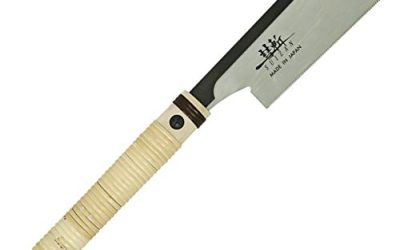
If your reason for searching is a cramped job, such as cutting inside a cabinet, trimming a stud in a wall cavity, or cutting trim in a corner, a full-length panel saw is the wrong tool. Small handheld saws fit better. A mini hacksaw takes a short blade and a compact handle, which makes it easy to cut pipe or bolts close to a wall. A coping saw has a thin blade stretched across a frame, which lets you turn through curves and cut inside a profile. A folding saw tucks into a pocket and can be locked at different angles. A pull-style Japanese saw also works in small areas because its thin blade can start a cut with little room above the work.
When you choose a small saw, think about the angle your hand will take. If you cannot hold a standard handle in the space, a pistol-grip or a compact folding handle may be easier. Use a blade guard or sheath when carrying a small saw in your pocket or tool bag, and store it away from children.
Match the Saw to the Job
| Job | Suggested saw | Suggested TPI range | Why |
|---|---|---|---|
| Cutting 2x4s and framing offcuts | IRWIN 15″ or JORGENSEN 15″ | About 8 | Deep gullets clear chips and cut fast |
| Shelves, trim and visible edges | CRAFTSMAN 20″ or HAUTMEC 14″ | About 10 to 12 | Finer teeth leave a cleaner edge |
| Pruning, firewood, camping | REXBETI 11″ folding | About 7 | Staggered coarse teeth, folds away |
| Steel bolts, conduit, threaded rod | Lenox HT50 or WORKPRO 12″ | About 18 to 24 | Bi-metal blade under tension |
| Tight spaces and curves | Mini hacksaw or coping saw | Varies by blade | Short frame, thin blade |
A worked example shows how to think about it. Say you are building a simple garden planter from 1×6 boards. You need about ten crosscuts, each through a board roughly three quarters of an inch thick. With an 8 TPI saw, each cut is quick but the edges look fuzzy and need sanding. With an 11 TPI saw, each cut takes a few more strokes but the edge is cleaner and needs little work. For a visible project, the finer saw saves time overall because you skip most of the sanding. For a fence post or rough deck framing, the coarse saw wins because nobody will see the cut.
The same logic applies to tooth shape. Crosscut teeth are shaped like tiny knives and sever fibres across the grain, while rip teeth work like small chisels along the grain. Most general-purpose hand saws use a crosscut-style tooth, which is why they work acceptably in both directions even though a dedicated rip saw will be faster along the grain. If your work involves a lot of long cuts along the board, a coarse 5 to 8 TPI saw makes sense, and if you mostly cut across boards, stay with 10 to 12 TPI.
Finally, think about ownership costs. A hardpoint saw has no sharpening cost but is replaced when it dulls. A hacksaw frame lasts for years, but blades wear out and are cheap to replace, so buy a pack of spares in the tooth count you use most. A folding saw’s locking mechanism is its weak point, so inspect it before every use and stop if the blade wobbles.
How We Chose
This guide is research-based. We searched the store catalogue for hand saws and hacksaws, compared the details in each listing (blade length, tooth count, materials, handle design), and read independent hand saw and TPI guides to understand typical ranges. We did not personally use these products.
We limited the main picks to two per brand, ensured a mix of panel saws, a folding saw and hacksaws, and avoided quoting prices, using tier words instead. We also left out models where we could not tell what the saw was designed to cut. Where tooth count was not listed, we said so, because a missing figure is more helpful to readers than a guess.
Independent guides broadly agree that rip saws sit around 4 to 8 TPI, crosscut and panel saws around 8 to 12 TPI, backsaws around 12 to 20 TPI, and hacksaws around 18 to 32 TPI, although exact ranges vary by source. We treated these as approximate guides.
Buying Guide
Tooth count (TPI)
Teeth per inch decides how fast and how clean the cut is. About 5 to 8 TPI is coarse and fast, good for rough cuts and ripping. About 8 to 12 TPI is the all-round range for panel saws and crosscuts. 12 to 20 TPI belongs to backsaws and fine joinery, and 18 to 32 TPI belongs to hacksaws. For a first wood saw, 8 to 11 TPI is a sensible compromise.
Blade length
A 14 to 15 inch saw is easy to control and fits a toolbox. A 20 to 26 inch saw gives longer strokes for wide boards and smoother cuts. Longer blades are less comfortable in tight spaces, so match the length to the work you do most.
Handle and grip
A comfortable handle is more important than most buyers expect. Look for a closed grip with room for gloved fingers, a shape that lets your index finger point along the blade, and a non-slip surface. Aluminum handles are light, and molded handles absorb vibration.
Hardpoint versus resharpenable
Most modern hand saws have hardened teeth that stay sharp longer but cannot be resharpened with a file. If you want a saw you can sharpen for decades, look at traditional Western saws from specialist makers, but expect to pay more. For household use, hardpoint saws are convenient.
Safety basics
Clamp the work, keep your free hand behind the cut line, and let the saw do the work. Wear eye protection when cutting metal, and use a blade guard when you store a saw. Never cut towards your hand or leg.
Common Mistakes
- Forcing the saw. Pressure causes wandering and jams the blade.
- Using a coarse saw for finish work, then fighting tear-out.
- Using a wood saw on metal or a hacksaw on hardwood.
- Ignoring blade tension on a hacksaw, which causes snapped blades.
- Cutting unsupported stock so the offcut splinters the edge.
Frequently Asked Questions
What is the best hand saw for cutting wood?
A 15 to 20 inch panel saw with 8 to 11 TPI is the best all-round hand saw for wood. The IRWIN 15-inch coarse saw is a good starting point, and the CRAFTSMAN 20-inch fine finish saw is a good second saw for cleaner cuts.
What are the best hack saws?
For serious metal cutting, a high-tension 12 inch hacksaw such as the Lenox HT50 is a strong pick. The WORKPRO 12 inch is a good kit that includes spare bi-metal blades and angle adjustment.
What is the best handheld saw to use for small areas?
A mini hacksaw, a coping saw or a folding saw is best for tight spaces. A pull-style Japanese saw also works well because the thin blade starts a cut with little clearance.
How many TPI should a wood hand saw have?
Choose about 8 TPI for fast rough cuts and ripping, and about 11 TPI for smoother crosscuts. Finer joinery saws run higher, often 12 to 20 TPI.
Can I cut wood with a hacksaw?
You can cut small dowels and trim with a hacksaw, but it is not designed for wood. The fine teeth clog quickly and the frame limits cut depth. Use a wood saw for lumber.
Can hand saws be sharpened?
Traditional saws can be filed, but most modern hardpoint hand saws are not designed to be resharpened. When they dull, replace them, or buy a saw with replaceable blades.
Is a folding saw good for woodworking?
A folding saw is excellent for pruning, camping and quick cuts, but it is too coarse for precise woodworking. Keep it for yard and field use.
Which One Should You Buy?
If you want one wood saw for the garage, buy the IRWIN 15-inch coarse saw. If clean crosscuts matter, add the CRAFTSMAN 20-inch fine finish saw. For cheap, fast rough cuts, the JORGENSEN 15-inch 8 TPI saw is hard to beat, while the HAUTMEC 14 inch is a practical backup. For yard work and travel, choose the REXBETI folding saw. For metal, pipe and bolts, pick the Lenox HT50 if you want a premium frame, or the WORKPRO kit if you want spare blades.
Start with one saw, learn how it cuts, and add specialists as your projects demand them.
Sources
- Woodworking Advisor fine-cut hand saw and TPI guide
- Western Building Center handsaw versus hacksaw guide
- Making Dubai handsaw TPI guide
- Woodworkstarter hand saw types guide
- Manufacturer product pages for IRWIN, CRAFTSMAN, Lenox, Bahco and WORKPRO
Last updated: October 2026
Related guides
More from Amazon
Programs that pair well with the guide above. Offers and eligibility are set by Amazon and may change.
A free business account with business pricing and bulk-buying tools for work, shop or home office.
Create a business accountFree shipping on eligible items, Prime Video and more. Eligible new members can start with a free trial.
Start a Prime free trialAudiobooks and podcasts to listen to on the go. Eligible new members can start with a free trial.
Try Audible freeAd-free music streaming. Eligible new subscribers can start with a free trial.
Try Music Unlimited freeAs an Amazon Associate we earn from qualifying purchases.
Write Your Review
No reviews yet. Be the first to share your experience!