What's inside
As an Amazon Associate I earn from qualifying purchases. This post may contain affiliate links at no extra cost to you.
What “one-handed cuts” really means
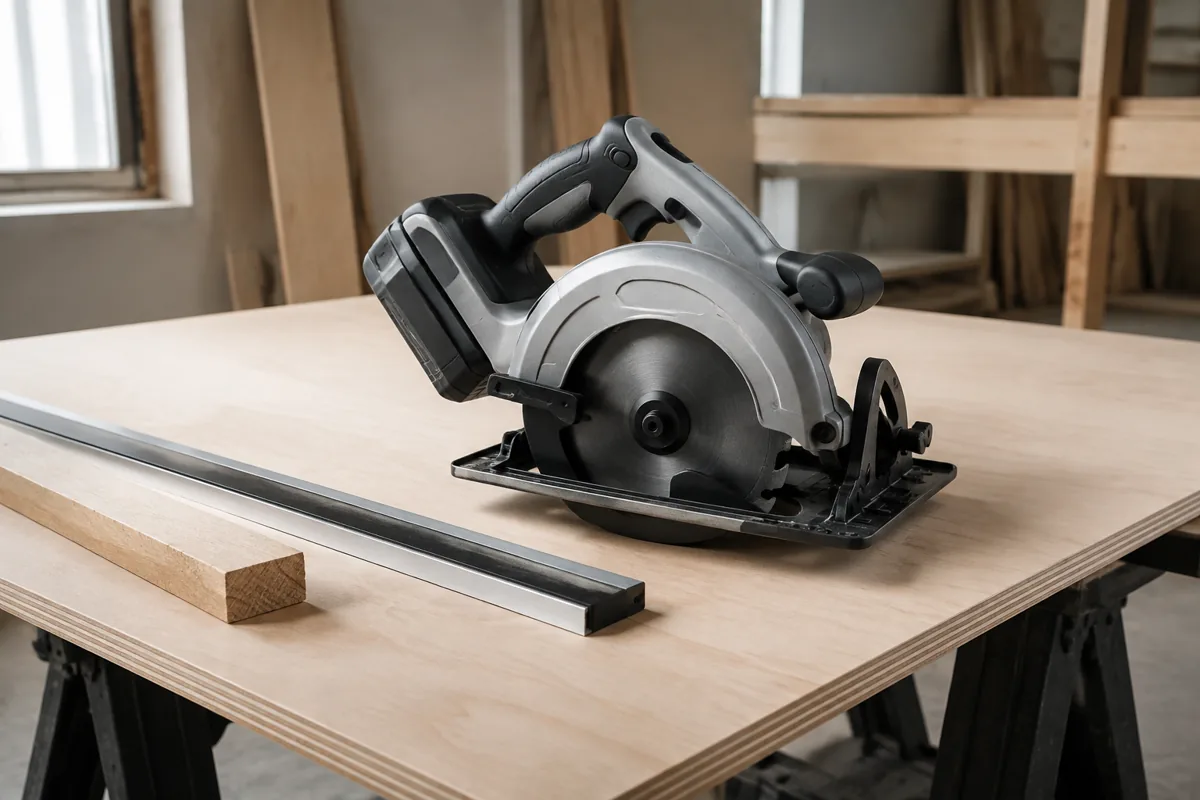
A compact cordless circular saw can be operated with one hand, but that does not make every cut safe to do one-handed. Keep the saw’s base plate supported, hold the work securely, and use your free hand to steady the material only when it is well clear of the blade. Never hold a small offcut beside the cut line or reach beneath the work. For awkward, overhead, or unstable cuts, clamp the material and use two hands where the saw’s design allows.
These saws are most useful for short cuts in sheet goods, trim, flooring, and lumber that is too thick for a jigsaw or too bulky for a full-size saw. Most compact models have blades around 4-1/2 inches and cut roughly 1-1/2 inches deep at 90 degrees. That is enough for common 2-by material, which is 1-1/2 inches thick, but leaves little margin. Check the actual depth at both 90 and 45 degrees before buying.
As an Amazon Associate we earn from qualifying purchases at no extra cost to you.


What to compare before buying
| Feature | Why it matters | What to look for |
|---|---|---|
| Blade diameter and depth | Sets the maximum thickness the saw can cut in one pass. | About 1-1/2 inches at 90 degrees for typical 4-1/2-inch saws; confirm the spec. |
| Battery and tool weight | A heavy battery makes a small saw tiring to guide one-handed. | Compare weight with the battery installed, not bare-tool weight. |
| Shoe and sight line | A narrow or awkward shoe can wander on short cuts. | Look for a stable base and a clear view of the blade or cut mark. |
| Blade availability | Compact saws may use less common blade sizes or arbor configurations. | Check that suitable replacement blades are easy to find locally. |
| Battery platform | A bare tool is a poor deal if it requires a new charger and batteries. | Favor a platform you already own, unless a kit price is compelling. |
Choose your battery platform first
For someone already invested in a cordless lineup, the best compact saw is often the one that shares batteries with existing drills, lights, or impact drivers. A small saw can draw current hard under load, so a tired or low-capacity battery may bog down sooner than it does in a drill. Use a healthy battery recommended for the tool, and expect runtime to vary with blade sharpness, material, and feed pressure.
If you are starting from scratch, compare the cost of a saw kit with battery and charger against the bare tool plus a battery and charger bought separately. Don’t choose a platform based only on the lowest bare-tool price. For a broader selection, compare cordless compact circular saw kits alongside the battery ecosystem you expect to use for other tools.
Which saw category fits the job?
A compact 4-1/2-inch saw is the practical choice for portability and short, common cuts. It is easier to carry and generally less tiring than a full-size circular saw, but its smaller blade limits depth and can struggle if pushed through dense material. Feed steadily; forcing the saw can stall it, heat the blade, or pull the cut off line. A sharp, material-appropriate blade matters more than trying to compensate with extra pressure.
A larger cordless circular saw is a better pick for repeated cuts in thick lumber or long rip cuts. It weighs more, but its deeper capacity and larger shoe are more forgiving on long work. If most work is thin plywood, flooring, or trim, that extra size may be unnecessary. If you regularly cut full-thickness framing lumber, don’t buy a compact saw expecting it to replace a standard circular saw.
For an existing battery system, compare compact 4-1/2-inch saws in your battery platform. Where cut depth is more important than low weight, look at full-size cordless circular saw kits instead.
Set up the cut to avoid common failures
Support the stock on a stable surface, with the offcut free to fall without pinching the blade. A pinched blade can stop abruptly and kick the saw back toward the operator. For plywood, support the panel close to both sides of the cut and use a straightedge when accuracy matters. Mark the cut, account for the blade’s kerf, and test the saw’s shoe and blade alignment on scrap before starting a visible cut.
Keep the base plate flat and move at a controlled pace. If the motor slows sharply, stop rather than leaning harder; check for a dull blade, a pinched cut, or a battery that needs charging. Wait for the blade to stop before setting the saw down. Wear eye and hearing protection, and use dust control where practical, especially when cutting sheet goods indoors.
When a cheaper option is enough
A lower-priced saw can be a sensible buy for occasional cuts in plywood, shelving, or trim, provided it has a reliable guard, a stable shoe, and blades you can replace without hunting for obscure parts. Spending more makes more sense for frequent use, better sight lines, smoother adjustment, or a platform you already own. Don’t pay extra for headline speed if your real need is a light saw for a few short cuts each month.
FAQ
Which saw category fits the job?
Related guides
- Longest Lasting Lawn Mower Battery: AGM vs Lithium vs Flooded Lifespan and Cost per Season
- Duralast Gold Lawn Mower Battery Review: U1 Fit, CCA and When to Pay for AGM
- Greenworks Pro 80V 21-Inch Mower Review: Runtime Math, Push vs Self-Propelled and Yard Fit
- Bosch High Pressure Washer Gun Replacement: Fittings, Adapters and What Fits Your Model