What's inside
As an Amazon Associate I earn from qualifying purchases. This post may contain affiliate links at no extra cost to you.
Best GPS Drones for Stable Flight: Picks by Budget, Skill, and Use
The best drones with GPS for stable flight are the DJI Mini 4K for an approachable, portable camera drone, the DJI Mini 4 Pro for advanced tracking and obstacle sensing in a compact body, and the DJI Air 3S for longer flights and a more capable dual-camera system. GPS helps a drone hold position outdoors and return toward its takeoff point, but it does not prevent collisions or guarantee a safe landing. Your best choice depends on how much camera control, flight time, and portability you actually need.
Quick comparison
Figures below are manufacturer-listed specifications; actual flight time is often shorter because of wind, temperature, battery age, and flight style. Always check the current package and regional rules before buying.
As an Amazon Associate we earn from qualifying purchases at no extra cost to you.

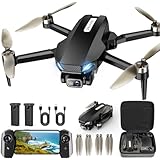


| Model | Approx. takeoff weight | Manufacturer-listed max flight time | Camera | Positioning and safety | Best suited to |
|---|---|---|---|---|---|
| DJI Mini 4K | Under 249 g | Up to 31 minutes | 4K video; 3-axis mechanical gimbal | GNSS positioning; return-to-home; downward vision positioning | Beginners who want a simple travel camera drone |
| DJI Mini 4 Pro | Under 249 g | Up to 34 minutes with standard battery | 4K/60 fps HDR video; 3-axis mechanical gimbal | GNSS; return-to-home; omnidirectional obstacle sensing | Experienced flyers wanting compact tracking and safety features |
| DJI Air 3S | Approx. 724 g | Up to 45 minutes | Wide and medium-tele cameras; 3-axis gimbal | GNSS; return-to-home; omnidirectional obstacle sensing | Travel creators prioritizing camera options and longer flights |
“Up to” flight times are measured under favorable conditions, not a promise of usable airtime on every outing. Keep reserve for the return trip rather than planning to fly until the battery warning appears.
Choose by situation
- First drone, occasional trips: Choose the DJI Mini 4K. It provides stabilized 4K footage and GPS-assisted hovering without the extra features and cost of a more advanced model.
- Small bag, frequent filming, more automation: Choose the DJI Mini 4 Pro. Its obstacle sensing and subject-tracking tools can help with demanding shots, but they do not replace piloting judgment.
- Longer outings and varied framing: Choose the DJI Air 3S. Its two cameras offer different perspectives without changing lenses, while its larger size and weight make it less convenient to carry.
- Mostly indoor flying: Don’t choose by GPS alone. GPS reception is unreliable indoors, and obstacle sensing and positioning behavior vary by lighting and surface. A small, guarded indoor drone may be a safer fit than any camera drone listed here.
What GPS does—and what it does not
A GPS drone typically uses satellite navigation, often alongside other GNSS systems, to estimate its outdoor position. When the signal is reliable, it can hold a location more steadily than a basic drone that depends mainly on the pilot’s corrections. This is especially useful for hovering while framing a photo or pausing to check surroundings.
GPS is not a force field against wind. A drone may drift or struggle to hold position in strong gusts, and a poor satellite fix can reduce positioning accuracy. Trees, buildings, and other obstructions can interfere with reception. Downward cameras or other sensors may help near the ground, but they also have limits—particularly over reflective, dark, featureless, or dimly lit surfaces.
Return-to-home: a useful backup, not an autopilot plan
Return-to-home (RTH) generally directs a drone back toward its recorded home point after a command or certain connection or battery events. Before takeoff, confirm that the home point has updated, check the RTH altitude, and make sure that altitude clears nearby obstacles. A return path can still cross trees, wires, buildings, or people; obstacle sensing may not detect every hazard.
Set the RTH altitude with your actual surroundings in mind and maintain visual line of sight where required. If the home point is recorded in the wrong place, or the aircraft cannot navigate safely, RTH may not bring it back as expected. Stay ready to cancel or redirect it when conditions change.
How to compare camera and flight-time claims
A gimbal matters as much as a headline resolution. These models use mechanical stabilization to smooth camera movement, while electronic stabilization alone can crop the image and may look less natural during turns. Consider frame-rate options if you plan to slow footage down, and check whether the camera’s field of view suits your subjects.
For planning, treat the advertised maximum as a ceiling. For example, if a drone advertises 31 minutes, a conservative 70% planning allowance is about 22 minutes: 31 × 0.70 = 21.7. That is a rough buffer, not a guaranteed runtime. Wind, repeated acceleration, cold weather, and an aging battery can reduce it further. Plan the shot so there is time to return and land with charge remaining.
Ownership details that affect the decision
Propellers are the first routine wear item: inspect them for chips, cracks, or bending before each flight, and replace damaged blades rather than trying to straighten them. Batteries gradually lose capacity and should be stored and charged according to the manufacturer’s instructions. Keep the camera lens and obstacle-sensing surfaces clean with a soft cloth; dirt can affect image quality or interfere with sensing.
Portability also involves more than folded dimensions. A spare battery, controller, charging hub, and protective case add weight and volume. The sub-249-gram Mini models are especially easy to pack, but weight thresholds do not automatically exempt a drone from every registration, remote-identification, or operating requirement. Rules vary by country and use; check the applicable aviation authority before flying.
Bottom line
For most new pilots seeking stable outdoor footage without a bulky kit, the DJI Mini 4K is the practical starting point. Step up to the DJI Mini 4 Pro if tracking and obstacle awareness justify the added cost, or choose the DJI Air 3S if dual-camera framing and longer manufacturer-rated flight time matter more than carrying light. In every case, GPS and RTH are aids—not substitutes for checking the route, weather, battery, and landing area.