What's inside
- Pick the Platform Before You Pick the Kit
- Spec Comparison: The Major 18V/20V Platforms in 2026
- Decision Matrix: Which Cordless Set Fits Your Situation
- Worked Calculation: Runtime and Cost Per Use
- What to Expect From a 2-Tool vs. 5-Tool Set
- Durability and Ownership Realities No Listing Shows
- How to Buy Without Locking Yourself Into a Dead End
- FAQ
- Pick the Platform Before You Pick the Kit
- Spec Comparison: The Major 18V/20V Platforms in 2026
- Decision Matrix: Which Cordless Set Fits Your Situation
- Worked Calculation: Runtime and Cost Per Use
- What to Expect From a 2-Tool vs. 5-Tool Set
- Durability and Ownership Realities No Listing Shows
- How to Buy Without Locking Yourself Into a Dead End
- FAQ
As an Amazon Associate I earn from qualifying purchases. This post may contain affiliate links at no extra cost to you.
The best cordless power tool sets for most buyers in 2026 are built around Milwaukee M18, DeWalt 20V MAX, or Ryobi 18V ONE+ if you want a low-cost entry with a huge ecosystem, while Makita 18V LXT remains the best fit for users who prioritize compact ergonomics and cross-compatibility within a mature 18V system.
Choosing a cordless set is really choosing a battery platform for the next 5-10 years. The drill and driver in the box matter less than voltage, whether your batteries work across all tools from that brand, and how many tools that platform will actually let you add later without buying new batteries and chargers.
As an Amazon Associate we earn from qualifying purchases at no extra cost to you.

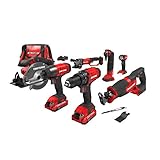


Pick the Platform Before You Pick the Kit
A cordless power tool set locks you into a battery form factor. If that platform is small, expensive to expand, or splits batteries between incompatible lines, your second or third tool purchase gets costly. Evaluate these three criteria before comparing kits:
1. Voltage Is About System, Not Just Power
For woodworking, DIY, and general construction, 18V/20V is the standard. The names are marketing: DeWalt 20V MAX, Milwaukee M18, Makita 18V LXT, Ryobi 18V ONE+, Bosch 18V and Craftsman V20 are all 18V nominal (20V max when fully charged). They deliver the same voltage class and run the widest range of tools.
- 12V systems (Milwaukee M12, Bosch 12V Max, DeWalt 12V MAX): Lighter, more compact, excellent for cabinet work, electrical, and overhead drilling. Limited for circular saws, miter saws, and table saws where sustained wattage matters.
- 18V/20V systems: The sweet spot for cordless power tool sets. Runs everything from drills to 7-1/4″ circular saws and 1/2″ impact wrenches.
- 36V/40V and 18V x2 (36V) systems (Makita X2 36V, DeWalt FlexVolt 60V MAX): Use two 18V batteries in series or a higher-voltage FlexVolt battery for miter saws, table saws, and SDS rotary hammers. Only worth it if you need corded-level performance without a cord.
Do not mix voltage classes expecting compatibility. A 12V battery will never power an 18V tool, even within the same brand.
2. Battery Cross-Compatibility Determines Real Cost
All major brands in 2026 keep batteries within one voltage platform interchangeable across tools of that platform, but there are exceptions that trap buyers:
- Fully forward/backward compatible: Ryobi 18V ONE+ (all ONE+ batteries since 1996 fit all ONE+ tools), Makita 18V LXT (all LXT 18V batteries fit all LXT 18V tools), Milwaukee M18 and M12 are each fully compatible within their voltage.
- Compatible with caveats: DeWalt 20V MAX batteries work in all 20V MAX tools, and FlexVolt 60V/20V batteries work in both 60V and 20V MAX tools, but standard 20V MAX batteries cannot power 60V FlexVolt tools at full power. Bosch 18V batteries are compatible across Bosch 18V tools, but older CORE vs. non-CORE generations charge at different rates on standard chargers.
- Not interchangeable: DeWalt 20V MAX does not fit DeWart 12V MAX. Milwaukee M18 does not fit M12. Makita 40V XGT does not fit Makita 18V LXT.
Look for kits that include at least one 4.0Ah or 5.0Ah battery rather than two small 1.5Ah or 2.0Ah packs. Small packs keep kit price down but throttle runtime on saws and sanders and wear out faster from deep discharge cycles.
3. Ecosystem Size Predicts Your Next 5 Purchases
Ecosystem size is how many bare tools you can buy later without new batteries. For cordless power tool sets, this is more important than the two tools in the box.
Spec Comparison: The Major 18V/20V Platforms in 2026
This table compares the core platforms most cordless sets are sold on. Tool counts are approximate bare-tool offerings available in North America for that battery system.
| Platform | Nominal Voltage | Common Battery Sizes | Weight per 5.0Ah Battery | Ecosystem Size (Bare Tools) | Charger Compatibility Note |
|---|---|---|---|---|---|
| Ryobi 18V ONE+ | 18V (20V max) | 1.5Ah, 2.0Ah, 4.0Ah, 6.0Ah | ~1.38 lb / 626g | 280+ | All ONE+ chargers charge all ONE+ batteries; HP tools benefit from newer fast chargers |
| DeWalt 20V MAX | 18V (20V max) | 2.0Ah, 4.0Ah, 5.0Ah, 6.0Ah, FlexVolt 6.0Ah/9.0Ah | ~1.40 lb / 635g | 220+ | 20V MAX chargers do not charge FlexVolt at 60V rate; FlexVolt chargers charge both |
| Milwaukee M18 | 18V (20V max) | 2.0Ah, 3.0Ah, 5.0Ah, 6.0Ah, 12.0Ah High Output | ~1.58 lb / 717g (5.0Ah XC) | 250+ | All M18 chargers work, but High Output batteries need M18 rapid chargers for full speed |
| Makita 18V LXT | 18V | 2.0Ah, 3.0Ah, 5.0Ah, 6.0Ah | ~1.37 lb / 620g | 300+ | All LXT chargers charge all LXT batteries; 18V x2 tools require two identical LXT batteries |
| Bosch 18V | 18V | 2.0Ah, 4.0Ah, 6.0Ah, 8.0Ah CORE | ~1.32 lb / 599g (4.0Ah CORE) | 85+ | CORE batteries require GAL18V series chargers for fastest charging |
| Craftsman V20 | 18V (20V max) | 2.0Ah, 4.0Ah, 6.0Ah | ~1.35 lb / 612g | 60+ | All V20 chargers cross-compatible; V20 not compatible with older Craftsman 19.2V |
Weight differences look small per battery, but a circular saw with a 6.0Ah High Output pack can be 0.7-1.0 lb heavier than the same saw with a compact 2.0Ah pack, which matters for overhead or trim work.
Decision Matrix: Which Cordless Set Fits Your Situation
Match your budget, space, and how often you will use the tools before comparing drill torque numbers.
| Your Situation | Recommended Platform Type | Best Kit Configuration | Why |
|---|---|---|---|
| First-time homeowner, light DIY 1-2x per month, tight budget | Ryobi 18V ONE+ or Craftsman V20 | 2-tool kit: drill/driver + impact driver with 2x 2.0Ah or 1x 4.0Ah | Lowest cost per bare tool later, huge retail availability, adequate power for drilling, driving, and light sawing |
| Serious DIY / woodworker building weekly, small shop | Makita 18V LXT or DeWalt 20V MAX | 3 to 5-tool kit: drill, impact driver, 6-1/2″ circular saw, multi-tool or jigsaw | Excellent ergonomics, wide saws Sanders routers that share the same battery, strong dust extraction options |
| Remodeling, automotive, or jobsite use 4+ days per week | Milwaukee M18 | 4 to 6-tool kit with at least 1x 5.0Ah High Output | Largest heavy-duty cordless range including Sawzall, SDS, and high-torque impacts on one battery |
| Primarily trim, cabinet install, or electrical in tight spaces | Milwaukee M12 or Bosch 12V Max or Makita 12V CXT | 2-tool 12V kit: drill/driver + impact driver with 2x 2.0Ah | 30-35% lighter than 18V, less fatigue, still drives 2-1/2″ screws and drills with spade bits |
| Need cordless miter saw or table saw without generator | DeWalt FlexVolt 60V MAX or Makita XGT 40V or Makita 18V X2 | Buy the saw as bare tool or high-capacity kit with 9.0Ah/12.0Ah packs | Requires high-watt-hour batteries; standard 2.0-5.0Ah 18V packs will not sustain rip cuts |
Worked Calculation: Runtime and Cost Per Use
Battery amp-hours alone do not tell you runtime. Use watt-hours (Wh) to compare across platforms.
Formula: Watt-hours = Nominal Voltage x Amp-hours. Runtime (hours) = Watt-hours / Average Tool Watt Draw.
Example for a typical woodworking task, a 6-1/2″ cordless circular saw drawing an average of 750W during crosscuts in softwood:
- Ryobi 18V 4.0Ah: 18V x 4.0Ah = 72 Wh. 72 / 750 = 0.096 hours = ~5.7 minutes of continuous trigger time.
- Milwaukee M18 5.0Ah XC: 18V x 5.0Ah = 90 Wh. 90 / 750 = 0.12 hours = ~7.2 minutes of continuous trigger time.
- DeWalt FlexVolt 6.0Ah in 20V mode: 18V x 6.0Ah = 108 Wh. 108 / 750 = ~8.6 minutes.
In practice that is about 35-55 linear feet of 3/4″ plywood crosscuts per 4.0-5.0Ah charge, not hours of work, because saws are intermittent. For a drill driving #8 x 2″ screws into pine (average ~180W), the same 72Wh pack yields 72 / 180 = 0.4 hours = 24 minutes of trigger time, or roughly 280-350 screws.
Cost per use perspective: A general market range for a quality 18V/20V 5.0Ah battery in 2026 is $90 to $140 when bought separately. Lithium-ion packs are rated for roughly 400-600 full charge cycles before capacity drops to ~80%. At 500 cycles x 90Wh = 45,000Wh lifetime. If that $120 battery powers a 150W orbital sander, lifetime runtime is 300 hours. That is $0.40 per hour of sanding in battery depreciation alone, before consumables. Buying a kit with two batteries included cuts that entry cost nearly in half compared to buying batteries separately later.
What to Expect From a 2-Tool vs. 5-Tool Set
2-Tool Sets (Drill/Driver + Impact Driver): The common entry point across all brands, typically with two compact batteries and a standard charger. Best value if you already own corded saws. Check that the drill has at least 55-65 Nm peak torque and the impact driver has three speed settings. Kits that only include 1.5Ah batteries will stall faster on hole saws and auger bits.
3-Tool Sets (Add Circular Saw or Reciprocating Saw): The sweet spot for woodworking startup. Look for a 6-1/2″ or 7-1/4″ circular saw with a 0-50 degree bevel and electric brake. A 6-1/2″ saw is lighter and pairs better with 4.0Ah batteries while still cutting 2x material at 45 degrees.
5-7 Tool Sets (Add Oscillating Multi-Tool, Jigsaw, Light, Sander): Often bundled with a mix of small and large batteries plus a tool bag. Evaluate each tool individually. An included reciprocating saw or flashlight that you will rarely use does not make a bundle cheaper if you will later need to buy the jigsaw or router as a bare tool anyway.
Durability and Ownership Realities No Listing Shows
What wears first: Chucks, trigger switches, and belt clips fail before motors. Brushed motors (still found in budget sub-$150 kits) need brush replacement after ~200-300 hours and run hotter. Brushless motors last longer, run 20-30% more efficiently, and are worth the premium for any tool you will use weekly.
Batteries are the consumable: Heat kills lithium-ion life. Do not store batteries on chargers in a hot garage or leave them fully charged for months unused. Store at 40-60% charge if you will not use the tool for weeks, and let hot batteries cool 15 minutes before recharging. A battery left at 100% in 95F heat can lose 15-20% capacity in a year even without cycles.
Consumables add up: Cordless sanders and saws do not save on blades, discs, and batteries. Budget $25 to $45 per 25-pack of quality 5″ hook-and-loop sanding discs and $35 to $60 for a carbide-tipped 24-tooth circular saw blade. Cheap blades force the motor and battery to work harder, shortening both.
Common mistakes:
- Buying mismatched platforms for the sake of a deal on one tool. Two platforms mean two chargers, two battery inventories, and no backup when one pack dies mid-project.
- Using a 2.0Ah compact battery on a circular saw or angle grinder for long rips or grinding. Voltage sag under load triggers early low-voltage cutoff and heats the cells, accelerating wear.
- Ignoring charger speed. A standard 2A charger takes ~120 minutes to fill a 5.0Ah pack. A rapid 6A charger does it in ~60 minutes. If you only own two batteries, fast charging determines downtime.
- Not cleaning dust from battery terminals and tool vents. Sawdust packed around motor vents raises operating temperature 10-15 degrees and shortens electronic life.
How to Buy Without Locking Yourself Into a Dead End
- List the next four tools you will likely want (for woodworkers often: circular saw, jigsaw, router, orbital sander, shop vac).
- Check that your chosen platform offers all of them as bare tools on the same battery. If two or more are missing or require a second battery line, choose a different platform.
- Compare bare-tool street prices for those future tools, not just the starter kit. A $50 cheaper kit often costs $100 more to expand.
- Choose a kit with at least one 4.0Ah or larger battery and a rapid charger if you will run saws or sanders. Two small batteries look better on paper but limit real use.
- Register batteries for warranty. Most brands warranty tools for 3-5 years but batteries for 2-3 years with proof of purchase. Keep packs paired and labeled with purchase date.
FAQ
Are 20V MAX batteries more powerful than 18V batteries?
No. DeWalt 20V MAX, Craftsman V20, and similar labels are 18V nominal. 20V is the maximum voltage when fully charged with no load. An 18V-labeled 5.0Ah battery and a 20V MAX 5.0Ah battery both store 90Wh and perform equivalently when compared at the same amp-hour rating and cell quality.
Can I use an adapter to run another brand’s battery on my tools?
Third-party adapters exist but bypass the battery and tool communication that manages temperature, current, and low-voltage cutoff. Using them risks overheating, loss of overload protection, and voids the warranty on both battery and tool. For safety and longevity, stay within the native platform.
Should a beginner start with 12V or 18V?
If you will only drill pilot holes, assemble furniture, and drive screws, 12V is lighter and often cheaper. If you plan to cut sheet goods, rip 2x stock, or use a random-orbit sander, start with 18V/20V. You can always add a 12V drill later for detail work, but 12V saws will limit you.
How many batteries do I actually need?
Two batteries is the practical minimum for uninterrupted work: one in the tool, one charging. Three is ideal once you own a saw and a sander, because high-draw tools can drain a pack in under 10 minutes of trigger time. Rotate packs to avoid deep-discharging a single battery repeatedly.