What's inside
As an Amazon Associate I earn from qualifying purchases. This post may contain affiliate links at no extra cost to you.
“Cub Cadet lawn mower batteries” actually describes two unrelated products: removable lithium packs that drive the blades on Cub Cadet’s cordless models, and 12V starter batteries that only crank the engine on its gas tractors and zero-turns. Knowing which system your machine uses determines everything — the part number, the price, and how you store it over winter.
As an Amazon Associate we earn from qualifying purchases at no extra cost to you.


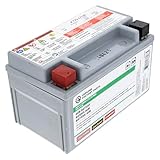
The Three Battery Systems Across Cub Cadet’s Lineup
Cub Cadet (built by MTD) sells machines powered three different ways, and none of the batteries swap between them:
- Removable 60V MAX lithium packs — clip into cordless walk-behind mowers (such as the 21-inch self-propelled models) and handheld tools. One pack typically runs every tool in the 60V MAX family.
- Fixed lithium traction packs — built into electric riders like the CC30E and the XT1 LT42E lawn tractor. These are large, permanently installed packs that power both the drive motors and the cutting deck.
- 12V starter batteries — found in every gas-powered rider and zero-turn (XT1/XT2 Enduro tractors, Ultima ZT series) and a few electric-start walk-behinds. Most are BCI group U1 or U1R.
| Model family | Battery | Typical specs | What it powers |
|---|---|---|---|
| Gas walk-behinds (recoil start) | None | — | — |
| XT1 / XT2 Enduro lawn tractors | 12V U1 or U1R | ~230–350 CCA, ~14–18 lb | Starter + ignition |
| Ultima ZT zero-turns | 12V U1 or U1R | ~230–350 CCA, ~14–18 lb | Starter + ignition |
| 60V MAX cordless mowers | Removable 60V lithium | 2.0–5.0 Ah (~120–300 Wh), ~2.5–4 lb | Blade motor |
| CC30E electric rider | Fixed lithium pack | 56V-class, ~30 Ah; rated up to ~1 acre | Drive + deck |
| XT1 LT42E electric tractor | Fixed lithium pack | 56V-class, 60 Ah; rated up to ~2 acres, ~4-hr recharge | Drive + deck |
How to Find the Exact Replacement Part Number
The fastest path is the model and serial tag — under the seat on tractors, on the frame near the rear on zero-turns, and on the deck of walk-behinds. Enter that model number into Cub Cadet’s online parts lookup, open the electrical section of the parts diagram, and the battery appears with its OEM part number. The same numbers cross-reference to MTD parts listings, since Cub Cadet is an MTD brand.
For 12V batteries, you don’t actually need the OEM part — you need four matching specs:
- Group size: U1 measures roughly 7.75 × 5.2 × 7.3 inches. It must fit the battery tray and hold-down.
- Terminal orientation: U1 vs. U1R have the positive post on opposite sides. Buy the wrong one and your cables won’t reach. Check your old battery’s label before ordering.
- Cold cranking amps: match or exceed the OEM rating (usually 230–300 CCA on lawn tractors). Higher CCA never hurts.
- Type: AGM resists vibration and won’t leak — worth it on zero-turns that shake constantly. Flooded is cheaper but needs occasional terminal cleaning.
For 60V MAX packs, compatibility is simpler: voltage is fixed, so you’re only choosing capacity. A 5.0 Ah pack holds 300 Wh versus 120 Wh in a 2.0 Ah pack — in the same grass, that’s roughly 2.5× the runtime, at the cost of a bit more weight and a higher price.
Picking a Replacement by Situation
| Your situation | Best choice | Typical price range |
|---|---|---|
| Gas tractor/ZTR with a dead battery; want guaranteed fit | OEM-spec U1/U1R AGM at or above factory CCA | $40–70 |
| Want a local exchange and dealer warranty | Interstate or another dealer-network lawn & garden U1 | $45–80 |
| Budget-first, light seasonal use | Value aftermarket U1 AGM — verify terminal side | $30–55 |
| Want lighter weight and long shelf life | LiFePO4 U1 drop-in (~4–6 lb) — confirm charging compatibility and warranty terms first | $90–150 |
| 60V mower dies mid-lawn | Add a second pack, or step up from 2.0 Ah to 5.0 Ah | $100–250 |
| Electric rider losing range | Dealer diagnostics — the fixed pack isn’t a shelf swap | Varies widely |
Interstate batteries for lawn mowers are a frequent search for good reason: Interstate’s lawn-and-garden line, sold through its dealer network rather than big-box shelves, includes U1-size options rated in the roughly 230–340 CCA range that fit most Cub Cadet tractors. The practical advantage is the counter warranty — typically a free-replacement period handled locally — plus a core credit for your old battery. Any brand works if the group size, terminal orientation, and CCA match; Interstate is simply the most available dealer option in many areas.
Swapping a 12V Starter Battery: Do It in This Order
- Key off, parking brake on. Disconnect the negative (–) cable first — if your wrench touches the frame while on the positive terminal, nothing sparks.
- Disconnect the positive cable, remove the hold-down strap or bracket, and lift the battery straight out.
- Brush corrosion off the tray and cable ends (a baking-soda paste neutralizes acid residue).
- Drop in the new battery, confirm the terminals sit on the correct side, and reinstall the hold-down — a loose battery is what kills plates fastest.
- Connect the positive cable first, then negative. Coat both terminals with dielectric grease or felt washers.
- Start the engine and check voltage at the terminals with it running: 13.5–14.5V means the charging system is healthy; under ~13V points to a failing stator/regulator that will kill your new battery too.
- Return the old battery for the core credit — lead batteries are almost universally recycled.
Winter Storage: Different Rules for Each Chemistry
This is where most Cub Cadet batteries die — not in summer, but in a cold shed from November to March.
12V lead-acid and AGM
- Charge to full before storage: 12.6–12.8V resting. A discharged battery can freeze around 20°F and will sulfate permanently.
- Either remove the battery and store it in a cool, dry spot (40–60°F is ideal), or leave it installed on a float-mode smart maintainer (Battery Tender or NOCO Genius–type units). Avoid old “dumb” trickle chargers — they slowly overcharge AGM batteries.
- No maintainer? Top it off every 4–6 weeks; AGM self-discharges ~2–3% per month.
Lithium packs (60V and traction packs)
- Store at 40–60% charge, not full — full cells age faster in storage.
- Keep them indoors between roughly 40–80°F. Most packs shouldn’t be charged below freezing, even if they can sit in the cold.
- Check charge every couple of months and never leave a pack parked in the charger for months on end.
| Resting voltage (12V battery) | Approx. state of charge | Action |
|---|---|---|
| 12.8V | ~100% | Ready to store |
| 12.4V | ~75% | Charge before storage |
| 12.2V | ~50% | Charge now |
| ≤ 12.0V | ~25% or less | Charge immediately — sulfation underway |
Ownership Realities and Common Mistakes
A well-maintained U1 lasts about 3–5 seasons — call it $12–15 per year of mowing at typical prices. What actually kills them first: terminal corrosion, vibration loosening the plates (worse on flooded batteries in zero-turns), and one deep discharge left sitting over winter. Lithium packs typically deliver several hundred charge cycles before noticeable capacity loss, and the first thing owners notice isn’t failure — it’s a mower that finishes 90% of the lawn instead of all of it.
- Buying U1 when the tractor needs U1R — the #1 ordering mistake. Check the positive terminal side first.
- Storing a lithium pack fully charged in a freezing shed — partial charge, indoors, wins every time.
- Using a trickle charger instead of a maintainer on an AGM battery.
- Assuming a car battery works — wrong footprint, wrong terminal layout, and automotive batteries aren’t built for mower vibration.
- Skipping the running-voltage check — a dead replacement two weeks later usually means the charging system, not the battery, was the real problem.
FAQ
Can I put a lithium battery in a gas Cub Cadet tractor?
LiFePO4 U1 drop-ins exist and weigh a fraction of lead-acid, but confirm your model’s charging system compatibility and check whether it affects your warranty before switching.
How long does a 60V MAX pack last per charge?
A 5.0 Ah pack stores about 300 Wh — expect roughly 2.5× the runtime of a 2.0 Ah pack in identical conditions. Thick, wet grass shortens any pack’s run significantly.
My tractor clicks but won’t start. Battery or something else?
Measure resting voltage first. If it’s above ~12.4V and still clicks, suspect the starter solenoid, corroded ground strap, or a safety switch before condemning the battery.
Do I have to buy a genuine Cub Cadet battery?
No — match the group size, terminal orientation, and CCA and any quality replacement (OEM, Interstate, or another brand) works identically.
Bottom line: figure out which of the three systems your machine uses, match specs instead of hunting part numbers, and store the battery the way its chemistry requires — that’s 90% of never dealing with a dead mower in April.