What's inside
As an Amazon Associate I earn from qualifying purchases. This post may contain affiliate links at no extra cost to you.
Impact Driver vs. Cordless Drill for Long Wood Screws
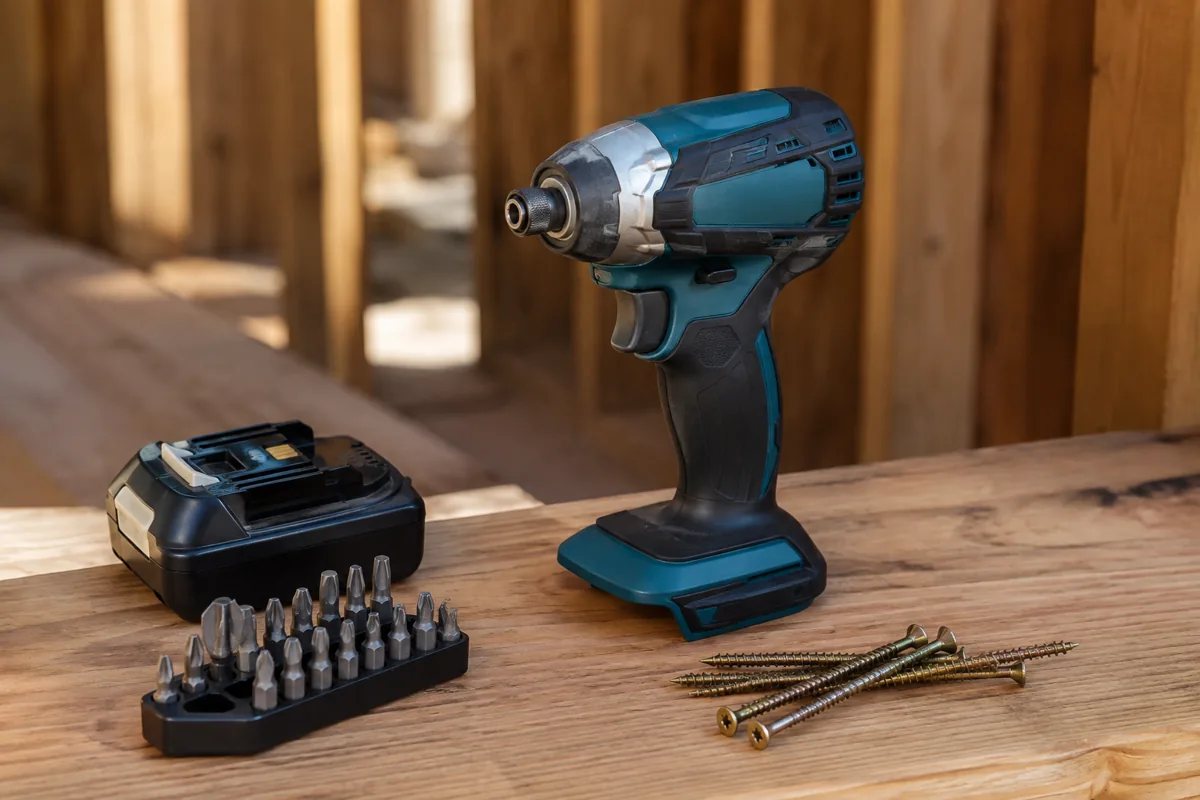
For driving long wood screws, a cordless impact driver is usually faster and easier on your wrist than a cordless drill. Its pulsing hammer mechanism delivers high twisting force without requiring you to lean hard on the tool. That matters when driving 3-inch, 4-inch, or longer structural screws into framing lumber, deck boards, and posts.
A cordless drill is still the better all-purpose tool. It can drive screws, drill clean holes, use larger bits, and handle delicate work with a clutch. If you only drive a few long screws occasionally, buying a drill may be the cheaper and more useful choice. The right answer depends on how many screws you drive, their diameter, and what other work you expect the tool to do.
As an Amazon Associate we earn from qualifying purchases at no extra cost to you.


The main differences
| Feature | Cordless impact driver | Cordless drill |
|---|---|---|
| Best use | Long and large screws, repetitive fastening | General drilling, small screws, controlled fastening |
| Chuck or holder | 1/4-inch hex quick-change collet | Keyless three-jaw chuck, commonly 3/8 or 1/2 inch |
| Torque behavior | High torque with hammering pulses | Smooth rotary torque |
| Control | Good on models with speed modes, less precise at full power | Usually better, thanks to the clutch and variable speed |
| Noise and vibration | Louder and more percussive | Quieter and smoother |
| Typical bare-tool weight | About 2 to 3 pounds | About 2.5 to 4 pounds |
An impact driver does not produce constant impact like a hammer drill. It rotates normally until resistance rises, then applies rapid rotational blows. Those pulses help prevent the motor from stalling and transfer more usable force to the screw.
When an impact driver is the better choice
Choose an impact driver if you regularly drive screws 3 inches or longer, use structural screws, build decks, install ledger boards, or assemble framing. A modern 18V or 20V-class impact driver has ample power for most wood screws used in residential construction. Even compact models can drive long screws, although a full-size tool may work faster in dense lumber.
The reduced twisting reaction is the biggest practical advantage. A high-torque drill can suddenly stop when a screw binds, twisting your wrist or forcing the bit out of the screw head. An impact driver still kicks, but the hammering action spreads the load over many small blows. It is easier to hold during a long fastening session.
Use a quality bit designed for impact drivers. Standard chrome or brittle drill bits can break in the hex holder, especially when driving large screws. A set of impact-rated driver bits is a necessary part of the purchase, not an optional upgrade.
The drawbacks are noise, less finesse, and the need to change bits more often if you are drilling pilot holes. The 1/4-inch hex holder accepts driver bits and many short drill bits, but it is not as versatile as a drill chuck. Impact drivers also make it easy to overdrive a screw, strip the head, or bury it below the surface.
When a cordless drill is the better choice
A drill is the sensible cheaper option when you are driving only a dozen or two long screws for a small project. It can handle a 3-inch wood screw if you use a sharp bit, keep the drill straight, and avoid forcing the tool after the motor begins to bog down. A 1/2-inch drill is especially useful if you also need to use large auger bits, hole saws, or spade bits.
The clutch is valuable for smaller screws and softer materials. Set it low enough that the screw stops near flush, then increase the setting only when necessary. This helps prevent stripped heads and crushed wood fibers. For long structural screws, the clutch may slip before the screw reaches full depth, so use the drill’s high-torque setting or drill mode when appropriate.
Drills are also better for finish work. Cabinet hardware, hinges, electrical boxes, and small trim screws usually benefit from smooth rotation rather than impact blows. The slower, more predictable action gives you better control near finished surfaces.
If you need one tool for general home maintenance, consider a cordless drill-driver kit before buying an impact driver. A drill is less specialized and can still drive long screws in moderate quantities.
How to drive long wood screws without problems
Start with the correct bit. A worn bit slips out of the recess, rounds the head, and can damage the surrounding wood. Press the tool firmly in line with the screw, especially during the first few seconds. Let the screw’s threads cut rather than leaning so hard that the bit flexes.
For screws 3 inches or longer, a pilot hole often improves results. In softwood, drill a pilot hole roughly equal to the screw’s minor, or core, diameter for the threaded section. In hardwood, use a pilot hole closer to the root diameter and consider a clearance hole through the top board. This reduces splitting and lowers the torque required.
Do not use impact action as a substitute for proper screw length or clamping. If a screw spins without tightening, the threads may be stripped or the screw may have passed through the usable material. If the tool stalls repeatedly, check for a knot, an undersized pilot hole, a damaged bit, or a screw that is too large for the material.
For deck and framing work, use a brushless cordless impact driver kit with a 2.0Ah or larger battery. Compact batteries reduce weight, while 4.0Ah or 5.0Ah packs provide more runtime for repetitive work. A bigger battery does not automatically provide more peak power, but it usually runs cooler and lasts longer between charges.
Battery platform and kit value
Battery compatibility matters more than a small difference in advertised torque. Once you own a platform, the next tool can often be purchased without another charger or battery. Compare the platform’s impact driver, drill, compact saw, light, and replacement battery prices before choosing.
A kit with two batteries is useful for long projects: one can charge while the other is in use. For occasional repairs, a compact 1.5Ah or 2.0Ah battery keeps the tool lighter. For hundreds of screws, choose a larger pack and a charger that can replenish it quickly.
Some manufacturers sell both brushed and brushless tools. Brushless models generally run longer per charge and stay cooler, but a basic brushed drill or impact driver can be perfectly adequate for weekend use. If the price difference is large and you drive only a few long screws each month, spend the savings on good bits and suitable screws instead.
Which one should you buy?
Buy an impact driver if long screws are a regular part of your work, you build decks or framing, or a drill repeatedly stalls and strains your wrist. Buy a cordless drill if you need one versatile tool for holes, small fasteners, and occasional long screws. If your budget allows both, the combination is efficient: use the drill for pilot holes and controlled fastening, then the impact driver for the long screws.
For a first purchase, match the tool to the rest of your cordless collection rather than chasing the highest torque number. A reliable battery platform, impact-rated bits, and the correct pilot-hole technique will matter more than an extreme specification you rarely use.
FAQ
Which one should you buy?
Related guides
- Longest Lasting Lawn Mower Battery: AGM vs Lithium vs Flooded Lifespan and Cost per Season
- Duralast Gold Lawn Mower Battery Review: U1 Fit, CCA and When to Pay for AGM
- Greenworks Pro 80V 21-Inch Mower Review: Runtime Math, Push vs Self-Propelled and Yard Fit
- Bosch High Pressure Washer Gun Replacement: Fittings, Adapters and What Fits Your Model