What's inside
As an Amazon Associate I earn from qualifying purchases. This post may contain affiliate links at no extra cost to you.
Best Dremel Rotary Tools for Cutting, Sanding, and Detail Work
For most woodworkers, the best Dremel rotary tool is the corded 4000-2/30: its 5,000–35,000 RPM range, variable speed, and broad accessory compatibility make it a versatile choice for carving, sanding, and light cutting. Choose the cordless 8250 when moving around the shop matters more than uninterrupted runtime, or a compact 3000 when you want a lower-cost corded tool for occasional detail work.
How the main options compare
Dremel’s rotary tools share the same general job—spinning small bits and accessories at high speed—but differ in speed control, power delivery, and what arrives in the box. The figures below are manufacturer-published specifications; kit contents can vary by retailer and region, so check the exact package before buying.
As an Amazon Associate we earn from qualifying purchases at no extra cost to you.


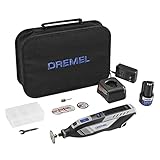

| Model | Power | Speed range | Collet / accessory fit | Useful distinction |
|---|---|---|---|---|
| Dremel 3000 | Corded, 1.2 A | 5,000–32,000 RPM | 1/8-in collet; accepts Dremel accessories and compatible rotary bits | Lower-cost general-purpose option |
| Dremel 4000 | Corded, 1.6 A | 5,000–35,000 RPM | 1/8-in collet; broad accessory compatibility | More power headroom and electronic feedback |
| Dremel 4300 | Corded, 1.8 A | 5,000–35,000 RPM | Three-jaw chuck accepts shanks from 1/32 to 1/8 in | Tool-free accessory changes without swapping collets |
| Dremel 8250 | Cordless, 12 V lithium-ion battery | 5,000–30,000 RPM | 1/8-in collet; compatible Dremel accessories | Portable, brushless motor; battery and charger are kit-dependent |
For reference, the 3000 is approximately 7.5 inches long and weighs about 1.2 pounds; the 4000 is roughly 9 inches long and around 1.4 pounds. The 8250 is about 9 inches long and weighs roughly 1.5 pounds with its battery. Weights and package contents can differ slightly by configuration. These are handheld tools, not substitutes for a full-size angle grinder or a woodworking router.
Pick by the job, not by the accessory count
- Frequent cutting and mixed shop work: Choose the corded 4000. It avoids battery interruptions and has a useful low-to-high speed range for switching between sanding drums, engraving tips, and cutting wheels. For cutting, use a suitable reinforced wheel and a cutting guide when the cut needs to stay straight.
- Many accessory changes: The 4300’s three-jaw chuck can save time when moving among shanks of different sizes. It is convenient for varied detail work, though a chuck is not a reason to use an accessory beyond its rated speed or intended application.
- Work away from an outlet: The 8250 is the portable pick for trimming, touch-ups, and detail work around a project. Runtime depends heavily on the accessory, pressure, material, and battery capacity; don’t plan on a full day of heavy cutting from one battery. A spare charged battery is more useful than guessing at a universal runtime.
- Occasional use or a tighter budget: The 3000 covers light sanding, polishing, engraving, and small cuts without paying for cordless convenience or the 4300’s chuck. Its 5,000 RPM minimum is still relatively fast for delicate work, so use a light touch and a steady grip.
A basic Dremel rotary tool kit usually includes the tool, a selection of accessories, and sometimes a case or attachments. The number of pieces matters less than having the right consumables: sanding bands for shaping, felt or polishing accessories for finishing, and cutting wheels suited to the material. Higher accessory counts often include duplicates or specialty bits that may not fit your projects.
Speed and setup make more difference than extra power
For wood, start with a scrap piece and the accessory maker’s recommended speed. Lower settings generally suit small sanding drums, plastic, and controlled engraving; higher settings can help with some cutting and polishing tasks, but speed is not a substitute for a sharp accessory. Too much pressure can bog the tool, burn wood, break a wheel, or make a bit wander. Let the accessory do the work and keep the tool moving.
For clean detail work, hold the tool like a pencil and support your hands or the workpiece. A flex-shaft attachment can reduce hand fatigue for fine carving, but it does not eliminate vibration or make an unsuitable bit safe. Clamp the work, wear eye protection, and use dust extraction or a suitable respirator when creating fine wood dust. Follow the tool and accessory instructions, especially for maximum RPM and material compatibility.
Accessory compatibility: check the shank before buying
Most common Dremel accessories use a 1/8-inch shank and fit the 3000, 4000, and 8250 with the correct collet. The 4300’s chuck accepts a wider range of shank sizes, from 1/32 to 1/8 inch. Some accessories need a specific mandrel or attachment, and larger accessories may require a different configuration. Confirm fit and speed limits rather than assuming that any rotary-tool bit will work.
For woodworking, useful starting accessories include a small sanding drum, a carbide or high-speed cutter intended for wood, and a mandrel with compatible sanding discs. For straight cuts in sheet material, a guide attachment can improve control, but a rotary tool’s small cutting depth and narrow base make it less suitable than a jigsaw or circular saw for long cuts.
Ownership costs and common wear points
Consumables are the recurring cost: sanding bands wear quickly when pressed hard, and thin cutting wheels can break if twisted or side-loaded. Replace damaged accessories rather than trying to extend their life. Clean dust from the tool’s vents regularly, keep the collet and accessory shank free of debris, and unplug a corded tool—or remove the battery—before changing accessories. A clogged vent can contribute to overheating, while an improperly tightened collet can let an accessory wobble.
Budget for replacement sanding and cutting accessories instead of buying the largest kit available. Cordless owners should also consider the cost of an extra battery if downtime would disrupt their work. In general, the 3000 is the economical occasional-use choice, the 4000 is the balanced corded choice, the 4300 favors frequent changes, and the 8250 earns its place when portability is a regular need.