What's inside
- Quick comparison: which diamond blade fits the job?
- What separates a good multi tool diamond blade from a poor one?
- Heat resistance matters more than maximum cutting speed
- Decision guide by project and user
- Worked ownership calculation
- How to use a diamond blade for an oscillating tool
- Expected service life and maintenance
- Final buying recommendation
- Quick comparison: which diamond blade fits the job?
- What separates a good multi tool diamond blade from a poor one?
- Heat resistance matters more than maximum cutting speed
- Decision guide by project and user
- Worked ownership calculation
- How to use a diamond blade for an oscillating tool
- Expected service life and maintenance
- Final buying recommendation
As an Amazon Associate I earn from qualifying purchases. This post may contain affiliate links at no extra cost to you.
The best multi tool diamond blade is a continuous diamond-grit blade with a 1.5–2.0 mm kerf, 10–20 mm cutting depth, and a reinforced steel body matched to the grout, tile, or masonry you need to remove.
Unlike a toothed oscillating blade, a diamond blade for an oscillating tool cuts by abrasion. That makes it slower in soft materials but far more suitable for cement grout, porcelain tile, mortar, thin-set residue, and some light masonry. The right choice depends less on brand name than on segment design, usable depth, grit quality, heat control, and how quickly the abrasive surface wears.
As an Amazon Associate we earn from qualifying purchases at no extra cost to you.
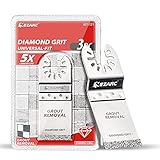
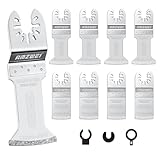


Quick comparison: which diamond blade fits the job?
| Blade type | Typical width | Typical cutting depth | Best material | Expected service life | Typical market range |
|---|---|---|---|---|---|
| Fine continuous diamond grit | 30–35 mm | 10–15 mm | Wall grout, ceramic tile joints, adhesive residue | 5–15 m of grout | $15–$30 |
| Wide continuous diamond grit | 40–65 mm | 15–25 mm | Floor grout, wider joints, porcelain tile | 8–25 m of grout | $25–$55 |
| Segmented diamond edge | 32–45 mm | 15–25 mm | Mortar, thin-set, soft brick, abrasive cement products | 2–8 m of heavy masonry | $25–$60 |
| Carbide-grit multi-tool blade | 30–65 mm | 10–20 mm | Grout and occasional hardened adhesive | 3–12 m of grout | $10–$35 |
These are practical ranges rather than guarantees. Hard porcelain, epoxy grout, excessive pressure, and dry cutting can reduce life substantially. A blade that lasts 15 m in soft cement grout may be finished after only a few metres of dense epoxy or mortar.
What separates a good multi tool diamond blade from a poor one?
1. Segment design and diamond coverage
Most multi tool diamond blades use either a continuous abrasive rim or a segmented rim. Continuous diamond grit gives a smoother, more controlled cut and is usually the better diamond blade oscillating tool option for grout around finished tile. It reduces the chance of snagging and gives more consistent joint width.
Segmented edges expose more of the cutting surface and clear dust more effectively. They are better for mortar and masonry, where a continuous edge can load with debris and overheat. The trade-off is more vibration, a rougher cut, and a greater risk of chipping adjacent tile.
Look for diamond grit that is evenly bonded across the working edge. Bare patches, thin coating at the corners, or an abrupt transition between grit and steel indicate a blade likely to wear unevenly. A reinforced neck is also valuable because the oscillating motion concentrates stress where the blade meets the tool holder.
2. Cutting depth and blade width
Blade width determines access and speed; it does not automatically determine usable depth. A narrow 30–35 mm diamond blade is easier to control in a tight corner, while a 50–65 mm blade covers a wider grout joint and is more efficient on long floor runs.
Before buying a diamond blade for multi tool work, measure the joint and the backing material. A blade rated for 20 mm may not safely remove 20 mm in one pass if the tool housing or blade collar prevents full insertion. For grout replacement, the target is commonly two-thirds to the full depth of the existing joint, depending on the new grout manufacturer’s instructions. Avoid cutting into waterproof membranes, heating cables, plumbing, or structural material behind the joint.
3. Material compatibility
- Cement grout: A continuous diamond edge is usually the cleanest choice.
- Porcelain tile joints: Use a fine, dense diamond coating and light pressure; porcelain dust is highly abrasive.
- Ceramic tile: Fine diamond grit works well, although carbide grit may be more economical for occasional work.
- Epoxy grout: Choose a blade specifically rated for epoxy or very hard grout. Expect slower progress and shorter life.
- Thin-set and mortar: A segmented diamond multi tool blade is generally more suitable than a fine continuous edge.
- Soft brick and cement board: Segmented diamond grit can work, but keep the cut shallow and control dust carefully.
- Wood, plastic, and metal: Do not use a diamond blade oscillating tool accessory as a general-purpose blade. Select a wood, bi-metal, or carbide blade designed for that material.
Heat resistance matters more than maximum cutting speed
Oscillating tools produce a short, rapid stroke rather than a rotating motion. That limits cooling and can make a diamond blade hot when it is pressed continuously into dense material. Heat first weakens the bond holding the grit, then can discolor or distort the steel body.
Better blades generally combine a stable steel backing with a high-temperature diamond bond. However, even a premium diamond blade needs sensible technique. Use the tool’s moderate speed setting, let the abrasive edge do the work, and make several shallow passes instead of forcing one deep cut. Pause every 20–40 seconds during demanding masonry work. For dry indoor cutting, a vacuum attachment or dust extractor is preferable to spraying water near an electrical tool.
A hot blade that smells metallic, loses grit in patches, or develops a visible wave should be removed from service. Cooling it briefly may prevent further damage, but it will not restore diamond particles that have already detached.
Decision guide by project and user
| Situation | Recommended choice | Why |
|---|---|---|
| One bathroom repair on a limited budget | 30–35 mm continuous diamond blade | Low purchase cost and sufficient control for short grout joints |
| Several rooms or long floor joints | 40–65 mm wide continuous blade | Faster coverage and less repositioning |
| First-time user working beside expensive tile | Narrow continuous blade, 10–15 mm depth | More precise and less likely to wander into the tile edge |
| Removing mortar or thin-set | Segmented diamond blade, 15–25 mm depth | Better debris clearance and more aggressive abrasion |
| Frequent renovation work | Two blade widths plus a replacement budget | Using the correct size reduces overheating and premature wear |
| Very tight corners or narrow joints | 30 mm-class blade with a narrow neck | Improves visibility and access around fixtures |
Worked ownership calculation
Suppose a $25 continuous diamond blade removes 12 m of ordinary cement grout before its cutting rate becomes unacceptable. Its abrasive cost is approximately $2.08 per metre ($25 ÷ 12). A $45 heavy-duty blade lasting 25 m costs about $1.80 per metre, despite the higher initial price.
For a small 6 m bathroom repair, the cheaper blade may be the sensible purchase because its total capacity is adequate. For 20 m or more, the higher-capacity blade can cost less per metre and save time. This calculation also explains why the cheapest diamond multi tool blade is not always the lowest-cost option: frequent blade changes, poor cutting speed, and damaged tile add to ownership cost.
How to use a diamond blade for an oscillating tool
- Confirm compatibility. Check the mounting interface, arbor pattern, and tool manufacturer’s accessory guidance. Universal-looking mounts are not necessarily interchangeable with every tool.
- Mark the intended depth. Use tape on the blade or a visible reference line. Stop before reaching membranes, heating cables, or hidden services.
- Start at a moderate speed. Set the tool low enough to maintain control, especially on glazed tile and corners.
- Make a guide pass. Let the blade establish the joint without forcing it sideways. A shallow first pass reduces wandering.
- Deepen in stages. Use short passes and withdraw the blade regularly to clear dust.
- Keep the blade aligned. Side-loading bends the backing and wears the diamond edge unevenly.
- Inspect after cooling. Brush or vacuum dust from the blade, then check for missing grit, cracks, or distortion.
Do not twist the blade while it is embedded, use it as a scraper, or push hard enough to stall the tool. Those common mistakes damage the blade body before the diamond coating has reached the end of its useful life.
Expected service life and maintenance
The cutting edge usually wears first at the corners and at the section used most often. A blade may still look coated while cutting slowly because the diamond particles have become polished or the bond has glazed over. If progress requires increasing pressure, replacement is usually safer and faster than continuing.
After use, disconnect the tool, allow the blade to cool, and remove dust with a soft brush or vacuum. Do not strike the edge against masonry or store it loose with metal accessories. Keep blades dry to reduce corrosion at the steel backing and mounting area. Labeling blades by material—such as “cement grout” or “mortar”—helps prevent using a worn masonry blade for a precision tile job.
Final buying recommendation
For most tile and grout repairs, choose a fine continuous multi tool diamond blade around 30–35 mm wide with 10–15 mm usable depth. Choose a 40–65 mm version when covering long floor joints, and switch to a segmented design for mortar, thin-set, or light masonry. Prioritize even diamond coverage, a rigid reinforced backing, clear depth information, and compatibility with your tool over an unusually low price. That combination gives the best balance of control, heat resistance, cutting performance, and service life.