What's inside
As an Amazon Associate I earn from qualifying purchases. This post may contain affiliate links at no extra cost to you.
The best budget cordless shop vacuum for most small workshops is a compact 18V or 20V wet/dry vacuum with a 2–4 gallon tank, a 1 1/4-inch hose, washable cartridge filter, and at least 20 minutes of useful runtime; among established options, the DeWalt DCV581H is a strong all-round choice, while a compact 2-gallon model is better for occasional cleanup and a larger dual-battery vacuum is better for extended job-site work.
As an Amazon Associate we earn from qualifying purchases at no extra cost to you.


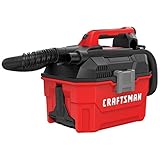
Best budget cordless shop vacuums at a glance
| Vacuum type or model | Tank capacity | Typical suction | Typical airflow | Useful runtime | Best suited to |
|---|---|---|---|---|---|
| Compact 18V/20V wet-dry vacuum | 1–2 gallons | 35–50 in. of water lift | 25–45 CFM | 15–30 minutes | Small shops, vehicles, quick sawdust cleanup |
| DeWalt DCV581H | 2 gallons | About 45 in. of water lift | About 31 CFM | 20–30 minutes with a 5Ah battery | Portable wet/dry cleanup and trim work |
| Mid-size 18V/20V wet-dry vacuum | 3–4 gallons | 40–60 in. of water lift | 35–55 CFM | 20–45 minutes | Renovation work and a small fixed workshop |
| Dual-battery cordless shop vacuum | 4–6 gallons | 50–70 in. of water lift | 50–70 CFM | 30–60 minutes | Frequent job-site use and larger tools |
These figures are useful comparison ranges rather than a promise that every vacuum reaches the same result. Manufacturers measure suction and airflow under different conditions, and battery size, hose length, filter loading, and nozzle design can change real performance substantially.
Our budget picks by situation
Best overall: DeWalt DCV581H
The DeWalt DCV581H is a practical budget choice for users already invested in DeWalt 20V MAX batteries. Its 2-gallon tank is large enough for routine sawdust, chips, and small liquid spills without making the vacuum cumbersome. It includes a flexible hose, a utility nozzle, a crevice tool, and a reusable filter, so it can handle both workshop and vehicle cleanup.
Its roughly 31 CFM airflow is adequate for a hose-and-nozzle vacuum, but it is not a substitute for a high-airflow dust extractor connected to a table saw or planer. The vacuum is better at collecting debris after cutting, drilling, routing, or sanding than at capturing every fine particle at the tool source. A 5Ah battery commonly provides around 20–30 minutes of intermittent work, depending on filter condition and whether the hose is restricted.
Best for the lowest ownership cost: a compact 18V or 20V 2-gallon vacuum
A compact battery vacuum is usually the least expensive route when you already own compatible batteries. Look for a model with a 1 1/4-inch hose, a washable pleated cartridge filter, a flat-bottom tank, and onboard tool storage. The smaller tank reduces carrying weight and charging demand, and it is sufficient when cleanup is limited to a bench, work van, or one room.
Avoid models that rely only on a foam sleeve or a thin disposable bag if you regularly clean fine sanding dust. They may be inexpensive initially, but filter replacement and declining airflow can make them costlier over time. A cartridge filter gives better fine-dust retention, provided it is cleaned correctly.
Best for longer job-site sessions: a dual-battery 4–6 gallon vacuum
Dual-battery models provide more airflow and a larger debris capacity, but they are not always the best budget purchase. They make sense when the vacuum runs several times a week, moves between locations, or cleans up after multiple trades. Their weight can exceed 20 pounds with batteries, and buying a second battery platform may cost more than the vacuum itself.
For a homeowner or occasional woodworker, a single-battery compact vacuum plus a spare battery is often better value than a large dual-battery unit. For a contractor, the larger tank reduces emptying interruptions and the wider hose is less likely to clog on chunks of drywall or wood.
What the specifications mean in actual use
Suction versus airflow
Water lift describes how strongly a vacuum can pull against resistance. It matters when the hose is long, the filter is partly loaded, or the vacuum is lifting heavier debris. Airflow, measured in cubic feet per minute, determines how much material the hose can carry once air is moving. For sawdust and chips, a balanced combination is more useful than a high suction number alone.
For a small workshop, approximately 35–50 CFM through a short 1 1/4-inch hose is workable for hand tools and floor cleanup. If you want source capture from a random-orbit sander, a 1 1/4-inch dust port, and a short hose, prioritize a good seal and clean filter. If you want to collect from a table saw or planer, cordless budget vacuums are usually underpowered; a corded dust collector or extractor is generally more suitable.
Tank capacity and weight
Tank size is not the same as usable debris capacity. A 2-gallon wet/dry vacuum may hold roughly 1.5 gallons of practical debris before the filter begins to restrict airflow or the tank becomes awkward to empty. A larger tank needs fewer emptying stops but becomes harder to carry and store.
For occasional shop use, 1–2 gallons is enough. Choose 3–4 gallons if you clean renovation debris or share the vacuum between a workshop and a vehicle. Choose 4 gallons or more when uninterrupted cleanup matters more than portability.
Hose and nozzle options
Check the supplied accessories before comparing headline motor specifications. A 5–7-foot hose is easier to store, while an 8–10-foot hose covers more of a job site but reduces effective airflow and is more likely to kink. A 1 1/4-inch hose is nimble for tools and benches; a 1 7/8-inch hose moves larger chips with less clogging.
- Crevice tool: useful for vehicle seats, corners, and narrow jig spaces.
- Wide utility nozzle: faster for floors and large work surfaces.
- Brush nozzle: safer for finished surfaces and delicate equipment.
- Tool adapter: important for routers, sanders, drills, and track-saw ports.
- Blower outlet: useful outdoors, but never use it to disperse hazardous fine dust.
A simple decision matrix
| Your situation | Recommended specification | Why |
|---|---|---|
| Budget under roughly $150 and occasional use | 1–2 gallons, single battery, 25–45 CFM | Lower purchase cost and easier storage |
| Small workshop used weekly | 2–4 gallons, cartridge filter, 35–55 CFM | Better filter life and fewer emptying stops |
| Frequent renovation or job-site work | 4–6 gallons, 1 7/8-inch hose, dual battery | More capacity and better resistance to bulky debris |
| Limited storage space | Under 15 pounds, hose wrap, onboard accessories | Can live on a shelf or in a vehicle compartment |
| Fine sanding dust | Sealed cartridge filter and optional bag | Protects airflow and simplifies emptying |
Runtime: a useful way to calculate battery needs
Suppose a vacuum runs for 25 minutes from a 5Ah battery, but your normal cleanup is split into five-minute sessions. That is approximately five cleanup sessions per charge under similar conditions. If you use it for 10 minutes each day, one battery provides roughly two days of work before charging, although cold temperatures, a clogged filter, and thick debris can reduce that figure.
For frequent use, compare the cost of a spare battery with the cost of moving to a larger battery platform. A second 5Ah battery usually improves productivity more than buying a vacuum with a slightly higher advertised suction figure, because the second pack removes charging interruptions.
Filter performance and ownership realities
The filter is usually the first component to affect performance. Fine wood dust loads pleated media quickly, especially when the tank is overfilled or the vacuum is used without a pre-separator. A small cyclone separator placed before the vacuum can capture much of the sawdust and extend filter-cleaning intervals, though it adds hose length and some airflow resistance.
- Switch off the vacuum and remove the battery before opening the tank.
- Empty the tank before debris reaches the filter or motor inlet.
- Tap or brush a dry cartridge filter outdoors; do not damage the pleats.
- Wash only filters explicitly marked washable, then allow them to dry completely.
- Check the hose, inlet screen, gasket, and nozzle for blockages.
- For wet pickup, remove or configure the filter as the manufacturer specifies, then dry the tank afterward.
Common mistakes include using a wet filter for dry dust, leaving liquid in the tank, forcing oversized chips through a narrow hose, and expecting a small cordless vacuum to replace a dust extractor. Battery vacuums also lose performance when the battery is hot, nearly empty, or stored in freezing conditions.
Final verdict
Choose the DeWalt DCV581H if you already own DeWalt 20V MAX batteries and want a capable, compact wet/dry vacuum for routine workshop and job-site cleanup. Choose a generic compact 18V or 20V model with a cartridge filter if the lowest total cost and smallest footprint matter most. Move to a 4–6 gallon dual-battery vacuum only when larger debris, longer sessions, and fewer emptying stops justify its extra weight and battery expense.