What's inside
- Quick picks by boat size
- Best electric outboard motors for small boats
- Best choices for jon boats and fishing boats
- When a high-voltage electric outboard is the better answer
- Battery demand and runtime: the calculation that matters
- Decision matrix for choosing the right system
- Mounting, wiring, and maintenance details that prevent problems
- Bottom line
- Quick picks by boat size
- Best electric outboard motors for small boats
- Best choices for jon boats and fishing boats
- When a high-voltage electric outboard is the better answer
- Battery demand and runtime: the calculation that matters
- Decision matrix for choosing the right system
- Mounting, wiring, and maintenance details that prevent problems
- Bottom line
As an Amazon Associate I earn from qualifying purchases. This post may contain affiliate links at no extra cost to you.
The best electric outboard motors are matched to boat length, total loaded weight, and intended water—not simply the highest thrust number: use a 12V motor for small tenders and fishing kayaks, 24V for most compact boats, and 48V systems when you need sustained power on a larger hull.
As an Amazon Associate we earn from qualifying purchases at no extra cost to you.

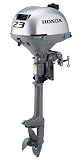
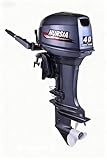

Quick picks by boat size
| Boat and typical load | Recommended system | Useful thrust or power range | Good motor types | What to prioritize |
|---|---|---|---|---|
| Inflatable tender or small fishing kayak, up to about 500 lb loaded | 12V | 18–40 lb thrust | Compact transom motor or kayak motor | Low weight, tiller control, easy battery removal |
| Small jon boat or dinghy, 500–900 lb loaded | 12V or 24V | 40–70 lb thrust | Minn Kota Endura Max, Newport Vessels NV-Series, Haswing Osapian | Correct shaft length and a deep-cycle battery |
| Aluminum fishing boat or larger inflatable, 900–1,500 lb loaded | 24V | 70–100 lb thrust | 24V transom or bow-mount motor | Battery capacity, wiring, and propeller clearance |
| Heavy jon boat, bass boat, or displacement hull, 1,500–2,500 lb loaded | 36V or 48V | Electric outboard rated by continuous power | Torqeedo Cruise, ePropulsion Navy, or similar high-voltage outboard | Continuous output, battery storage, charging access |
These are starting points rather than legal or safety ratings. Include people, fuel or gear, batteries, anchors, and the motor itself when estimating weight. A boat that is comfortable with a 40 lb-thrust motor at half load may become difficult to control when carrying two adults and camping equipment.
Best electric outboard motors for small boats
For kayaks and lightweight inflatables
A compact 12V motor is usually the best choice for a kayak, canoe, or small inflatable. Look for approximately 18–30 lb of thrust, a short or adjustable shaft, and a motor weight that can be carried without upsetting the boat’s trim. A 30–40Ah lithium battery can provide useful fishing and maneuvering time while remaining manageable to lift.
The main advantage is simplicity: one battery, modest wiring, and a small charger. The limitation is reserve power. Wind and current affect a light boat disproportionately, so a motor that moves the boat well on calm water may struggle on an exposed lake. Keep a paddle aboard and avoid treating a small electric motor as a substitute for navigation and emergency equipment.
For small tenders and dinghies
A 30–55 lb-thrust transom motor is a better fit for a tender carrying one or two people. Minn Kota Endura Max models are common examples of 12V freshwater trolling motors, while Newport Vessels and Haswing offer compact transom-mounted electric motors in several thrust classes. These motors are relatively affordable and easy to replace, but most are primarily designed for freshwater.
For occasional use, a 12V 50–100Ah lithium iron phosphate battery is often more practical than a lead-acid battery. Lithium batteries cost more initially but provide more usable capacity, weigh substantially less, and maintain voltage better under load. Confirm that the battery’s battery-management system can supply the motor’s maximum current.
Best choices for jon boats and fishing boats
For a 12–14-foot aluminum boat or a wide fishing skiff, 55–80 lb of thrust is a sensible range when the loaded weight stays below roughly 1,000 lb. A 12V 55 lb motor can work for calm-water fishing, but a 24V 70–80 lb motor gives better acceleration and control without forcing the motor to operate at its limit all the time.
At this size, mounting becomes as important as thrust. A transom motor is inexpensive and easy to steer from the rear. A bow-mount motor improves boat positioning while fishing, especially in wind, but requires a rigid mounting deck, a quick-release bracket, and additional space at the bow. Measure from the mounting surface to the waterline: the propeller should remain submerged during turns, but the shaft should not be so long that it becomes awkward to lift or strikes the bottom.
Freshwater trolling motors are not automatically suitable for saltwater. Salt can corrode electrical connections, fasteners, shaft components, and steering hardware. For coastal use, choose a model specifically labeled for saltwater, rinse it with fresh water after every outing, and inspect sacrificial anodes where fitted. Never store a wet motor in a sealed compartment.
When a high-voltage electric outboard is the better answer
Dedicated electric outboards become more compelling on heavier boats or when you need sustained propulsion rather than low-speed trolling. Torqeedo Cruise models and ePropulsion Navy models are examples of purpose-built electric outboards with integrated controls, robust mounting systems, and battery options designed around continuous propulsion. Their higher purchase price is partly paying for the motor, controls, monitoring, and propulsion battery as a system.
A 3–6 kW electric outboard may be appropriate for a light displacement boat or compact skiff, while heavier planing hulls require careful matching of motor power, hull design, battery voltage, and local regulations. Do not equate a trolling motor’s advertised thrust directly with an electric outboard’s kilowatt rating. Thrust figures are often measured at low speed, whereas kilowatts describe electrical input or rated output under a different test condition.
High-voltage systems normally use proprietary or purpose-built batteries. That reduces compatibility but improves safety and monitoring. Check battery mass, charging time, ingress protection, connector type, warranty coverage, and whether the battery can be removed for charging. A motor that fits the transom but leaves no practical way to recharge is not a good ownership choice.
Battery demand and runtime: the calculation that matters
Runtime depends on energy, not just amp-hours. Calculate battery energy in watt-hours:
Watt-hours = volts × amp-hours
For example, a 12V 100Ah battery contains approximately 1,200Wh on paper. If it is a lithium battery and you plan to use about 90% of its rated capacity, usable energy is roughly 1,080Wh. A motor drawing 600W at a particular speed would therefore run for approximately:
1,080Wh ÷ 600W = 1.8 hours
That is an estimate, not a promise. Wind, waves, weeds, boat loading, battery temperature, propeller condition, and speed setting all change consumption. At half speed, a motor often uses far less than half the power because water resistance rises sharply with speed. This is why a large battery can provide a full day of trolling but only a short period of high-speed travel.
Lead-acid batteries should generally not be discharged as deeply as lithium batteries if you want reasonable service life. They also become heavy: a 12V 100Ah marine lead-acid battery may weigh around 60–70 lb, compared with roughly 25–30 lb for a comparable lithium battery. Secure either type firmly so it cannot shift in rough water.
Decision matrix for choosing the right system
| Your situation | Recommended direction | Why | Trade-off |
|---|---|---|---|
| Low budget, occasional calm-water use | 12V freshwater trolling motor and deep-cycle battery | Lowest equipment cost and broad availability | Heavy battery and limited corrosion protection |
| Frequent fishing, limited lifting strength, or small storage area | 12V or 24V motor with LiFePO4 battery | Lower carried weight and better usable capacity | Higher upfront price; charger must match the battery |
| Windy lakes or a heavily loaded 14–16-foot boat | 24V, 70–100 lb thrust, or a dedicated high-voltage outboard | More reserve power and better control under load | Two batteries or a larger proprietary battery system |
| Saltwater use several times per month | Saltwater-rated motor with sealed connectors and corrosion-resistant hardware | Better protection against repeated exposure | More maintenance and usually a higher purchase price |
| Long trips where propulsion is essential | Dedicated electric outboard with display, battery gauge, and spare charging plan | More predictable monitoring and installation | Greater cost, battery mass, and charging dependence |
Mounting, wiring, and maintenance details that prevent problems
- Use the correct shaft length. A shaft that is too short ventilates the propeller in waves; one that is too long can hit the bottom and adds leverage to the mount.
- Size cables for the distance. Long runs create voltage drop and heat. Follow the motor manufacturer’s cable and fuse recommendations rather than relying on ordinary automotive wire.
- Install a circuit breaker or fuse. It protects the wiring during a short circuit or stalled propeller. Position it close to the battery.
- Secure the battery. Use a marine battery box, straps, or a dedicated hold-down. A battery sliding across the hull can damage terminals and change trim.
- Clear the propeller after every outing. Fishing line, weeds, and plastic increase load, reduce runtime, and can damage the shaft seal.
- Rinse saltwater equipment. Use fresh water, dry the connectors, and apply only manufacturer-approved protective products. Do not pressure-wash seals or electrical fittings.
- Store batteries correctly. Follow the battery maker’s charge and temperature guidance. Lithium batteries should not normally be charged when frozen or outside their specified temperature range.
Bottom line
For a small tender or kayak, choose a light 12V motor and prioritize portability. For a fishing boat, move to 24V when the loaded weight, wind, or desired range makes a 12V motor work too hard. For heavier boats and regular point-to-point travel, compare dedicated 3–6 kW electric outboards by usable battery energy, not headline thrust. The best electric outboard motors are the ones whose voltage, mounting, corrosion protection, and battery capacity match the way you actually use the boat.