What's inside
As an Amazon Associate I earn from qualifying purchases. This post may contain affiliate links at no extra cost to you.
The best electric leaf blower for most yards in 2026 is the EGO Power+ LB7654, which pairs a 765 CFM airflow rating with a 200 MPH nozzle speed on a single 56V battery, but a lighter 650 CFM model or a quieter Ryobi Whisper unit often makes more sense on smaller lots and in noise-restricted neighborhoods.
Electric blowers are now strong enough to replace a handheld gas blower for nearly every homeowner. The trick is reading the specs properly: airflow volume (CFM) moves piles of leaves, nozzle speed (MPH) lifts wet or matted debris, and battery size decides whether you finish the job on one charge.
As an Amazon Associate we earn from qualifying purchases at no extra cost to you.


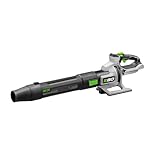

The Shortlist
| Model | Battery platform | Rated CFM | Rated MPH | Approx. weight with battery | Typical price range |
|---|---|---|---|---|---|
| EGO Power+ LB7654 | 56V | 765 | 200 | about 12-13 lb | $280-$350 (kit) |
| EGO Power+ LB6504 | 56V | 650 | 180 | about 10 lb | $200-$280 (kit) |
| Ryobi 40V HP Whisper Series (RY404014BTL) | 40V | 650 | 160 | about 10-11 lb | $180-$260 |
| Milwaukee M18 FUEL Dual Battery Blower (2824-20) | 2 x 18V | 600 | 145 | varies with packs | $250-$350 (tool only) |
| Husqvarna Leaf Blaster 350iB | 36V | 800 | 200 | about 11-12 lb | $300-$400 (kit) |
Ratings are manufacturer figures at maximum or turbo setting. Real-world output on the normal setting is lower, and turbo drains any battery quickly.
Which Blower Fits Your Property
Large lots and heavy fall leaf drop: EGO LB7654
If you have mature oaks or maples and a half acre or more, airflow volume matters most, and the LB7654 is one of the highest-volume handheld battery blowers sold widely in the US. Its variable-speed trigger, cruise control and turbo button let you run it gently along beds and then push it hard on open lawn. The main downside is weight: a large 56V pack on the back of the handle makes it front-light but heavy overall, so long sessions are tiring.
Medium lots and all-round use: EGO LB6504
The LB6504 gives up some volume in exchange for a lighter, better-balanced tool. For driveways, patios, grass clippings after mowing and moderate leaf drop, 650 CFM is plenty, and the lower weight makes it the better daily tool for many people.
Noise-sensitive neighborhoods: Ryobi 40V HP Whisper Series
Ryobi’s Whisper line is engineered for lower sound output, which matters where HOAs or towns restrict blower noise or early-morning yard work. Published measurements put it noticeably quieter than most competitors at the operator’s ear. It also runs on the widely available Ryobi 40V battery family.
Existing Milwaukee M18 owners: M18 FUEL Dual Battery Blower
Drawing on two M18 packs at once, this blower gives jobsite-tool owners a strong yard blower without buying into a new battery system. It is louder than the others on this list and its value depends on already owning several high-capacity M18 batteries.
Maximum handheld output: Husqvarna Leaf Blaster 350iB
Husqvarna rates the 350iB at 800 CFM, at the top of the handheld battery class. It suits owners who want a dealer-supported brand and the most air possible without moving to a backpack.
Runtime Reality
Blowers are among the most power-hungry cordless tools. A high-output blower on turbo can draw well over 1,000 watts, which is why rated runtimes vary so widely.
| Battery | Energy | Low speed | Normal use (mixed) | Turbo only |
|---|---|---|---|---|
| 56V 5.0Ah | 280 Wh | up to 2 hr or more | about 20-35 min | about 12-15 min |
| 40V 6.0Ah | 240 Wh | up to 1.5 hr | about 20-30 min | about 10-12 min |
| 2 x 18V 8.0Ah | 288 Wh | over 1 hr | about 20-30 min | about 12-15 min |
For a quarter-acre lot that needs 15 minutes of blowing per week in summer, one battery is plenty. In peak leaf season on a larger lot, budget either a second battery or a larger 7.5Ah-class pack, and plan the job so you use turbo only for wet or matted patches.
CFM vs MPH: What Actually Matters
- CFM (cubic feet per minute) is the volume of air. Higher CFM moves bigger piles farther with each pass. This is the number to prioritize for leaves.
- MPH (nozzle speed) is how fast the air leaves the tube. High MPH with low CFM feels strong on a fingertip but pushes only a narrow strip.
- Nozzle choice trades one for the other. A narrow concentrator nozzle raises speed and lowers volume; a wide flat nozzle does the opposite. Most leaf work goes faster with the wider nozzle.
Corded Electric Blowers: When They Still Make Sense
A corded 12-amp handheld blower costs a fraction of a battery kit and never runs out of power. On a small lot with outdoor outlets, it is still a sensible budget choice. The limits are the cord, which usually needs a 50 to 100-foot 14- or 12-gauge extension, and reach on larger properties. Several corded models also convert to a vacuum and mulcher, which battery blowers generally do not.
Ownership Tips That Extend Life
- Keep the intake screen clear. A blocked intake overheats the motor and cuts output. Check it whenever you blow wet leaves or grass.
- Do not run batteries hot. Let a pack cool before recharging after a long turbo session; most chargers will pause anyway.
- Store batteries part-charged. Over winter, keep packs around 30 to 50 percent and indoors above freezing.
- Use hearing and eye protection. Even quiet models exceed comfortable levels at the operator’s position on high settings.
FAQ
Is 765 CFM overkill for a small yard?
Usually. Under about a quarter acre, a 450 to 650 CFM blower is lighter, cheaper and easier to control around beds.
Should I get a battery backpack blower instead?
If you clear more than an acre of heavy leaf fall, a backpack spreads weight onto your shoulders and allows larger batteries. For typical suburban lots, a handheld is easier to store and use.