
Our Top Picks
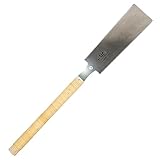
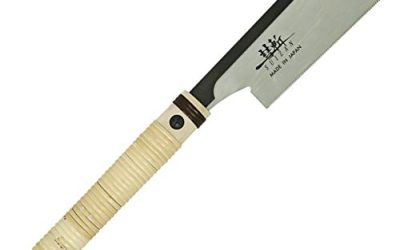
 SUIZAN Ryoba Double Edge Saw 9.5" Assembly ver9.5 Inch (240mm)23.2 x 0.79 x 3.15 inches0.44 poundsCheck on Amazon


What's inside
- Top Picks at a Glance
- Comparison Table
- 1. SUIZAN Ryoba 9.5″: Best Overall
- 2. Gyokucho 770-3500 Razor Dozuki: Best Budget Joinery Saw
- 3. JORGENSEN Ryoba 7″: Best Value
- 4. Temple Tool Ryoba 9.5″: Best Premium Ryoba
- 5. SUIZAN Kataba 10.5″: Best for Long Crosscuts
- 6. KAKURI Ryoba 9.5″: Best for Comfort
- 7. ROCKLER Japanese Mini Dozuki: Best for Tiny Cuts
- Also Consider
- Ryoba, Dozuki or Kataba: Which Pattern Fits Your Work?
- How to Get a Clean Cut With a Pull Saw
- How We Chose
- Buying Guide
- Common Mistakes
- Frequently Asked Questions
- Which One Should You Buy?
- Sources
As an Amazon Associate I earn from qualifying purchases. This post may contain affiliate links at no extra cost to you.
The best Japanese pull saw for most woodworkers is a 9.5 inch ryoba such as the SUIZAN Ryoba Double Edge Saw, because one blade gives you a rip edge and a crosscut edge in a single tool. If your work is mostly fine joinery, a dozuki such as the Gyokucho Razor Dozuki is the better runner-up, since its thin, stiffened blade follows a knife line for dovetails and tenon shoulders. This guide covers the best Japanese pull saws and hand saws of this type for woodworking, from budget flush-cut saws to premium ryoba models, and explains which of the three patterns (ryoba, dozuki, kataba) fits the cuts you actually make.
A quick note on how this article was built. This guide is research-based: we compared manufacturer spec sheets, retailer listing details and independent woodworking write-ups, and we did not personally use these products. Where a spec is not stated by the maker or the listing, we write “not listed” rather than guess.
As an Amazon Associate we earn from qualifying purchases at no extra cost to you.



Top Picks at a Glance
- Best Overall: SUIZAN Ryoba Double Edge Saw 9.5 inch, the most flexible single saw for rip and crosscut work.
- Best Value: JORGENSEN Ryoba 7 inch, an SK5 blade with 18 TPI and 7-12 TPI edges at a small-shop price.
- Best Budget Joinery Saw: Gyokucho 770-3500 Razor Dozuki, a classic fine-cut saw for dovetails.
- Best Premium Ryoba: Temple Tool 9.5 inch Ryoba with separate rip and crosscut edges.
- Best for Long Crosscuts: SUIZAN Kataba Single Edge Saw 10.5 inch.
- Best for Comfort: KAKURI 9.5 inch Ryoba with a non-slip cork handle.
- Best for Tiny Cuts: ROCKLER Japanese Mini Dozuki Panel Saw with a 150 mm blade.
Comparison Table
| Product | Type / best for | Key specs | Watch for | Price tier |
|---|---|---|---|---|
| SUIZAN Ryoba 9.5″ | Ryoba, all-round woodworking | 9 TPI rip, 15 TPI crosscut; 0.5 mm plate (maker page) | Teeth are not resharpenable by hand | Mid-range |
| Temple Tool Ryoba 9.5″ | Ryoba, joinery and board cutting | Rip-cut and crosscut edges; TPI not listed | Tooth counts need checking on the listing | Premium |
| JORGENSEN Ryoba 7″ | Ryoba, small shops and flush trimming | SK5 flexible blade; 18 TPI and 7-12 TPI edges | Short blade limits cut depth | Budget |
| KAKURI Ryoba 9.5″ | Ryoba, comfort grip | Cork handle; double-edged blade; TPI not listed | Handle cork can wear with heavy use | Budget to mid-range |
| Gyokucho 770-3500 Razor Dozuki | Dozuki, dovetails and tenons | Thin blade with stiffening spine; TPI not listed | Spine limits cut depth | Budget |
| SUIZAN Kataba 10.5″ | Kataba, long crosscuts | 14 TPI; 0.6 mm plate; about 0.8 mm kerf (maker page) | Single edge, crosscut only | Mid-range |
| ROCKLER Mini Dozuki | Dozuki, small precise cuts | 150 mm blade; 106 teeth (listing) | Light-duty only | Budget |
1. SUIZAN Ryoba 9.5″: Best Overall
- Double-edge ryoba pull saw, 9.5 inch (240 mm) blade
- Rip edge about 9 TPI, crosscut edge about 15 TPI, per the maker’s product page
- Plate thickness about 0.5 mm with a kerf near 0.8 mm
- Replaceable blade design (check the exact listing for handle details)
- Made in Japan by a long-established saw brand
Best for: anyone buying a first Japanese pull saw who wants to rip and crosscut with one tool. Skip if: you only ever make fine joinery cuts, where a dozuki is more controllable.
The ryoba is the pattern that makes the most sense when you have one saw and a bench. Flip it over and the other edge has different teeth, so you do not need to change blades between a rip along the grain and a crosscut across it. On a 9.5 inch blade you get enough reach to cut through a typical 2×4 or a 3/4 inch board without running out of stroke length, and the plate is thin enough that the cut feels light compared with a Western panel saw.
In practice the thin plate is the real selling point. A 0.5 mm plate removes less wood than the 0.9 to 1.2 mm plate common on Western hand saws, which means less effort per stroke and a narrower kerf that closes up neatly on a joint. The trade-off is that pull saws rely on tension, so you pull gently and let the teeth do the work. Pushing hard or twisting the blade in the cut is how people kink plates.
Pros: versatile rip and crosscut edges; thin kerf; trusted maker with a wide range of sizes; replacement blades available. Cons: impulse-hardened teeth cannot be sharpened with a file; easy to damage if dropped or twisted; the learning curve of pulling instead of pushing.
2. Gyokucho 770-3500 Razor Dozuki: Best Budget Joinery Saw
- Razorsaw dozuki with a stiffening spine along the back of the blade
- Designed for dovetails, tenon shoulders and fine joinery
- Replaceable blade (the listing name includes the blade)
- TPI and plate thickness: not listed in the store title
Best for: learning to cut dovetails and tenons without paying for a premium joinery saw. Skip if: you need to cut deep into wide boards, since the spine stops the blade from sinking past its depth.
A dozuki is the specialist of the three patterns. The spine along the top edge keeps a very thin blade straight, which is why it can follow a knifed baseline accurately and leave a surface that needs little or no cleanup. That same spine is the limitation: the depth of any cut is capped by the distance from the teeth to the spine, so a dozuki is a joinery saw, not a lumber-breakdown saw.
Because this model is sold as a budget Razorsaw, it is a sensible way to find out whether you enjoy hand-cut joinery before moving to a more expensive saw. Pair it with a marking knife and a square, and use light strokes at the start to establish the kerf. If the listing details matter to you (tooth count in particular), read the current listing before buying, because we could not confirm them from the title alone.
Pros: thin, accurate cut; low cost; replaceable blade; excellent for practice. Cons: limited cut depth; delicate teeth; specs not stated in the listing title.
3. JORGENSEN Ryoba 7″: Best Value
- 7 inch double-edge ryoba pull saw
- SK5 flexible blade
- 18 TPI on one edge and 7-12 TPI on the other, per the listing
- Compact size for benches and tool bags
Best for: small shops, flush trimming dowels and plugs, and cuts in tight spots. Skip if: you often cut boards wider than about 5 inches.
The shorter blade is easier to control, which helps beginners keep a straight kerf. The 18 TPI edge is the fine side, suited to clean crosscuts and trimming. The coarser 7-12 TPI edge is the faster side for ripping along the grain. SK5 is a high-carbon steel commonly used on lower-cost pull saws; it holds a usable edge but, like all impulse-hardened teeth, is replaced rather than resharpened.
This is the saw to buy if the goal is to try pull-saw technique with little risk. It will not feel as refined as the premium options, but it cuts on the pull stroke the same way, and the narrower blade is forgiving when you are learning to keep the saw square to the face of the work.
Pros: low cost; compact; fine and coarse edges; easy to control. Cons: limited cut depth; teeth are disposable; fit and finish is simpler than premium saws.
4. Temple Tool Ryoba 9.5″: Best Premium Ryoba
- 9.5 inch ryoba with both a rip-cut edge and a crosscut edge
- Marketed for dovetails, tenons, joinery and cutting boards
- TPI figures: not listed in the store title
- Sold by a tool company that also offers dozuki and kataba versions of the same series
Best for: woodworkers who want a refined ryoba and may add a dozuki or kataba from the same series later. Skip if: you are watching the budget, where the JORGENSEN or KAKURI do the same basic job.
Temple Tool positions this saw toward joinery, and its listing mentions dovetails and tenons alongside board cutting. A ryoba this size can do both because the crosscut edge leaves a smooth face and the rip edge clears sawdust well along the grain. If you work in hardwoods, check the listing for the tooth specification before buying and compare it with the maker’s own page, because tooth count changes how smooth and how quick the cut is.
The reason to pay for a premium ryoba is consistency: straighter plates, a handle shaped for a relaxed pull, and a series of companion saws if you grow into the hobby. For a single-saw purchase, the SUIZAN is still the benchmark we would start from, but this is a worthy alternative.
Pros: rip and crosscut edges; joinery-oriented; part of a matching series. Cons: higher cost; tooth specs not shown in the title; teeth not resharpenable.
5. SUIZAN Kataba 10.5″: Best for Long Crosscuts
- Single-edge kataba, 10.5 inch (265 mm) blade
- 14 TPI, plate about 0.6 mm, kerf about 0.8 mm (maker page)
- Crosscut teeth only
- One source says there is no dozuki-style spine, so depth is not capped; the maker lists a carbon steel spine. Check the current listing
Best for: trimming boards to length, cutting trim and moulding, and general carpentry crosscuts. Skip if: you want to rip long boards, since there is no rip edge.
The kataba trades the ryoba’s flexibility for a single clean edge and a straight back. Because the blade is only toothed on one side, it is often easier to hold and aim, and the extra length gives you long, rhythmic strokes through thicker stock. At 14 TPI the crosscut finish is smooth enough for visible work such as shelves and trim.
The conflicting information about the spine is a good reminder to read the exact listing. Some retailers describe the saw as spine-free so it can cut to any depth, while the maker’s page mentions a carbon steel spine. Either way, the saw is a crosscut specialist, and its main benefit is a cleaner, faster cut across the grain than a ryoba of the same length.
Pros: long stroke; smooth crosscut; easy to aim; trusted brand. Cons: no rip edge; replacement blade needed when damaged; spine description varies by seller.
6. KAKURI Ryoba 9.5″: Best for Comfort
- 9.5 inch Japanese pull saw with a double-edged ryoba blade
- Non-slip cork handle
- Marketed for woodworking use
- TPI: not listed in the store title
Best for: longer sessions where a grippy, lightweight handle matters. Skip if: you want to confirm exact tooth counts before buying and the listing does not state them.
Pull saws are used with a light, two-handed or one-handed grip, and a handle that does not slip makes that easier. Cork stays comfortable when your hands are warm and gives a bit of cushion on long cuts. KAKURI is a Japanese tool brand that sells through general retail, and this saw sits between the budget imports and the premium maker saws.
A cork handle also helps with accuracy. If you tend to grip hard, a gentler handle encourages you to relax your hand, which keeps the blade from binding. If you plan to use the saw outdoors or in damp conditions, wipe the handle dry and store the saw with the blade covered.
Pros: comfortable grip; ryoba flexibility; fair cost. Cons: specs not shown in the title; cork can wear; blade is a consumable.
7. ROCKLER Japanese Mini Dozuki: Best for Tiny Cuts
- Mini dozuki panel saw with a 150 mm (about 6 inch) blade
- 106 teeth, per the listing
- Silver finish; compact size
- Designed for small, precise cuts
Best for: model-making, small boxes, and trimming small parts. Skip if: you need a primary workshop saw.
A 150 mm blade with 106 teeth is a very fine tool. Fine teeth leave a smooth surface and are less likely to tear delicate grain, but they cut slowly in thick stock. Think of it as a small-parts saw: dowels, tiny tenons, plugs, and fine kerfs in thin boards.
The mini dozuki is a nice second saw for a shop that already has a ryoba. It handles the jobs that a larger blade makes awkward, and it is inexpensive enough to keep close to the bench. We would not use it as a first saw because the short stroke length makes longer cuts tiring.
Pros: precise; light; fine tooth count; low cost. Cons: light duty; slow in thick stock; small size.
Also Consider
RUITOOL 6 Inch Ryoba Flush-Cut Saw
A 6 inch double-edge ryoba with a flexible SK5 blade and 14/17 TPI edges. A very low-cost way to try flush cuts on dowels and plugs. Expect a light-duty tool.
JORGENSEN Kataba 10-3/8 Inch
A kataba with a 14 TPI SK5 blade and a folding design according to the listing. Good if you want a kataba at a lower cost than the maker-brand option.
Clarke Brothers Kataba and Dozuki Set
A two-saw set with 10 inch blades that share one rattan handle. Useful for someone who wants to compare patterns before committing to a premium saw.
HAUTMEC 9 Inch Folding Flush-Cut Saw
A folding pull saw with a 17 TPI SK5 blade. The folding design is practical for a tool bag or truck, but it will not match a fixed-handle saw for rigidity.
Ryoba, Dozuki or Kataba: Which Pattern Fits Your Work?
Most of the confusion around Japanese saws comes from the three names, so it helps to match each one to a job rather than a brand. The table below maps common woodworking situations to a pattern.
| Your situation | Best pattern | Why | Example pick |
|---|---|---|---|
| One saw for a small home shop | Ryoba, 9.5 inch | Rip and crosscut edges in one tool | SUIZAN Ryoba 9.5″ |
| Hand-cut dovetails and tenon shoulders | Dozuki | Thin plate and spine follow a knife line | Gyokucho Razor Dozuki |
| Trimming boards, shelves and moulding to length | Kataba, 10 inch or longer | Long stroke, clean crosscut | SUIZAN Kataba 10.5″ |
| Flush-trimming dowels, plugs and tenon ends | Short ryoba or flush-cut saw | Flexible, can lie flat on the surface | JORGENSEN Ryoba 7″ |
| Model-making and tiny parts | Mini dozuki | Very fine teeth, small blade | ROCKLER Mini Dozuki |
| Long sessions with sore hands | Any pattern with a soft handle | Less grip force needed | KAKURI Ryoba 9.5″ |
If your budget allows only one saw and you are unsure, the ryoba remains the safe choice. It covers the widest range of jobs, and the second saw you add later will usually be a dozuki for joinery or a kataba for trim, depending on where you notice the ryoba falling short.
How to Get a Clean Cut With a Pull Saw
Technique matters as much as the saw. Start by marking the line with a knife or a sharp pencil, then place the blade on the waste side of the line. For the first two or three strokes, pull lightly, angling the blade slightly so only the first few teeth bite. Once a kerf is established, lower the blade to your working angle and take long, relaxed strokes using the whole length of the blade.
Hold the work firmly. A bench hook or a planing stop helps for joinery, and clamps or a vise help for larger boards. Keep your wrist straight and let your shoulder and elbow drive the stroke. Because the saw cuts on the pull, the blade stays in tension, which is why it can be so thin. If the saw starts to wander, stop and restart the kerf rather than bending the blade to correct it.
When you reach the end of the cut, support the offcut so it does not tear the last fibres, and slow your strokes. For flush cuts against a surface, slip a thin piece of card or a plastic shim under the blade to protect the finished face. After use, wipe the blade, especially if you cut resinous or damp wood, and store the saw with a cover so the teeth do not catch on other tools.
Finally, accept that a pull saw blade is a wear item. A kinked or dull plate is usually cheaper to replace than to repair. Keep a spare blade, and learn the pattern of your own mistakes: if you kink blades by twisting, a short practice session with lighter strokes will save you money.
How We Chose
This guide is research-based. We started by searching the store catalogue for pull saws in each pattern (ryoba, dozuki, kataba), then compared the listed blade lengths, tooth counts and materials. For the SUIZAN models we cross-checked figures against the maker’s product pages and an independent retailer, and noted where those sources disagreed. We did not personally use these products, and we do not claim ownership experience.
Our selection rules were simple. Each pick had to be a real, currently sold pull saw. We limited the main picks to two per brand so the list does not read like a single manufacturer’s catalogue. We also made sure each pattern was represented so readers can see the differences. Where a spec was missing from the listing we wrote “not listed” instead of filling the gap with a guess, and we avoided quoting prices, using tier words instead because prices change.
We cross-referenced our understanding of pull-saw technique with woodworking publications and guides that explain the differences between Japanese and Western saws. Those sources agree on the broad points (thin plate, cut on the pull stroke, replaceable blade) but disagree on some tooth-count ranges, so we treated any single number as approximate.
Buying Guide
Choose the pattern first
A ryoba has teeth on both sides: one edge for ripping along the grain, one for crosscutting. A dozuki has fine teeth and a stiffening spine for joinery. A kataba has teeth on one side only and is often a crosscut saw. If you can only buy one saw, buy a ryoba. If you are mainly cutting dovetails and tenons, buy a dozuki. If you mainly trim boards and moulding, a kataba is faster to control.
TPI: fine versus fast
Teeth per inch controls the balance between speed and finish. Roughly 9 TPI suits ripping, 14 to 17 TPI suits general crosscuts, and 20 TPI or more suits fine joinery. Sources quote Japanese pull saws anywhere from about 9 to 24 TPI depending on pattern. Higher TPI cuts slower but leaves a smoother face. If the listing does not state TPI, check the maker’s page or choose a model that does.
Blade length and cut depth
A 6 to 7 inch blade is easiest to control and suits small work. A 9.5 inch blade gives you stroke length for boards and framing. A 10.5 inch kataba is for long crosscuts. Remember that a dozuki’s spine caps the cut depth at the distance between the teeth and the spine, so a dozuki is not a good choice for cutting through thick stock.
Replaceable blades and teeth
Most pull saws use impulse-hardened teeth. They stay sharp for a long time, but cannot be resharpened with a file, so a blade is a consumable. Check that replacement blades exist for the saw you buy. Models from established makers usually have them, while very cheap saws are often disposable as a whole.
Handle and weight
A long straight handle suits two-handed use for rip cuts, while a shorter handle suits one-handed trimming. Rattan wrapped handles are traditional and comfortable. Cork and rubber handles are practical alternatives. Avoid heavy handles on thin blades because the weight can pull the cut off line.
Common Mistakes
- Pushing the saw like a Western saw. Pull saws cut on the pull stroke; pushing can buckle the thin plate.
- Using a dozuki for deep cuts. The spine will stop the cut.
- Applying pressure. Let the teeth work with a light pull.
- Twisting the blade in the kerf. This is the usual way plates kink.
- Storing the saw uncovered. Teeth are delicate, so use a sheath or cover.
- Buying on length alone. A longer blade is not better if you cut mostly small joinery.
Frequently Asked Questions
What is the best Japanese hand saw for woodworking?
A 9.5 inch ryoba is the best single choice for most woodworkers because it rips and crosscuts. The SUIZAN Ryoba is the model we would start with. Add a dozuki later if you do a lot of fine joinery.
What is the difference between ryoba, dozuki and kataba saws?
A ryoba has teeth on both edges, one for ripping and one for crosscutting. A dozuki has fine teeth and a stiffening spine for joinery. A kataba has teeth on one edge and typically cuts across the grain.
Are Japanese saws good for cutting joints?
Yes, dozuki and ryoba saws are widely used for dovetails, tenons and similar joints because the thin plate gives a narrow kerf and good control. Technique matters more than price, so practise on scrap wood first.
Can I use a Japanese folding saw for woodworking?
Yes, for light work. A folding Japanese saw is convenient for flush cuts and travel, but a fixed-handle saw is more rigid and better for accurate joinery.
Can you sharpen a Japanese pull saw?
Generally no. Most use impulse-hardened teeth that are not meant to be filed, so you replace the blade when it dulls. Check that a replacement blade exists before buying.
How many TPI should a Japanese pull saw have?
For ripping choose about 9 TPI, for general crosscuts 14 to 17 TPI, and for fine joinery 20 TPI or more. These are approximate ranges, and sources vary slightly.
Are cheap Japanese-style saws worth buying?
They are fine for learning and occasional flush cuts, but expect simpler fit and finish and disposable blades. If you use a pull saw regularly, a maker-brand ryoba is usually worth the extra cost.
Which One Should You Buy?
If you want one saw, choose the SUIZAN Ryoba 9.5 inch. If you want the lowest-risk way to try pull saws, choose the JORGENSEN Ryoba 7 inch. If you are learning dovetails, choose the Gyokucho Razor Dozuki. If you mostly trim boards to length, choose the SUIZAN Kataba 10.5 inch. For comfort on long jobs, the KAKURI is worth a look, and for tiny precise cuts the ROCKLER Mini Dozuki is a handy second saw. If you want a refined ryoba and plan to grow a set, the Temple Tool series is a premium route.
Whatever you buy, practise the pull stroke on scrap, let the teeth cut, and keep a spare blade on hand. A good pull saw is a small investment that makes hand-cut joinery much more approachable.
Sources
- SUIZAN manufacturer product pages (ryoba and kataba specifications)
- Infinity Tools Japanese pull saw overview
- Garage Tooled best Japanese saws guide
- Oushke Japanese pull saw types guide
- The Woodworking Club Suizan kataba listing
Last updated: October 2026
Related guides
More from Amazon
Programs that pair well with the guide above. Offers and eligibility are set by Amazon and may change.
A free business account with business pricing and bulk-buying tools for work, shop or home office.
Create a business accountFree shipping on eligible items, Prime Video and more. Eligible new members can start with a free trial.
Start a Prime free trialAudiobooks and podcasts to listen to on the go. Eligible new members can start with a free trial.
Try Audible freeAd-free music streaming. Eligible new subscribers can start with a free trial.
Try Music Unlimited freeAs an Amazon Associate we earn from qualifying purchases.
Write Your Review
No reviews yet. Be the first to share your experience!