What's inside
As an Amazon Associate I earn from qualifying purchases. This post may contain affiliate links at no extra cost to you.
What matters when cutting wood framing
For demolition, a cordless reciprocating saw needs enough power to cut through studs, nails and occasional screws without stalling, but control matters just as much. A heavy saw is tiring overhead; an overly aggressive one can jump around when the blade catches a fastener. For typical house framing, a quality 18V or 20V-class saw is a practical starting point. Higher-voltage platforms can offer more speed and runtime, but add weight and cost.
Check the bare-tool weight and how the battery changes the balance. A saw that feels manageable without a battery can become awkward with a large pack attached. A 4Ah or 5Ah battery is a useful middle ground for repeated cuts; a compact 2Ah pack is lighter for short jobs but may need frequent swaps. If you already own compatible batteries, staying on that platform is often the best value.
As an Amazon Associate we earn from qualifying purchases at no extra cost to you.


Features worth paying for
A variable-speed trigger helps start cuts accurately and slow down near pipes, wiring or finished surfaces. Orbital action moves the blade in a more aggressive path and can speed rough cuts in clean wood. It also increases vibration and can make the saw harder to control around nails or delicate material. Look for a switchable orbital setting if you expect both fast demolition and controlled cuts.
A tool-free blade clamp is useful when demolition blades bend or wear out mid-job. A pivoting shoe helps keep the blade supported as the cut angle changes. Vibration reduction can make a noticeable difference over a long session, though it does not eliminate fatigue. Blade length matters too: a 6-inch blade is easy to control for common studs, while an 9- or 12-inch blade can reach through thicker assemblies but is easier to bend.
Cordless saw types compared
| Type | Best for | Trade-off |
|---|---|---|
| Compact 18V or 20V saw | Occasional repairs, tight spaces and short cuts | Less comfortable in repeated heavy demolition |
| Full-size 18V or 20V saw | Most framing removal and general remodeling | Heavier, especially with a large battery |
| Higher-voltage saw | Long, demanding cuts and frequent professional use | Higher tool and battery cost; often more weight |
For a homeowner removing a few walls or cutting out damaged framing, a full-size saw on an existing battery platform is usually the sensible choice. A compact saw is fine for occasional cuts, but expect slower progress through doubled studs or nail-heavy lumber. If demolition is regular paid work, compare full-size and higher-voltage tools by weight with the battery installed, not by voltage alone. Browse 18V cordless reciprocating saws if you want to compare common platform options.
Choose blades for the material
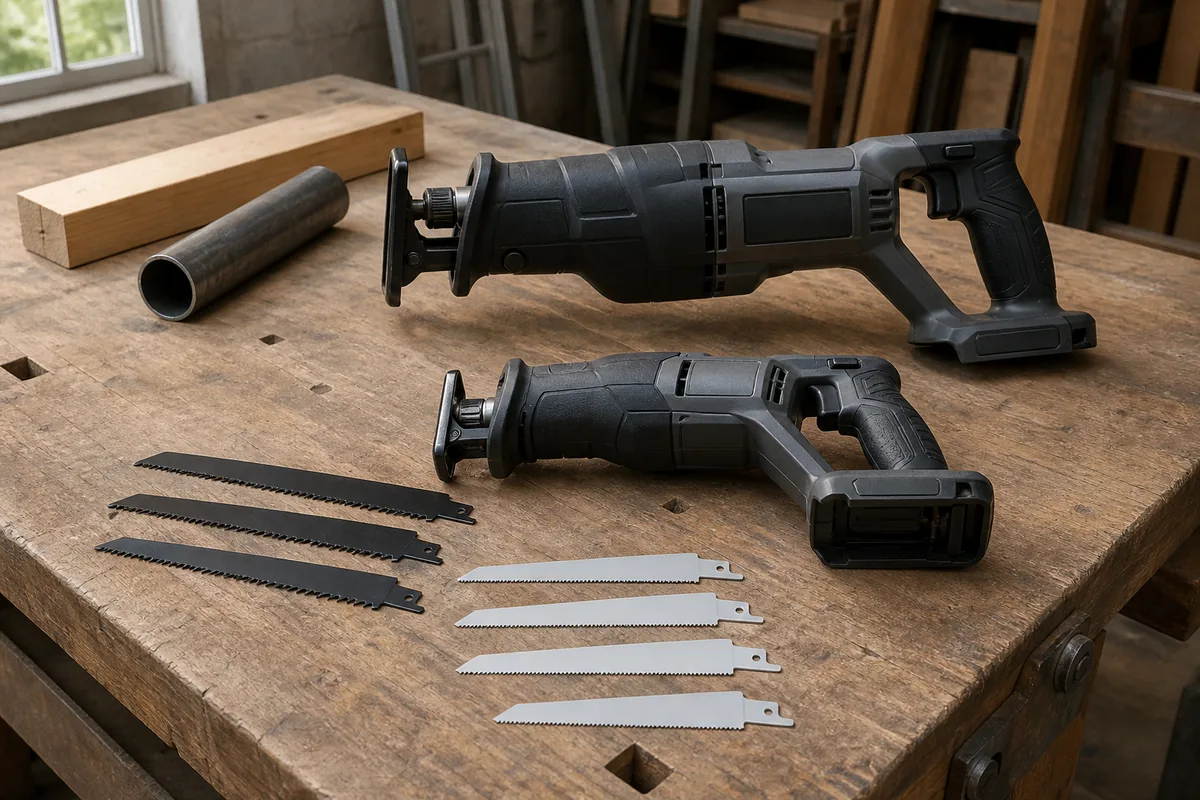
The blade often determines whether a cut feels easy or miserable. For wood with nails, use a demolition or nail-embedded-wood blade with a coarse tooth pattern. A blade around 6 to 9 inches long is a useful general-purpose range for studs and framing members. Fine-tooth metal blades cut nails cleanly but can be slow through wood; very coarse wood blades cut quickly but may snag on fasteners.
Keep spare blades nearby. A bent blade can wander into a wall cavity, and a dull blade makes the saw work harder, drains the battery faster and encourages forceful pushing. Let the saw do the cutting; pressing hard can flex the blade and increase kickback. For cleaner cuts in bare lumber, a wood-cutting blade is faster. For an unknown wall containing nails, a nail-embedded-wood blade is the safer default. See reciprocating-saw demolition blades for wood and nails.
Battery and runtime trade-offs
Runtime varies with blade condition, wood species, nail count and cutting technique, so advertised cut counts are not a dependable job estimate. Dense hardwood, doubled framing and embedded fasteners consume more power than clean softwood. A spare charged battery is more useful than choosing a heavier high-capacity pack for every cut. If you already have a platform, compare the price of a bare tool with a kit; paying for another charger and battery makes little sense if your current packs are in good condition.
Battery compatibility is not universal, even within a brand’s product range. Confirm that the saw accepts the exact battery family you own. Older batteries may fit but deliver less runtime or shut down sooner under heavy load. For a one-off project, renting or borrowing a saw can be cheaper than buying a new platform. A corded saw may also be a reasonable low-cost choice if you have reliable power and do not need to work away from an outlet.
Cut framing without damaging what stays
Before cutting, confirm what is inside the wall and whether the framing is structural. Turn off relevant circuits and water supplies, and use a detector where appropriate; a saw blade can reach hidden wiring or plumbing in seconds. If the wall may be load-bearing, get qualified advice before removing studs. Wear eye and hearing protection, gloves suited to the work and a respirator when dust warrants one.
Support the piece being removed so it cannot pinch the blade as the cut closes. Keep the shoe pressed against the work, start at low speed, and avoid cutting blind into a cavity. If the blade binds, release the trigger and reposition it rather than twisting the saw. These habits prevent damaged blades, sudden jumps and avoidable battery drain.
Related guides
- Longest Lasting Lawn Mower Battery: AGM vs Lithium vs Flooded Lifespan and Cost per Season
- Duralast Gold Lawn Mower Battery Review: U1 Fit, CCA and When to Pay for AGM
- Greenworks Pro 80V 21-Inch Mower Review: Runtime Math, Push vs Self-Propelled and Yard Fit
- Bosch High Pressure Washer Gun Replacement: Fittings, Adapters and What Fits Your Model