What's inside
As an Amazon Associate I earn from qualifying purchases. This post may contain affiliate links at no extra cost to you.
The best Wagner heat gun for most DIY users is the Wagner Furno 500: it offers broad temperature control, useful airflow adjustment, and enough power for paint removal without the cost or complexity of the Furno 750. Choose the simpler Furno 300 for occasional low-cost work, or the Furno 750 when precise digital control and frequent use matter more than price.
As an Amazon Associate we earn from qualifying purchases at no extra cost to you.


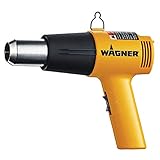
Wagner heat guns compared at a glance
Wagner’s Furno range is primarily separated by control, not by radically different heating technology. All are corded tools intended for tasks such as softening paint, shrinking tubing, bending some plastics, loosening adhesives, and drying materials. The figures below are representative published specifications; minor variations can occur between regional versions.
| Model | Temperature range | Airflow control | Power | Useful controls | Best suited to |
|---|---|---|---|---|---|
| Wagner Furno 300 | Approximately 750°F and 1,100°F (399°C and 593°C) | 2 fan settings | About 1,200 W | Two heat levels, stand for hands-free use | Occasional paint softening and basic craft work |
| Wagner Furno 500 | Approximately 150–1,200°F (66–649°C) | 5 fan settings | About 1,500 W | Multiple temperature settings, memory function, integrated stand | General DIY, paint removal, shrink tubing, and controlled craft work |
| Wagner Furno 750 | Approximately 125–1,300°F (52–704°C) | 6 fan settings | About 1,500 W | Digital display, programmable modes, stand, wider adjustment range | Frequent users and projects requiring repeatable heat |
Temperature readings describe the air at or near the nozzle, not necessarily the surface temperature of the workpiece. Wood species, paint thickness, distance, airflow, and room conditions all affect the result.
Which Wagner heat gun should you buy?
Choose the Furno 300 for occasional, uncomplicated jobs
The Furno 300 is the sensible budget choice when the main requirement is simply “hot” or “hotter.” Its two heat levels are enough for softening many layers of household paint, loosening labels, and performing basic heat-shrink work. The limited control is also difficult to misuse in the sense that there are fewer settings to adjust.
Its drawback is the lack of a genuinely low-temperature setting. That makes it less suitable for delicate plastics, thin veneer, electronics-adjacent work, or crafts where a small change in heat can ruin the material. It is a practical tool for infrequent use, but not the best option for fine control.
Choose the Furno 500 for the best all-purpose balance
The Furno 500 is the strongest general recommendation because its broad range begins low enough for delicate work and reaches high enough for stubborn paint and adhesives. Multiple heat and fan settings let you trade heat for airflow: lower airflow can concentrate warmth on a small area, while higher airflow spreads heat and reduces the chance of scorching one spot.
For paint removal, the 500 provides useful headroom without requiring the user to jump directly to its maximum setting. For crafts, its lower settings are more manageable than the Furno 300’s fixed high-temperature choices. The integrated stand is valuable when both hands are needed for bending plastic or handling a workpiece.
Choose the Furno 750 for repeatable, high-frequency work
The Furno 750 is aimed at users who want more deliberate control. Its digital display and programmable operating modes make it easier to return to a known setting after switching tasks. The extra fan adjustment is useful when working with materials that respond differently to heat, such as vinyl, heat-shrink tubing, adhesives, and thin plastic sheet.
That control does not automatically make it faster at removing paint. A lower-cost model can remove paint just as effectively when the operator keeps the nozzle moving and uses the correct scraper. The 750 earns its premium through repeatability, wider adjustment, and convenience during longer or more varied projects.
Paint removal: temperature and airflow matter more than maximum heat
A heat gun softens paint so a scraper can lift it; it does not replace the scraper. The most effective setting is usually the lowest temperature that makes the coating pliable. Excessive heat can char wood, discolor surfaces, soften underlying adhesives, or create fumes before the paint is ready to scrape.
- Remove loose dirt and identify the substrate. Be especially cautious around veneer, laminate, plastic trim, and unknown coatings.
- Start at a low or medium setting and hold the nozzle several inches from the surface.
- Move continuously in short passes rather than heating one point.
- Test with a sharp scraper. If the coating smears or resists, increase heat gradually or slow the pass.
- Work in a narrow section, scraping while the coating is soft instead of heating a large area ahead of yourself.
- Allow the surface to cool before sanding, cleaning, or applying a new finish.
For a large painted panel, the Furno 500 or 750 is preferable because airflow and temperature can be adjusted as the operator moves from broad flat areas to corners. The Furno 300 remains adequate for small repairs, but its high fixed settings demand more care around wood edges.
Craft work and accessory choices
Craft applications usually benefit from control rather than raw output. Lower heat and moderate airflow are useful for shrinking tubing, softening thermoplastic, removing adhesive labels, and shaping some plastics. Begin with a test offcut because plastic types vary substantially: some become flexible, while others melt, bubble, or release unpleasant fumes.
A basic Wagner heat gun may be sold with a small accessory set, while other packages contain only the tool. Common useful nozzle types include:
- Reduction nozzle: concentrates heat over a smaller area for tubing, soldering-related heating tasks, or localized adhesive work.
- Wide or surface nozzle: spreads heat over a broader area and helps reduce concentrated scorching during paint removal.
- Reflector nozzle: wraps airflow around tubing, making it useful for evenly shrinking heat-shrink material.
- Glass-protection nozzle: directs heat away from a window edge when softening paint near glass, although the glass and frame still require care.
Do not force an accessory onto a cold or dirty nozzle. Let the tool cool fully, inspect the attachment for distortion, and keep the nozzle opening clear. Accessories improve control, but they do not make an unsuitable material safe to heat.
Decision matrix for different buyers
| Your situation | Recommended model | Why | Trade-off |
|---|---|---|---|
| Lowest reasonable cost; a few small jobs per year | Furno 300 | Simple two-level operation and adequate high heat | Limited low-temperature control |
| First heat gun; mixed woodworking and household repairs | Furno 500 | Broad range and adjustable airflow cover the widest range of tasks | Costs more than a basic two-level tool |
| Frequent restoration or varied craft work | Furno 750 | Digital settings and programmable modes improve repeatability | Higher purchase price and more controls than occasional users need |
| Small workshop with limited bench space | Furno 500 or 750 | Integrated stands support hands-free positioning | A corded tool still needs safe cable routing and clearance |
| Delicate plastic or adhesive work | Furno 500 or 750 | Low settings and airflow adjustment reduce the risk of overheating | Requires testing and close attention; no setting guarantees safety |
Ownership realities: what wears first
The heating element is not usually the first problem in normal intermittent use. Nozzles can discolor or accumulate softened adhesive, the power cord can suffer damage if repeatedly wrapped tightly, and the stand or accessory fit can become inconvenient if the tool is dropped. Dust and paint flakes can also enter the intake and restrict airflow.
After each project, unplug the tool and let it cool before wiping the housing. Keep intake vents clear, remove residue from accessories only after they are cool, and store the gun where the cord is not sharply bent. Never block the intake while operating it. A restricted intake can increase internal heat and shorten component life.
Budget for consumables such as replacement scrapers and, for restoration work, suitable nozzle attachments. A dull scraper makes users hold the heat gun over one spot longer, increasing both surface damage and tool stress. Sharp, properly sized scrapers are part of the system rather than an optional extra.
Safety points that affect model choice
Use ventilation, eye protection, heat-resistant gloves where appropriate, and a stable nonflammable work surface. Keep the nozzle away from skin, cables, solvents, dust, and combustible debris. Old coatings may contain hazardous substances; avoid creating dust or fumes and follow local guidance for identifying and removing them. Never leave a powered heat gun unattended, even on its stand.
For most woodworkers, the Furno 500 is the most versatile Wagner heat gun. The Furno 300 makes sense when low price and simple high-heat work are the priorities, while the Furno 750 is the better investment for users who value precise, repeatable control across frequent paint-removal and craft projects.