What's inside
As an Amazon Associate I earn from qualifying purchases. This post may contain affiliate links at no extra cost to you.
Best Budget Cordless Tool Storage Bags: Picks by Job and Tool Load
The best budget cordless tool storage bag for most homeowners is a roughly 16-inch, 20–30-liter bag with a reinforced base, a wide opening, and enough internal room for your drill, batteries, and charger without stacking them under heavy tools. Choose a smaller bag for a drill-and-driver kit, or a 19-inch-plus model if you regularly carry several tools and want less cramped packing.
What matters more than the pocket count
Nominal dimensions can be misleading: exterior measurements include padding and fabric, while handles and tapered sides may reduce usable space. Before buying, measure the largest tool and charger you plan to carry. Leave about 1–2 inches of clearance around bulky items so the zipper can close without pressing against them.
As an Amazon Associate we earn from qualifying purchases at no extra cost to you.
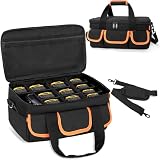


- Interior capacity: A 16-inch bag generally suits a compact kit; a 19-inch bag is more practical for several tools, batteries, and a charger. Check interior dimensions when the manufacturer provides them.
- Pocket layout: Use exterior pockets for frequently reached items such as bits, a tape measure, and safety glasses. Internal pockets help keep batteries from sliding into tools, but excessive dividers can consume the central space needed for a charger.
- Fabric durability: Polyester is common in budget bags. Denier indicates yarn thickness, not a guarantee of overall quality; stitching, zipper construction, and reinforcement at handle attachment points also matter.
- Base protection: A rigid or semi-rigid bottom resists sagging and helps keep the bag upright. A water-resistant base is useful on damp floors, but it does not make the bag waterproof.
- Carrying comfort: Look for padded handles and a detachable shoulder strap with a shoulder pad. A strap is more useful for a longer walk than for lifting a heavily loaded bag repeatedly.
Size and feature comparison
The figures below are practical shopping ranges for common budget-bag formats, not claims about a particular brand. Verify a specific model’s measurements and materials before purchase.
| Bag format | Typical exterior length | Approx. usable capacity | Typical fabric | Best fit |
|---|---|---|---|---|
| Compact | 12–14 in (30–36 cm) | 10–18 L | 600D polyester is common | One drill or impact driver, 1–2 batteries, small charger |
| Everyday | 15–17 in (38–43 cm) | 20–30 L | 600D–900D polyester | Two compact tools, 2–3 batteries, charger, hand tools |
| Large | 18–20 in (46–51 cm) | 30–45 L | 900D polyester or heavier fabric | Several tools, multiple batteries, charger, accessories |
Capacity varies with shape and internal structure, so treat liters as a guide rather than a promise. A broad, box-shaped bag can pack more effectively than a longer bag with a narrow opening.
Choose by your situation
| Your situation | Best starting choice | Why | Check before buying |
|---|---|---|---|
| Occasional home repairs, limited storage | 12–14-inch compact bag | Easy to store and avoids paying for unused volume | Whether the charger fits alongside the tool |
| Regular DIY projects and a small cordless set | 15–17-inch everyday bag | Balances capacity, carrying comfort, and shelf space | Internal dividers and a supported base |
| Several tools shared between jobs | 18–20-inch large bag | Reduces the need to carry a second container | Handle stitching and shoulder-strap padding |
| Frequent van or workshop use | Everyday or large bag with a firm base | Stays upright and is easier to load and unload | Base abrasion protection and zipper quality |
| Walking farther with a heavy kit | Moderate-size bag with a padded strap | More comfortable than narrow handles alone | Strap attachment points and loaded weight |
Three useful budget picks by type
Best value for a basic cordless kit: compact 12–14-inch bag
Choose this format if your regular load is one drill or impact driver, a charger, and a couple of batteries. Its smaller footprint is convenient for a cupboard or car trunk. The trade-off is limited room for extra hand tools: putting a bulky charger beside a large tool can leave little usable space.
Best all-rounder: 15–17-inch bag with a reinforced base
For many DIY users, this is the safest starting point. It can accommodate a small set while keeping bits and accessories accessible in exterior pockets. Prefer a wide top opening and a base panel that does not fold under the weight of the kit. If pockets are sewn into the interior, make sure they do not block the charger’s footprint.
Best for a growing kit: 18–20-inch bag with a shoulder strap
A large bag suits people who carry several tools or work across different locations. It also makes it easier to separate batteries and accessories from metal hand tools. The downside is that empty space encourages overpacking. Check the strap anchors and handle stitching, since a larger bag can become heavy quickly.
Check the fit before you commit
A simple sizing check can prevent a frustrating return. Measure the longest tool, the charger’s width and height, and the largest battery. Then compare those measurements with the bag’s interior—not just its advertised exterior length.
- Place the charger flat on a surface and note the footprint it needs.
- Allow roughly 1–2 inches (2.5–5 cm) of spare length around the longest item for padding and easy removal.
- Plan a separate spot for batteries; avoid packing them beneath heavy tools where they can be pressed or scratched.
- Keep the total load manageable. A bag that fits everything may still be uncomfortable to carry.
For example, a 16-inch exterior bag may have less than 16 inches of clear interior length once seams and padding are counted. If your tool is close to that dimension, move up a size or look for stated interior measurements.
Where budget bags wear—and how to extend their life
On lower-cost bags, common weak points are zipper teeth or sliders, stitching where handles join the body, and abrasion on the bottom corners. Heavy tools shifting during transport can stress all three. A rigid bottom helps, but it cannot compensate for lifting the bag by an accessory pocket or overloading its seams.
- Put heavier tools at the bottom and close to the center, rather than against an outer wall.
- Keep sharp bits in a case or holder so they do not snag the lining.
- Brush off sawdust and dirt before they work into zippers. For cleaning, use a damp cloth and mild soap, then let the bag dry fully with its compartments open.
- Do not store damp batteries or a wet charger inside the bag; moisture trapped in fabric can encourage corrosion or damage electronics.
- Inspect strap anchors and handle seams periodically. Stop carrying the bag by a damaged handle until it is repaired or replaced.
Pay extra for a better base and sound handle reinforcement before paying for a large number of small pockets. For most buyers, a well-proportioned everyday bag with a clear charger fit will be more useful than a bigger, less supported bag.