What's inside
As an Amazon Associate I earn from qualifying purchases. This post may contain affiliate links at no extra cost to you.
A cordless concrete nailer can save time when fastening steel track, clips, and light fixtures to concrete or masonry. It is not a universal replacement for a hammer drill and concrete screws: substrate hardness, fastener length, and the fixture’s load all matter. Choose around the actual job and the battery platform you already own, not just the tool’s advertised shots per charge.
As an Amazon Associate we earn from qualifying purchases at no extra cost to you.
What a cordless concrete nailer is for
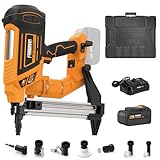
These tools drive hardened pins into concrete or steel using a battery-powered mechanism, sometimes with a gas cartridge and sometimes without one. They are built for repeated, relatively light fastening: metal framing track, electrical clips, conduit supports, and similar work. They are not intended to carry every overhead or structural load. Follow the fixture maker’s fastening schedule and the nailer’s approved applications.
For track installation, a nailer is most useful when the slab is sound and you can keep the tool square to the surface. A typical pin may be around 1 to 1¼ inches long, but the correct length depends on the track and concrete. Too short, and the track can loosen; too long, and you may hit embedded services or drive into a weak layer. Check drawings and scan before drilling or shooting into a slab.
What to check before buying
Confirm the fastener and substrate. Read the tool’s fastening range and approved base materials. Some models accept collated pins; others use proprietary fasteners or require gas. A nailer that works well in normal concrete may struggle in very hard concrete, aggregate, or steel. Test a few shots on the actual surface before committing to a long run.
Compare the complete system. Tool price is only part of the cost. Add batteries, charger, pins, and—where required—fuel cells. A bare tool can be a sensible buy if you already own compatible batteries. If you are starting fresh, compare a kit with the cost of the required battery and charger. Battery platforms are not interchangeable, and a tool from a familiar brand may still use a different voltage family.
Check access and pace. A compact nose helps near corners and track returns. Tool weight matters overhead; a heavy nailer becomes tiring after hundreds of fastenings. Look for a depth adjustment, a clear fastener reload, and a practical belt hook. Ask how the tool behaves after repeated firing, not only how quickly it drives one pin.
Cordless nailer options at a glance
| Option | Best fit | Main trade-off |
|---|---|---|
| Battery-only concrete nailer | Regular track and fixture work on an existing battery platform | Higher tool cost; confirm performance on hard concrete |
| Battery-and-gas nailer | Fast production work where the system is approved for the substrate | Fuel-cell cost, storage, and additional consumables |
| Hammer drill and concrete screws | Small jobs, occasional anchors, or fixtures needing a removable connection | Slower per fastening; requires drilling and dust control |
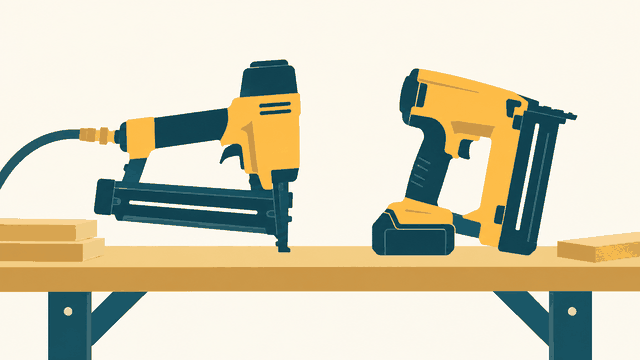
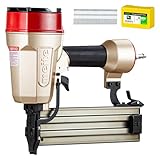
For frequent fastening, start by comparing cordless concrete nailers that match your battery system and the specified pins. Don’t assume a similar-looking framing nailer is suitable; wood nailers and concrete nailers use different fasteners and are designed for different materials.
Battery, charger, and consumable costs
Concrete nailers can draw heavily during each drive, so a small battery may reduce runtime or feel unbalanced on the tool. Follow the manufacturer’s battery recommendations; a compact pack can still be useful for overhead work if it is approved. If you are buying into a platform, compare the nailer with the other cordless tools you expect to use. A battery and charger bought for one specialist tool may be poor value if the rest of your kit uses another system.
Estimate consumables from the job rather than relying on a headline shots-per-charge figure. Count the planned fasteners, then allow extra for missed shots, test shots, and damaged pins. Keep the right pin length and any required fuel cells on hand. If pins are sold in large boxes, check that the tool accepts that exact collation and diameter before ordering.
For an occasional installation, a hammer drill with concrete screws is often the cheaper, more flexible option. It takes longer because each hole must be drilled, cleaned as required, and fastened, but screws can be removed and are easier to inspect or replace. That trade-off can be worthwhile for a few clips or a fixture with a specific anchor requirement.
Practical setup and failure checks
Wear eye and hearing protection, and keep hands clear of the nose. Treat every shot as capable of ricochet: hard aggregate, a glancing angle, or a steel edge can deflect a pin. Keep bystanders out of the line of fire. Before starting, check for embedded wiring, pipe, or post-tensioning; never fasten blindly where a strike could cause serious damage.
Hold the tool firmly and perpendicular to the surface. A tilted shot can leave the pin proud, bend it, or produce a weak connection. If a pin does not seat, do not simply fire another into the same point. Inspect the fastener and substrate, move to a permitted location, and adjust depth only within the manufacturer’s instructions. Repeated misfires, a pin that backs out, or track that can be lifted by hand are reasons to stop and reassess the concrete and fastener choice.
Use the tool’s specified nosepiece and fasteners, and follow its maintenance schedule. Dust and debris around the nose can interfere with feeding; clear jams only as the manual directs, with the tool made safe. For critical fixtures, use the anchoring method and inspection requirements given by the fixture manufacturer or project documents. A cordless nailer is a speed tool—not a substitute for a load-rated anchor where one is required.
Related guides
- Longest Lasting Lawn Mower Battery: AGM vs Lithium vs Flooded Lifespan and Cost per Season
- Duralast Gold Lawn Mower Battery Review: U1 Fit, CCA and When to Pay for AGM
- Greenworks Pro 80V 21-Inch Mower Review: Runtime Math, Push vs Self-Propelled and Yard Fit
- Bosch High Pressure Washer Gun Replacement: Fittings, Adapters and What Fits Your Model